
7 Minutes
A 3.4-million-year-old foot discovered in Ethiopia is reshaping how scientists see early hominin diversity. Far from being a simple curiosity, the Burtele foot offers direct evidence that more than one human relative walked, climbed, and ate differently in the same landscape as the famous Lucy. Here’s what the new analysis reveals about locomotion, diet, growth, and how multiple hominin species coexisted in the Afar Rift.
An unexpected fossil from Woranso-Mille
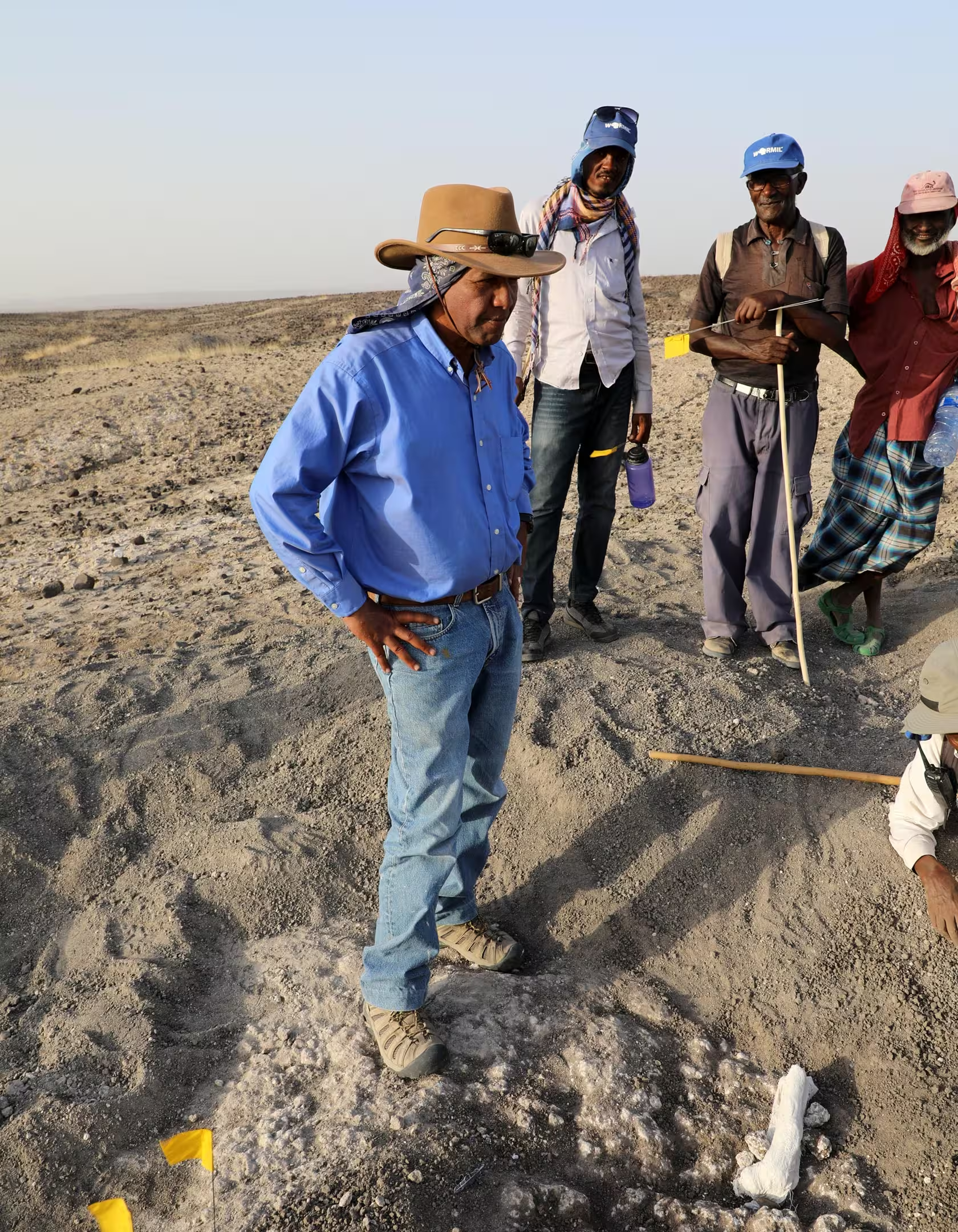
In 2009, researchers led by paleoanthropologist Yohannes Haile-Selassie of Arizona State University recovered eight foot bones from sediments at the Woranso-Mille site, in Ethiopia’s Afar Rift. The fossils—later nicknamed the Burtele foot—were recovered in multiple pieces and carefully assembled. At first, scientists hesitated to assign the foot to a particular species because, in paleoanthropology, crania and teeth are typically the decisive elements for naming species.
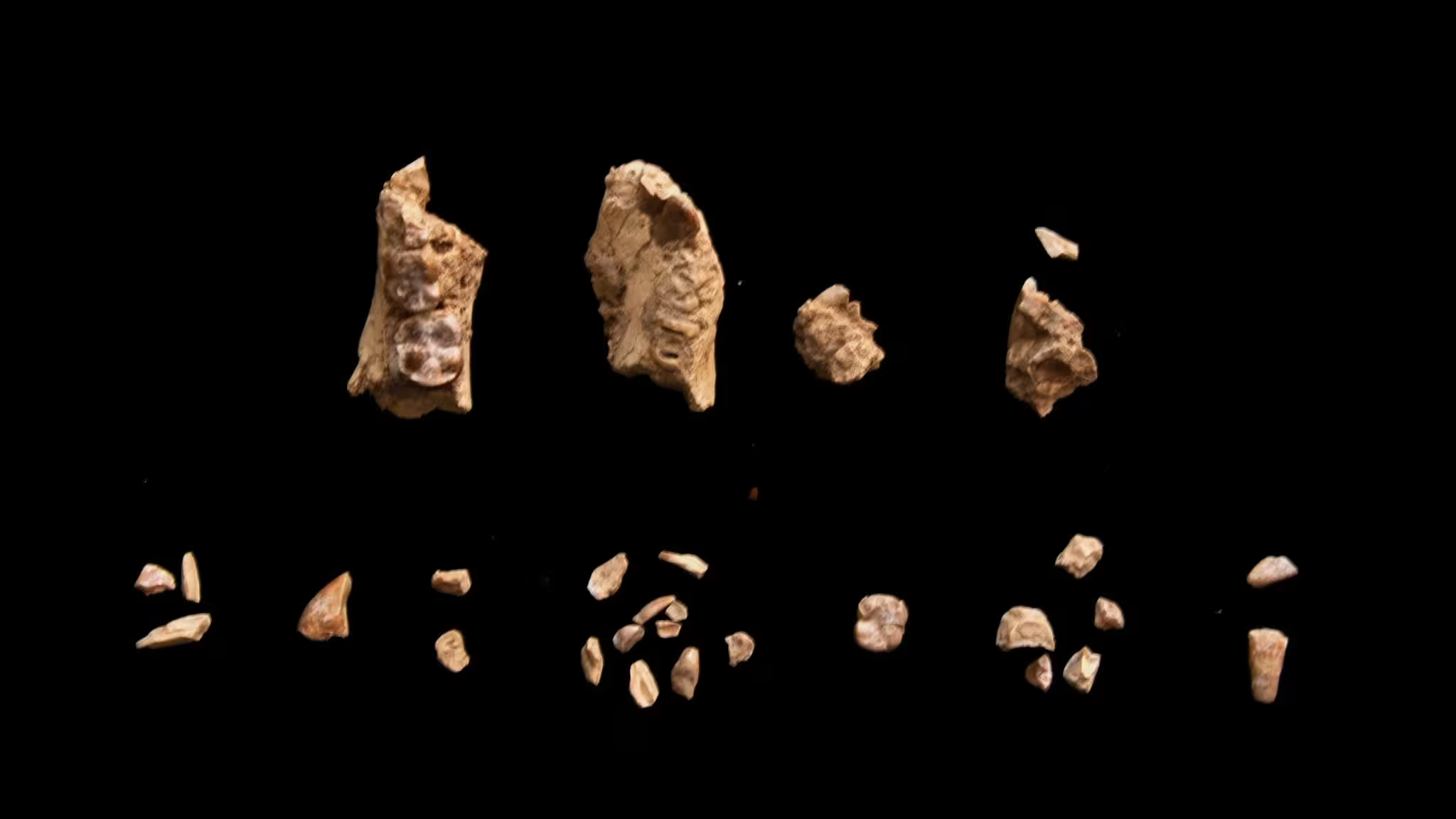
When the Burtele foot was initially reported in 2012, it already looked different from Australopithecus afarensis, the species represented by the famous Lucy skeleton. The question was whether the foot belonged to A. afarensis or to another, contemporaneous hominin. Over the following decade, repeated fieldwork and new finds at Woranso-Mille permitted a confident reassignment: the foot most likely belongs to Australopithecus deyiremeda, a species that lived at roughly the same time as Lucy but exhibited distinct anatomy and behaviors.
Why the Burtele foot matters for bipedality
The Burtele specimen reveals a mix of primitive and derived traits. Most striking is the retention of an abducted big toe, an opposable hallux that would have aided grasping—useful for climbing. At the same time, the foot exhibits clear adaptations for upright walking on two legs. But its walking mechanics differed from those of modern humans: the Burtele foot appears to have pushed off primarily from the second toe rather than relying on the big toe as humans do today.
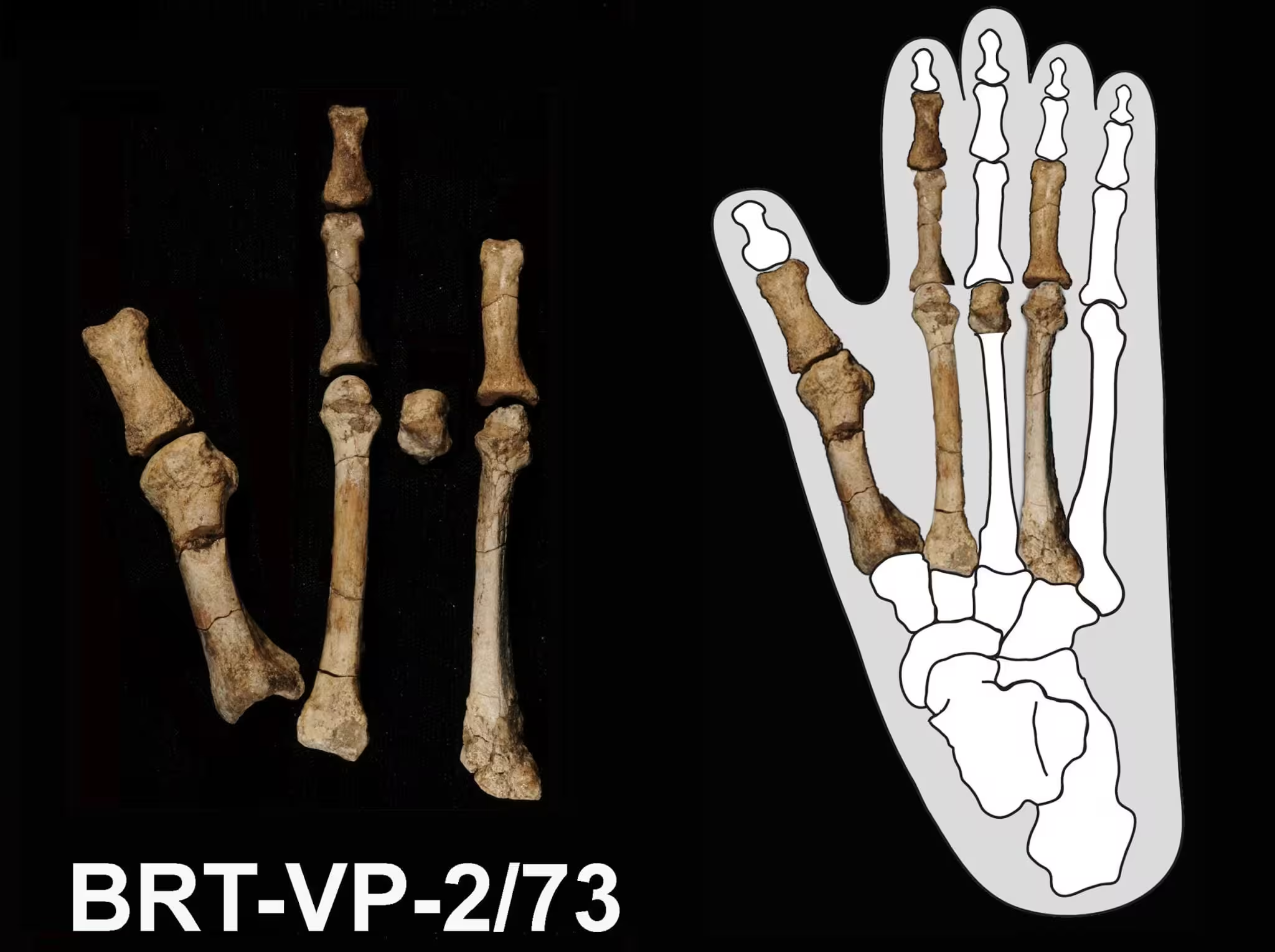
The Burtele foot (left) and the foot embedded in an outline of a gorilla foot.
That mix points to an important message: bipedality in early hominins was not a single, uniform adaptation. Instead, there were multiple ways of walking upright. Ardipithecus ramidus, dated to 4.4 million years ago, also retained an abducted big toe. The presence of a similar trait at 3.4 million years ago demonstrates that different locomotor strategies coexisted and evolved in parallel. In plain terms, early hominins experimented with a range of solutions for moving both in trees and on the ground.
Dietary differences written in enamel
Locomotion wasn’t the only area where species diverged. Isotope analysis of tooth enamel collected from the Burtele area provides a window into diet and ecological niche partitioning. Naomi Levin, a professor at the University of Michigan, analyzed carbon isotopes from several teeth to reconstruct what these hominins were eating.
The carbon isotope results show a clear distinction: Australopithecus afarensis (Lucy’s species) had a mixed diet that included C3 resources (trees and shrubs) and C4 resources (tropical grasses and sedges), indicating access to a broader range of foods including grass-based resources. In contrast, A. deyiremeda leaned more heavily on C3 vegetation. That pattern aligns A. deyiremeda more closely with older hominins such as Ardipithecus ramidus and Au. anamensis.
Isotopic evidence matters because it demonstrates that two hominin species occupying the same landscape were not in direct ecological competition for identical food resources. By partitioning dietary niches—one species exploiting more grass and sedge-based resources and the other relying more on woodland foods—both could coexist across fluctuating environments.
Geology, dating, and the challenge of stratigraphy
Making sense of these fossils required rigorous geological work. Establishing the relative and absolute ages of sediment layers at the site is essential to link foot bones to teeth and jaws and to understand the paleoenvironments in which these hominins lived. Beverly Saylor, a professor of earth, environmental and planetary sciences, led the stratigraphic and geochronological analyses that clarified how different fossil-bearing layers connect across Woranso-Mille.
Careful field mapping, sedimentology, and stratigraphic correlation revealed that the Burtele foot, the teeth, and the juvenile jaw belong to deposits of the same age. That linkage is what allowed researchers to associate the foot confidently with Australopithecus deyiremeda and to build a coherent picture of life in the Afar Rift 3.4 million years ago.
Growth, development, and the juvenile jaw
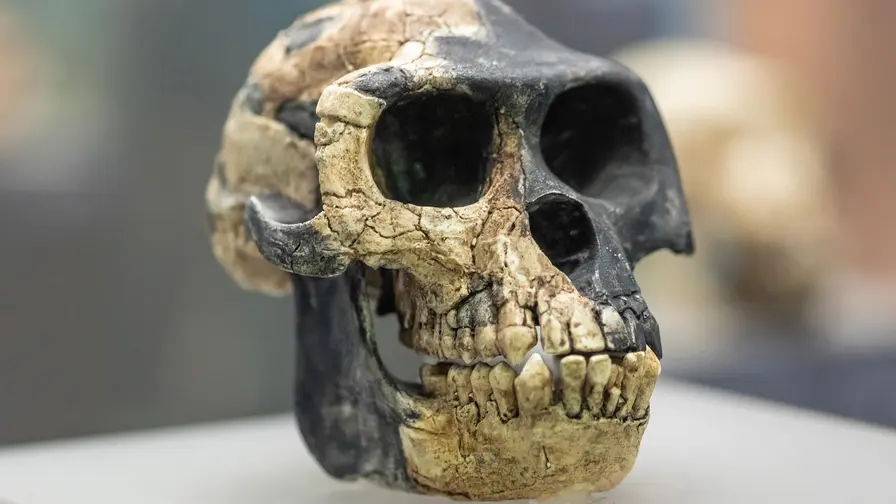
Along with isolated teeth, the team recovered a juvenile lower jaw clearly attributable to A. deyiremeda based on dental anatomy. The jaw contained a full complement of deciduous teeth and developing adult teeth embedded deep within the jawbone. Using computed tomography (CT) scanning, researchers examined tooth formation stages to estimate the juvenile’s age at death—about 4.5 years.
The pattern of tooth development in this juvenile shows a growth disconnect between incisors and molars, similar to what researchers observe in living apes and known early australopiths such as A. afarensis. That parallel suggests that, despite anatomical and behavioral variation between contemporary species, early australopiths shared broadly similar developmental schedules. This provides a rare glimpse into life history evolution in our early relatives and suggests that differences in locomotion and diet did not necessarily translate to radically different growth patterns.
How multiple hominins shared the same landscape
The combination of locomotor evidence, isotopic diet signals, stratigraphic dating, and growth data builds a compelling case: at Woranso-Mille, more than one hominin species lived in close proximity while exploiting different ecological niches. That arrangement reduces direct competition and explains how two closely related species could persist together through time.
Beyond paleoecology, this research has broader implications for understanding human evolution. It challenges simplified, linear narratives that imagine one species giving way to the next. Instead, the fossil record increasingly points to a branching, diverse hominin community in which multiple morphologies and behaviors coexisted, adapted, and sometimes overlapped in time and space.
Expert Insight
Dr. Elena Marquez, a fictional paleoanthropologist and science communicator with experience in East African fieldwork, reflects on the significance of these finds: "Discoveries like the Burtele foot force us to rethink how versatile early hominins were. Rather than a straight climb to modern human anatomy, evolution was a workshop of experiments—different ways of walking, climbing, and eating. The more fossils we find in well-dated contexts, the clearer it becomes that adaptability and niche partitioning were central to hominin survival in changing climates."
What this means for broader research and future work
The reassignment of the Burtele foot to Australopithecus deyiremeda underscores the value of long-term, multidisciplinary field programs. Continued excavations at Woranso-Mille and similar sites will be critical to expand sample sizes, find associated crania and postcranial material, and refine environmental reconstructions. Advances in micro-CT scanning, geochemical analyses, and high-resolution stratigraphy are enabling researchers to extract more nuanced information from fragmentary remains than ever before.
Future work is likely to focus on several directions: searching for additional skeletal elements attributable to A. deyiremeda; increasing the geographic and temporal coverage of isotopic studies to map dietary variation more finely; and using biomechanical modeling to test how an abducted big toe influenced balance, climbing ability, and walking efficiency. Each new line of evidence will improve our understanding of the many evolutionary experiments that occurred during a crucial period in hominin history.
Why the story still matters today
Yohannes Haile-Selassie and his colleagues emphasize that studying the deep past is not just academic curiosity. Patterns of climatic change and ecological resilience that played out millions of years ago can inform how species, including humans, respond to environmental stress. The Afar Rift record shows that ecosystems shifted repeatedly, and that hominins adapted through behavioral flexibility and niche partitioning. Understanding those adaptive responses contributes to our broader knowledge of resilience under changing climates.

By revealing a hominin that fused climbing prowess with a unique form of bipedal walking and a different dietary strategy, the Burtele foot expands the story of human origins. It is a reminder that our lineage was once a diverse community of cousins experimenting with life in varied habitats—experiments that ultimately shaped the evolutionary pathways leading to Homo.












Leave a Comment
Comments (3)
Feels a bit overhyped, sample size tiny and one foot assembled from bits, yet still cool. Hope they find more bones soon
Isotope data looks neat, but is it enough to separate species diets for sure? feels tentative, and how linked is the foot to the jaw exactly?
Wow, that Burtele foot is wild. Multiple biped styles at once? mind blown 😮 The niche partitioning idea is elegant, but i want more teeth samples, if that’s real…