
5 Minutes
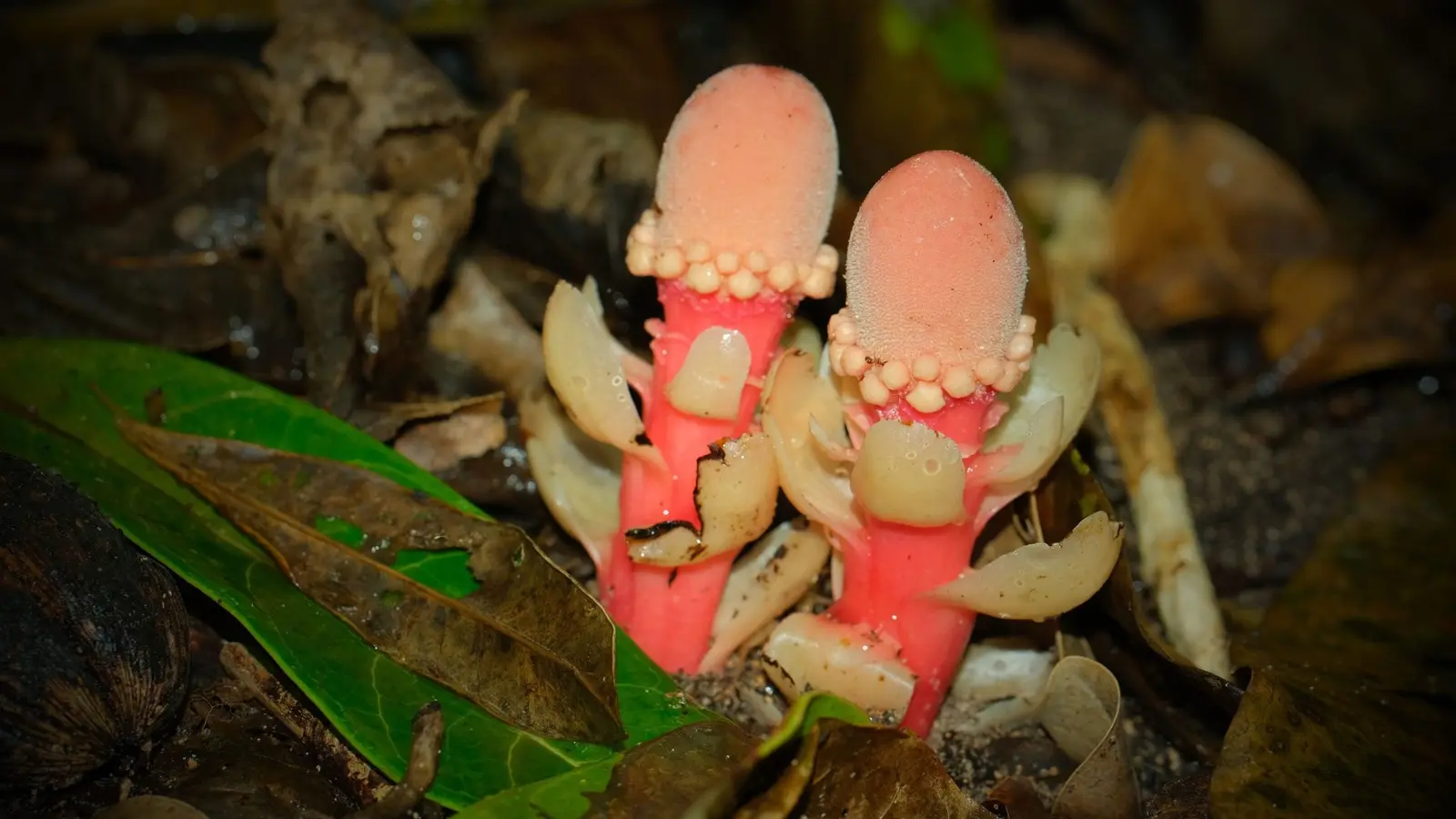
A tiny, mushroom-like organism that never sees sunlight: Balanophora is a flowering plant that defies expectations. Lacking chlorophyll and true roots, it lives as an obligate parasite on tree roots, produces minute flowers and seeds, and displays reproductive tricks rarely seen in the plant kingdom. Scientists calling remote island forests home have begun to unravel how this unusual genus survived for tens of millions of years—and why its future may be precarious.
A fungus-like plant that isn’t a fungus
At first glance, Balanophora looks like a clump of mushrooms pushing up from the moss. But this organism is a flowering plant—one that has abandoned photosynthesis entirely. Without chlorophyll or conventional roots, Balanophora attaches to the belowground roots of particular tree species and siphons water, sugars, and nutrients from them. The visible structure above ground is a reproductive spike covered in tiny flowers and seeds so small they border on microscopic.
Biologists have long been captivated by Balanophora because it overturns many expectations about what a plant must have. The genus name itself—derived from the Greek balanos (acorn) and phoros (bearing)—hints at the plant’s odd, acorn-like appearance. Field teams from the Okinawa Institute of Science and Technology (OIST), Kobe University, and the University of Taipei recently combined efforts to survey Balanophora populations across Japan, Taiwan, and subtropical islands. Their sampling revealed patterns in genetics, cellular biology, and reproduction that shed new light on this enigmatic group.
Tiny plastids, major biochemical roles
One hallmark of parasitic plants is the gradual loss of plastid genes as photosynthesis becomes unnecessary. Plastids are the cellular compartments that include chloroplasts in green plants; they house pathways for photosynthesis and other essential biosynthetic reactions. In fully photosynthetic species, plastid genomes commonly contain up to roughly 200 genes. In Balanophora, researchers found a dramatically reduced plastid genome remaining—only about 20 genes.
That reduction, however, does not mean the plastids are vestigial. Proteomic and genetic analyses showed that Balanophora imports over 700 proteins from the cell cytoplasm into its plastids. In other words, the organelles have been streamlined yet retained important non-photosynthetic functions: building blocks for pigments, fatty acids, and other metabolites necessary for the parasite’s life cycle.
Professor Filip Husnik, whose lab studies evolutionary cell biology, notes that the sequence of plastid gene loss in Balanophora resembles the reductive trends seen in other eukaryotic parasites—most notably Apicomplexa like the malaria parasite, which trace back to photosynthetic ancestors. That parallel suggests common biochemical constraints govern how plastids are pared down when photosynthesis is abandoned.
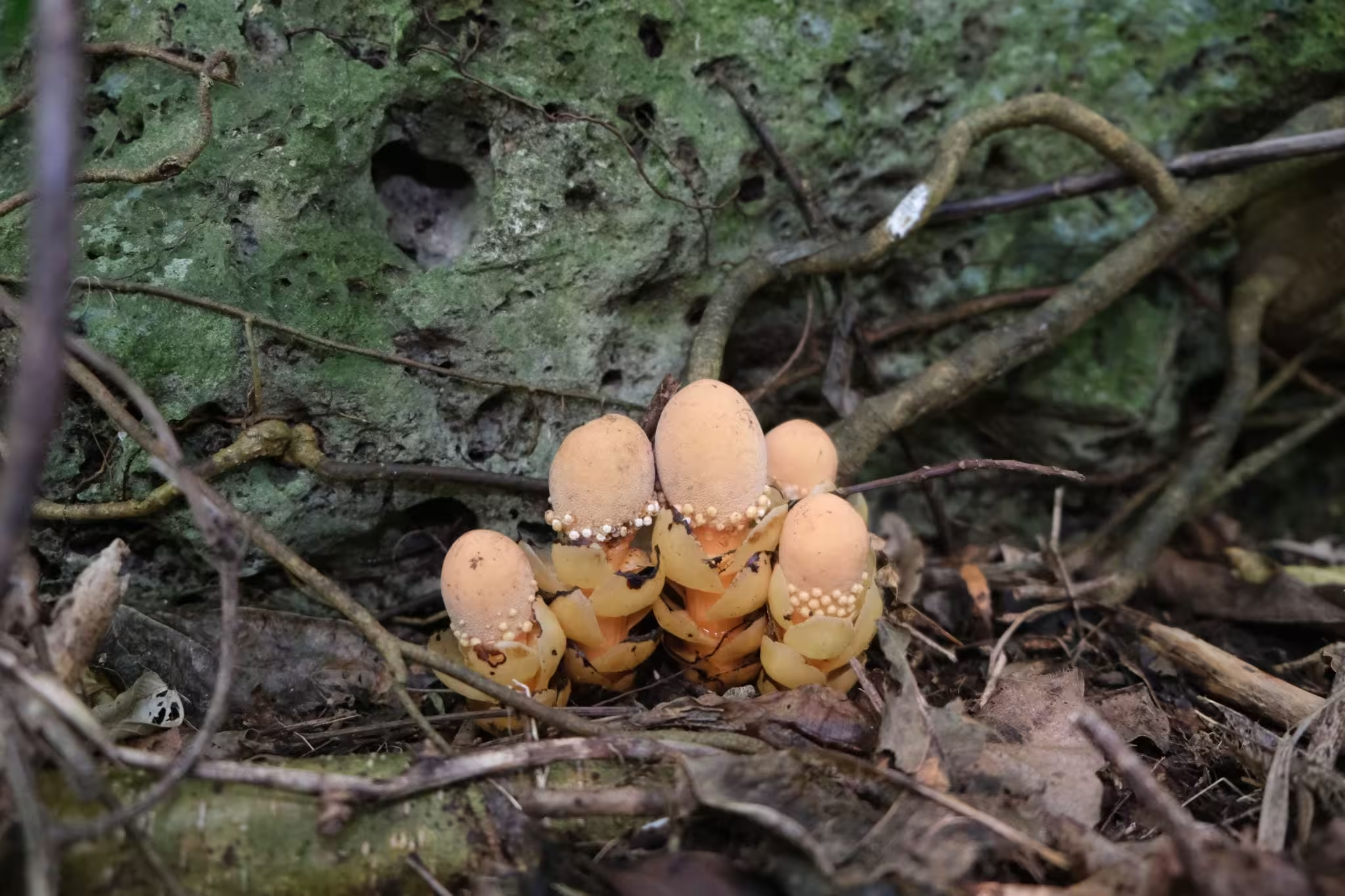
A macro photograph of a cluster of mushroom-like plants on the forest floor against a mossy backdrop. These are Balanophora fungosa ssp. fungosa from southern Okinawa Island. Credit: Filip Husnik
Ancient lineage and island evolution

By comparing DNA from multiple Balanophora populations, the research team reconstructed the genus’s evolutionary tree. The family Balanophoraceae is ancient: it likely split from other flowering plants and diversified during the mid-Cretaceous, roughly 100 million years ago. That timing makes Balanophora one of the earliest lineages to forfeit photosynthesis and adapt to a fully parasitic lifestyle.
Islands figure prominently in Balanophora’s story. Several species and populations occur on islands across East Asia—habitats that are both isolated and ecologically distinct. Island life appears to have favored unusual reproductive strategies in the genus. While some Balanophora populations still reproduce sexually and require pollination and fertilization to produce seed, others are capable of producing seed without fertilization (facultative agamospermy). Even more striking are island populations that reproduce exclusively through agamospermy—obligate clonal seed production.
Reproduction, host specificity, and conservation stakes
Obligate agamospermy is rare among plants because it limits genetic diversity and can accelerate the accumulation of deleterious mutations. Yet for Balanophora, clonal seed production may confer a colonization advantage: a single female plant can establish a new population on an island without a mate. This helps explain how Balanophora disperses across fragmented island landscapes where suitable host trees are patchy.
Host specificity compounds the plant’s vulnerability. Individual Balanophora populations typically parasitize only a narrow range of tree species. If those host trees decline through logging, land-use change, or illegal collection, the parasitic plant is likely to follow. Many Balanophora habitats are small, local, and sometimes protected—but protection does not eliminate the ongoing risks from human activity.
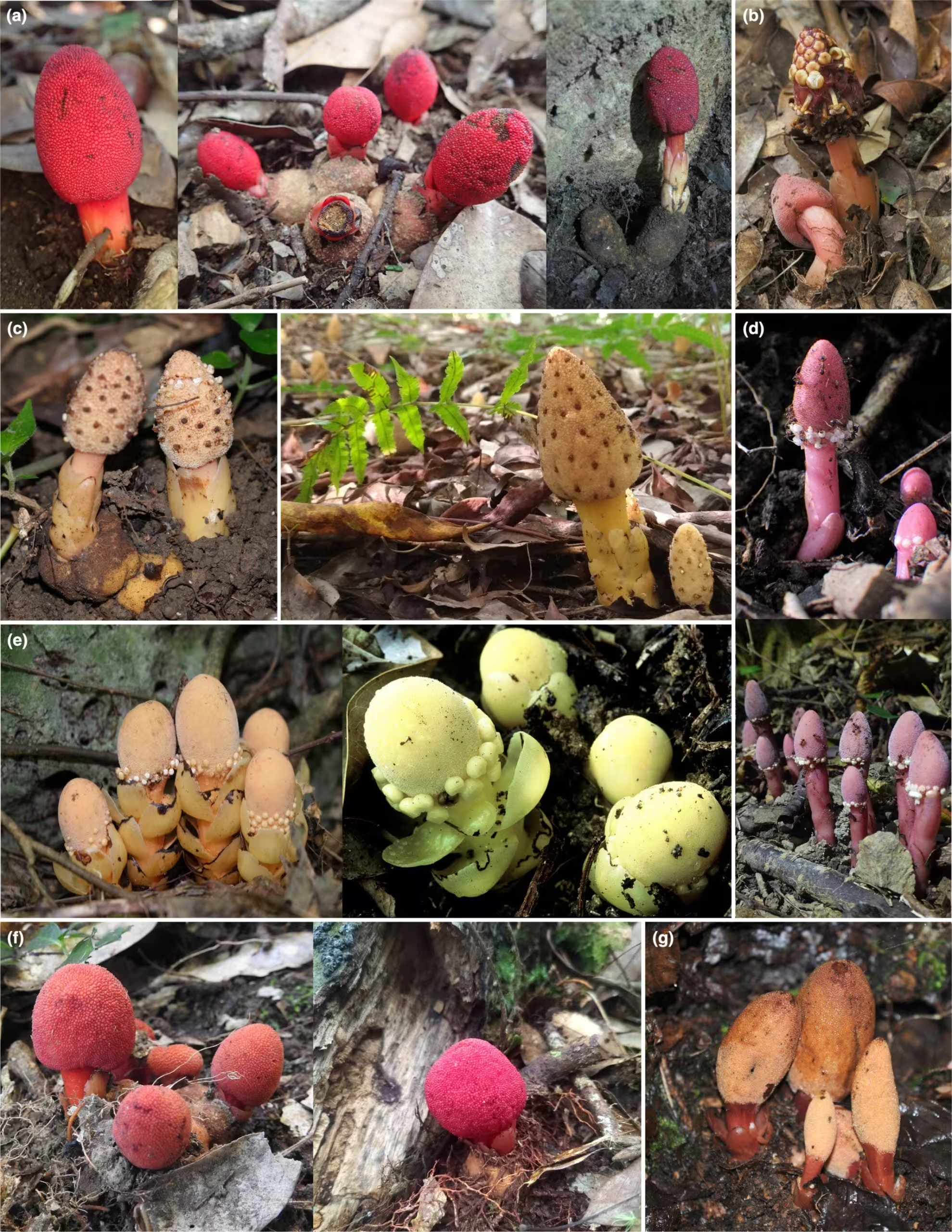
A selection of the sampled Balanophora plants. (a) B. japonica (left and center: Kyushu, Japan; right: Taiwan), (b) B. mutinoides (Taiwan), (c) B. tobiracola (from left: Okinawa, Japan; Taiwan), (d) B. subcupularis (Kyushu, Japan), (e) B. fungosa ssp. fungosa (from left: Okinawa, Japan; Taiwan), (f) B. yakushimensis (from left: Kyushu, Japan; Taiwan), (g) B. nipponica (Honshu, Japan). Credit: Svetlikova et al., 2025
The team’s work combines field sampling with genomic and cellular methods, establishing a baseline for future studies of plastid function, host–parasite interactions, and island biogeography. Researchers stress that continued collaborations with local botanists and authorities were essential to gain access to remote populations and to ensure fieldwork followed conservation guidelines.
Expert Insight
"Balanophora forces us to rethink what 'plant' means," says Dr. Lian Moreno, an evolutionary botanist who studies parasitic plants. "It retains just enough cellular machinery to function while outsourcing everything else to its host. That trade-off can be elegant in stable island niches but precarious when environments change rapidly."
Dr. Moreno adds that Balanophora is a valuable model for studying reductive evolution and organelle function. "Understanding how plastids remain useful after photosynthesis is lost could teach us about metabolic flexibility across life—insights that reach beyond botany into microbial and parasitic systems."

Protecting Balanophora means protecting the specific forest communities and host trees it depends on. For scientists, policymakers, and the public, the plant is both a conservation priority and a living laboratory for evolution’s more unexpected experiments.












Leave a Comment
Comments (2)
is this even true? plastids importing 700+ proteins sounds wild... could be real, but i want to see more controls. also obsessed with island evolution tho
wow didnt expect a plant to look like mushrooms and ditch photosynthesis. kinda eerie but fascinating. hope they protect those host trees