
3 Minutes
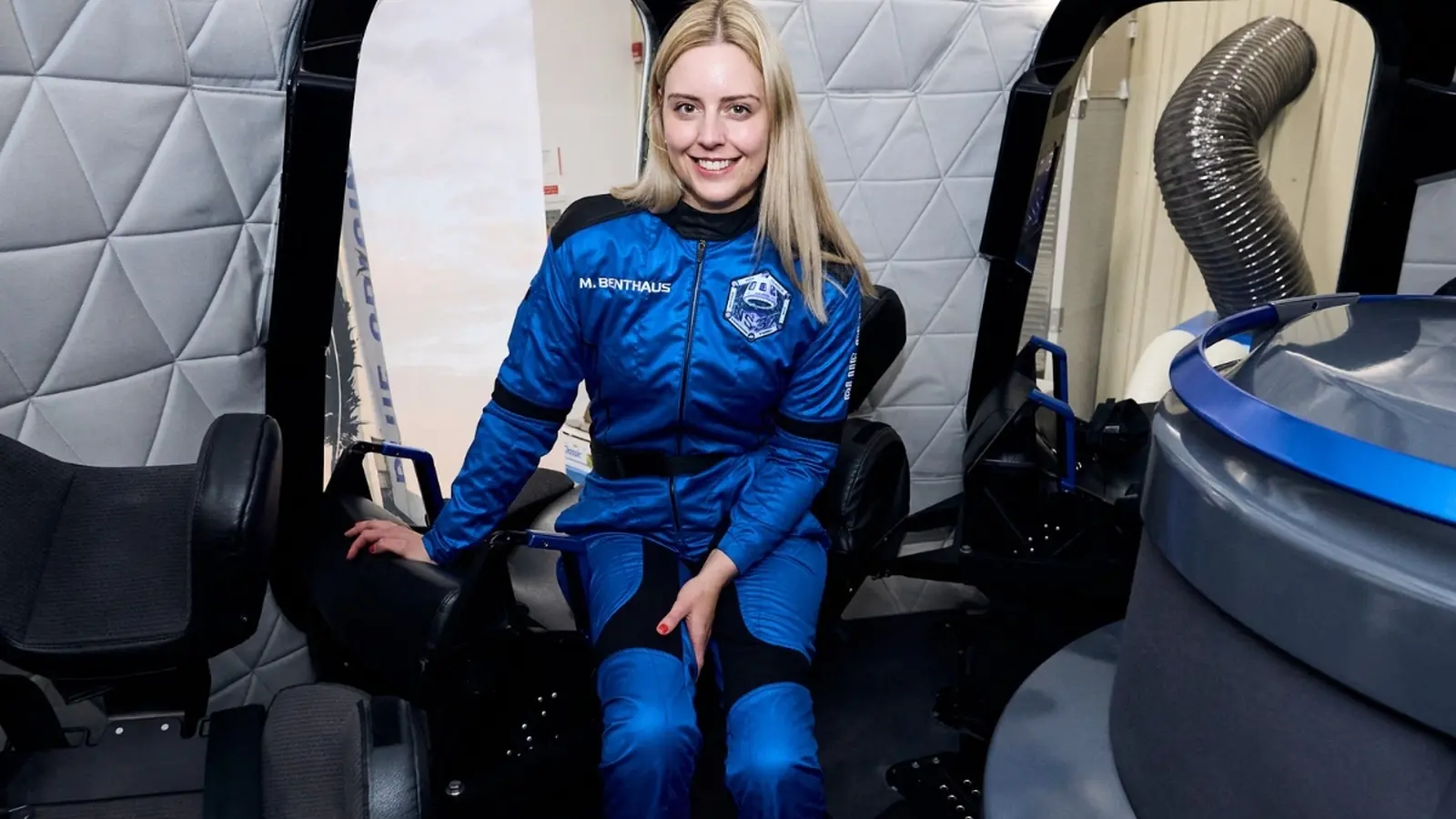
German aerospace and mechatronics engineer Michaela Benthaus made history on Saturday as the first wheelchair user to cross the Karman line on a commercial suborbital flight. Her 10-minute journey aboard Blue Origin's New Shepard highlights both advances in private space tourism and the challenges of making space accessible to people with disabilities.
A milestone above the Karman line
Blue Origin launched its New Shepard rocket at 8:15 a.m. local time (1415 GMT) from the company’s West Texas facility. The flight, fully automated, lifted the crewed capsule to beyond the internationally recognized boundary of space — the Karman line — before the capsule separated and glided back to Earth under parachutes.
Michaela Benthaus, an engineer at the European Space Agency who uses a wheelchair after a spinal cord injury sustained in a mountain-biking accident, was among the NS-37 crew. Her presence on the flight was celebrated widely online; among the replies, private astronaut Jared Isaacman posted congratulations on social media, noting the inspirational value of the mission.
Why this flight matters for accessibility and representation
Benthaus has spoken publicly about the barriers she encountered after her accident: "After my accident, I really, really figured out how inaccessible our world still is." She added, "If we want to be an inclusive society, we should be inclusive in every part, and not only in the parts we like to be." Those remarks underscore a broader conversation about designing spacecraft, ground operations, and training to accommodate a wider range of bodies and abilities.
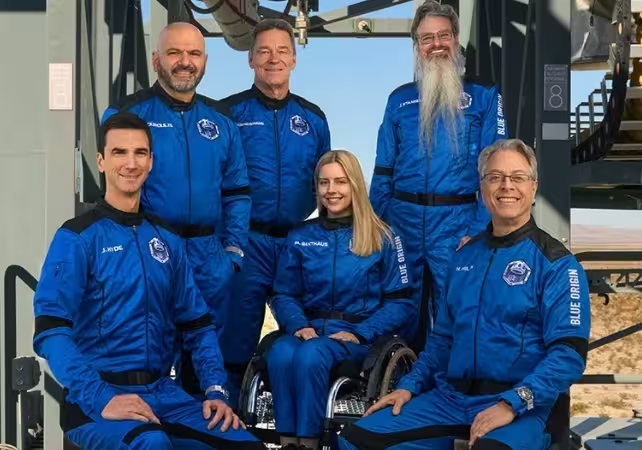
NS-37 crew (L to R): Joey Hyde, Adonis Pouroulis, Hans Koenigsmann, Michaela (Michi) Benthaus, Jason Stansell, and Neal Milch. (Blue Origin)
Mission details and company ambitions
Blue Origin's New Shepard is a vertical-launch, suborbital vehicle designed for short-duration space tourism flights. The flight was the company's 16th crewed mission, part of a sustained program to offer brief trips across the Karman line. New Shepard is built for rapid turnarounds and passenger experience; ticket prices are not publicly listed.
Beyond suborbital tourism, Blue Origin is pursuing orbital capability with its much larger New Glenn rocket. This year the company completed two uncrewed orbital test flights with New Glenn, signaling an intent to compete in the orbital launch market alongside companies such as SpaceX.
What’s next for inclusive space travel?
Benthaus’ flight is a symbolic step: it raises practical questions about universal design in spacecraft, accessible training facilities, and policy changes needed to ensure people with disabilities can participate in future missions — from suborbital tourism to science-driven orbital flights. As private companies scale up operations, accessibility will increasingly shape engineering choices and public expectations.














Leave a Comment
Comments
No comments yet. Be the first.