
3 Minutes
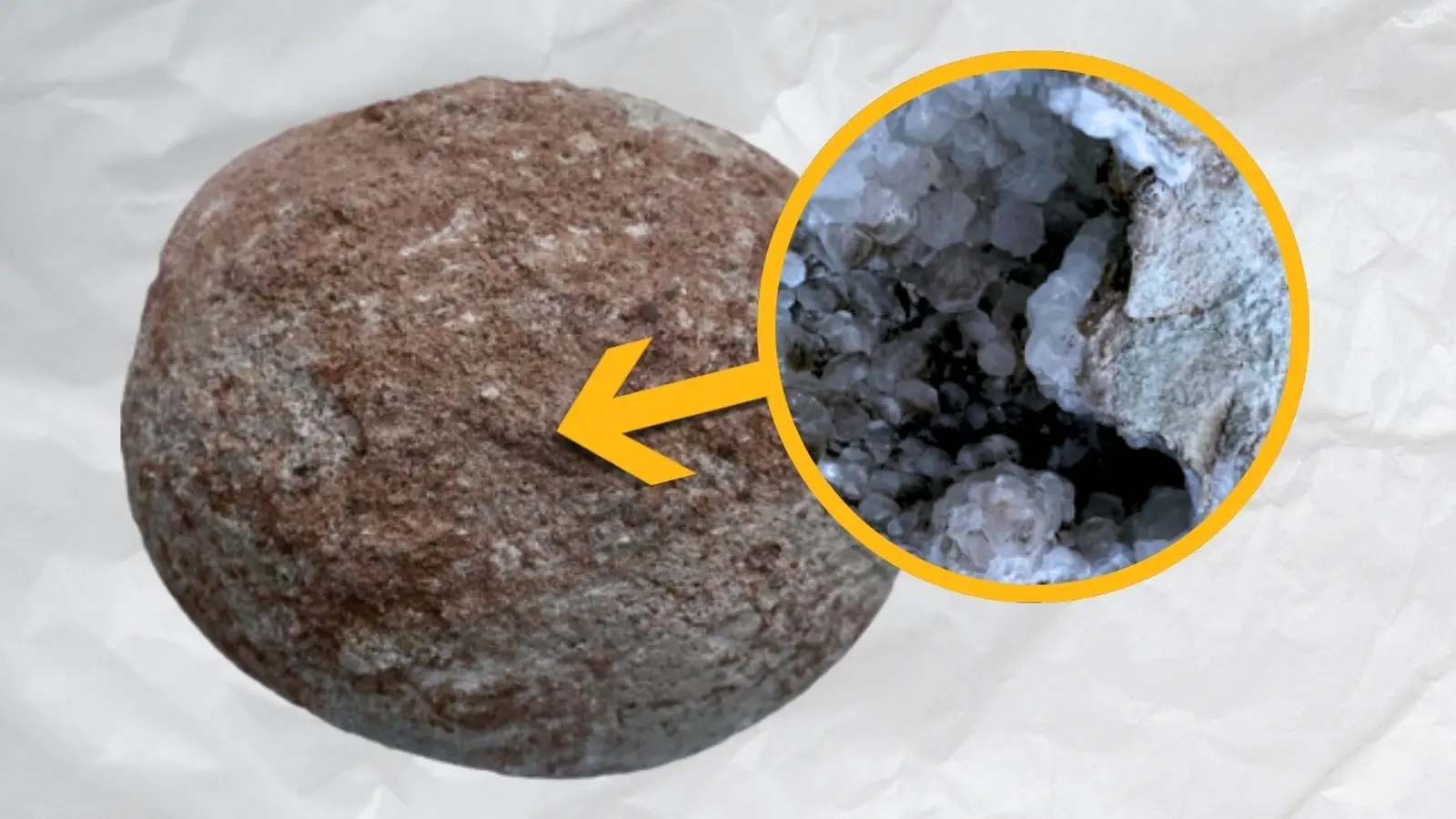
A grapefruit-sized fossil egg from China turned out to be more than a simple relic of a lost hatchling. Instead of preserved embryonic remains, paleontologists discovered the inside of the shell filled with sparkling calcite crystals — a natural dinosaur geode that reveals both the egg's structure and clues about its burial environment.
A new egg species and a geological surprise
The specimen, recovered from the Upper Cretaceous Chishan Formation in the Qianshan Basin, measures roughly the size of a grapefruit and belongs to a newly described oospecies named Shixingoolithus qianshanensis. The 2022 study led by Qing He (Anhui University) identified the egg on the basis of detailed shell microstructure — microscopic patterns in the eggshell that match known dinosaur egg signatures rather than those of birds or modern reptiles.
The discovery is notable on two fronts. First, Shixingoolithus represents a previously unknown egg type from a region better known for Paleocene turtles, early mammals, and birds. Second, instead of a fossilized embryo, the shell cavity contains well-formed calcite crystals. The researchers likened the interior to a geode: an empty chamber lined by crystalline mineral growth.
How do crystals grow inside a dinosaur egg?
The process is straightforward in principle, though rare in practice. After burial, any organic contents — including an embryo — decay and leave the eggshell hollow. Groundwater then migrates through micropores and tiny cracks in the shell. Minerals dissolved in those waters, especially calcium carbonate, precipitate on the inner surfaces and slowly build crystals over time.
The crystal-lined egg from Qianshan offers more than aesthetic value. Calcite that precipitates after burial can trap chemical signatures of the fluids that formed it. That means the crystals preserve information about the geochemistry of the nest site and the diagenetic history of the fossil bed — essentially a snapshot of the chemistry of ancient groundwater that flowed through sediments tens of millions of years ago.
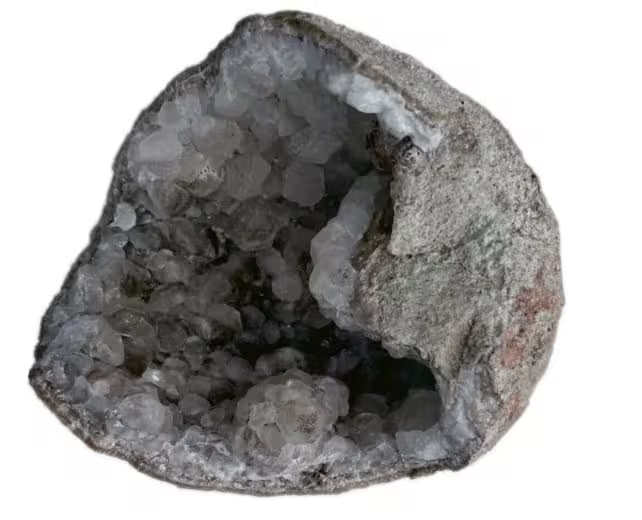
The crystal-filled dinosaur egg
Scientific context and broader implications
Beyond taxonomy and taphonomy, these mineralized interiors can serve as a dating tool. In a recent separate study, researchers directly dated calcite crystals from fossil eggs, giving paleontologists a new method to constrain the age of buried eggs independently from surrounding sediments. Because the crystals form after burial, their isotopic and radiometric signatures can sometimes be used to bracket burial timing and to reconstruct post-burial fluid conditions.
For paleontologists, that opens useful pathways. Egg microstructure tells researchers the biological origin and possible incubating behaviors. The mineral infill tells them about burial, groundwater, and the local paleoclimate. Combined, those datasets deepen our ability to read fossil eggs as both biological objects and geological records.
Why the find matters to science communicators and the public
Discoveries like the Qianshan geode-egg do what great museum displays do: they surprise and educate at once. A fossil that resembles a gemstone naturally invites curiosity, while the science behind it links everyday processes — decay, water flow, crystal growth — to deep time. For researchers, these specimens are a twofold archive: evidence of ancient life and a mineral record of the environments that hosted that life.





Leave a Comment
Comments
No comments yet. Be the first.