
4 Minutes
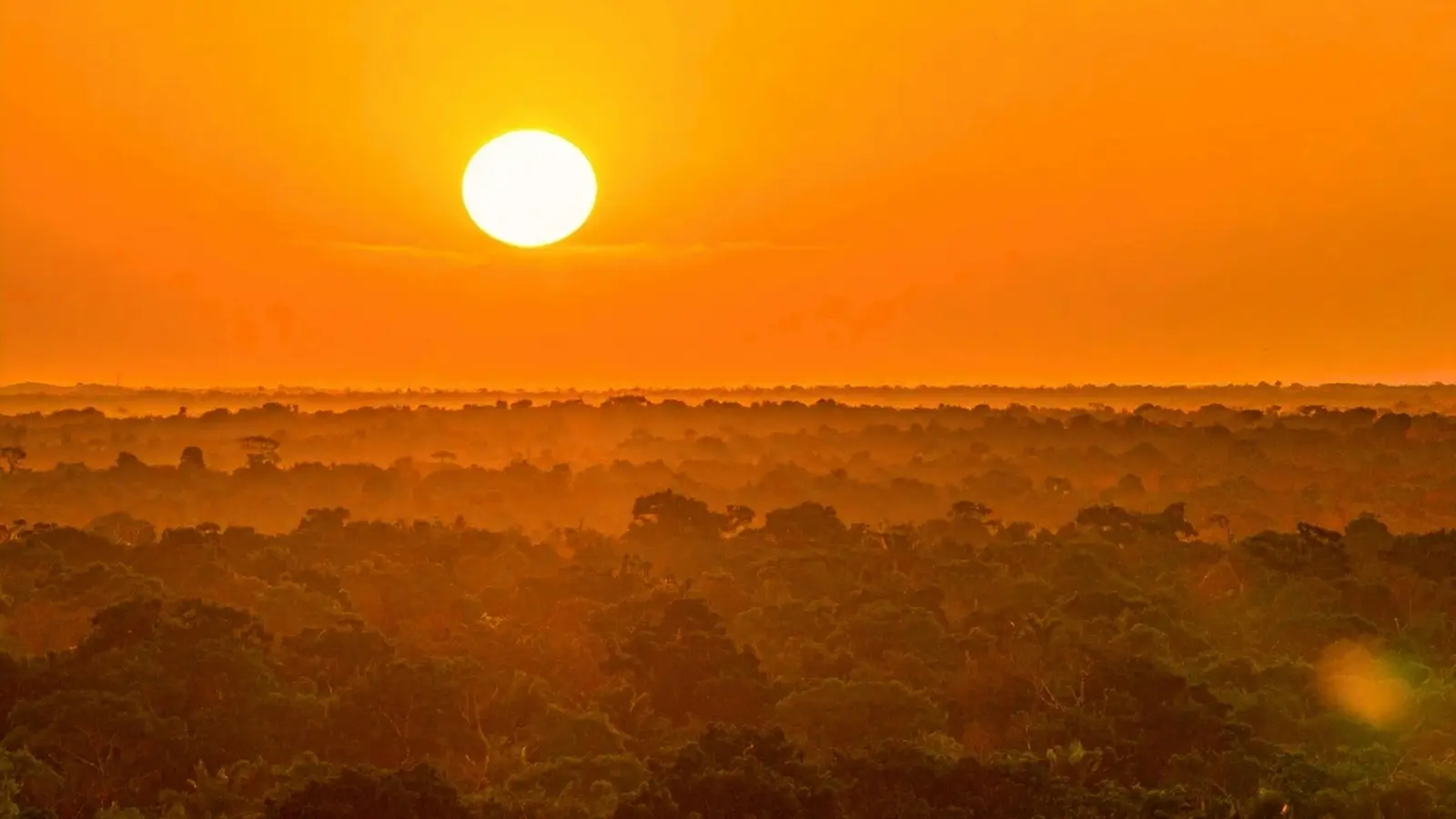
The Amazon rainforest is increasingly showing signs of a new, more extreme climate regime researchers call "hypertropical." A multinational study analyzing more than three decades of field data finds droughts are becoming hotter, longer and more frequent — exposing trees and soils to stress levels that, in some cases, have no modern analogue.
What the study found: a forest in fast transition
Scientists combined long-term field measurements with climate models to track how Amazon trees and soil respond to high temperature and low moisture. Their results indicate that extreme "hot droughts" already seen during events like the 2015 and 2023 El Niño episodes will become more common through the century. In many places, these conditions could persist year-round — eroding the distinction between wet and dry seasons and driving a shift toward what the team calls a hypertropical state.
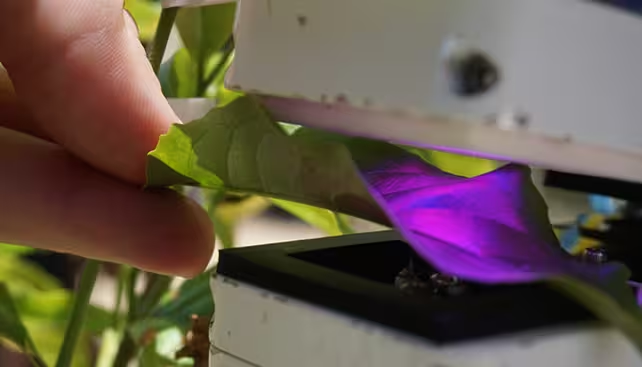
In this picture, a scientist is measuring a leaf's photosynthesis rate.
How trees are losing their grip: mechanisms of decline
Field observations reveal two primary physiological failure modes that increase tree mortality under prolonged heat and drought.
Hydraulic failure
When soil moisture drops, trees struggle to pull water up from roots. Air bubbles can form in the xylem — the plant's water-conducting tissue — blocking flow and causing branches or whole trees to desiccate rapidly.
Carbon starvation
To conserve water, trees close the tiny pores (stomata) on leaves, reducing carbon dioxide uptake. Over extended droughts, reduced photosynthesis can deplete carbohydrate reserves, weakening trees and increasing the risk of death.

The combination of these stressors is already visible in current extremes. The researchers estimate that under projected hypertropical conditions, tree mortality could rise by roughly 55 percent in affected areas, with fast-growing, low wood-density species most vulnerable.
Why it matters: carbon balance and forest composition
The Amazon currently absorbs a significant fraction of global CO2 emissions. But if large-scale tree die-off increases, these forests could shift from carbon sinks to net carbon sources — releasing stored carbon as wood decomposes. Models in the study suggest many regions of the Amazon may cross critical water thresholds that precipitate widespread mortality, and similar trends could emerge in tropical forests across Africa and Asia.
Secondary forests, which often contain a higher share of fast-growing species with lower wood density, appear especially susceptible. That has implications for reforestation, biodiversity and the value of regrowth as a climate mitigation strategy.
Scientific context and methods
The authors based their conclusions on extensive, decades-long field campaigns combined with regional climate projections. By looking at paired sites affected by the 2015 and 2023 droughts — both amplified by unusually warm El Niño events — they identified consistent water-stress thresholds that preceded elevated mortality. These empirical thresholds were then used in models to assess how frequently and where hypertropical conditions might occur by 2100 under continued warming.
Implications for policy and practice
Results make clear that the trajectory of Amazon climate depends on human greenhouse gas emissions. If current emissions continue unabated, hypertropical conditions would likely appear sooner and more broadly. That raises urgent questions for conservation planning, carbon accounting and international efforts to reduce emissions and protect tropical forests.
Expert Insight
"This work links hard field measurements with climate projections to show not just that change is coming, but how it will act on trees and soils," says Dr. Elena Morales, a tropical ecophysiologist (fictional) with two decades of Amazon research. "Protecting large, intact forest tracts and reducing emissions are two complementary strategies: one buys time for ecosystems, the other reduces the pace of change."
The study, published in Nature, is a stark reminder that tropical forests are not static backdrops but dynamic systems responding rapidly to warming and shifting rainfall patterns. What happens in the Amazon matters globally — for biodiversity, regional climate and carbon budgets — and the window for effective action is narrowing.











Leave a Comment
Comments (2)
Is this even true at scale? Models look strong but forests are messy - soil, local deforestation, fires. curious how they accounted for that, or is it optimistic?
wow that's terrifying... trees can't keep up with these hot droughts. 55% more mortality? if true, reforestation plans need a rethink, like yesterday