
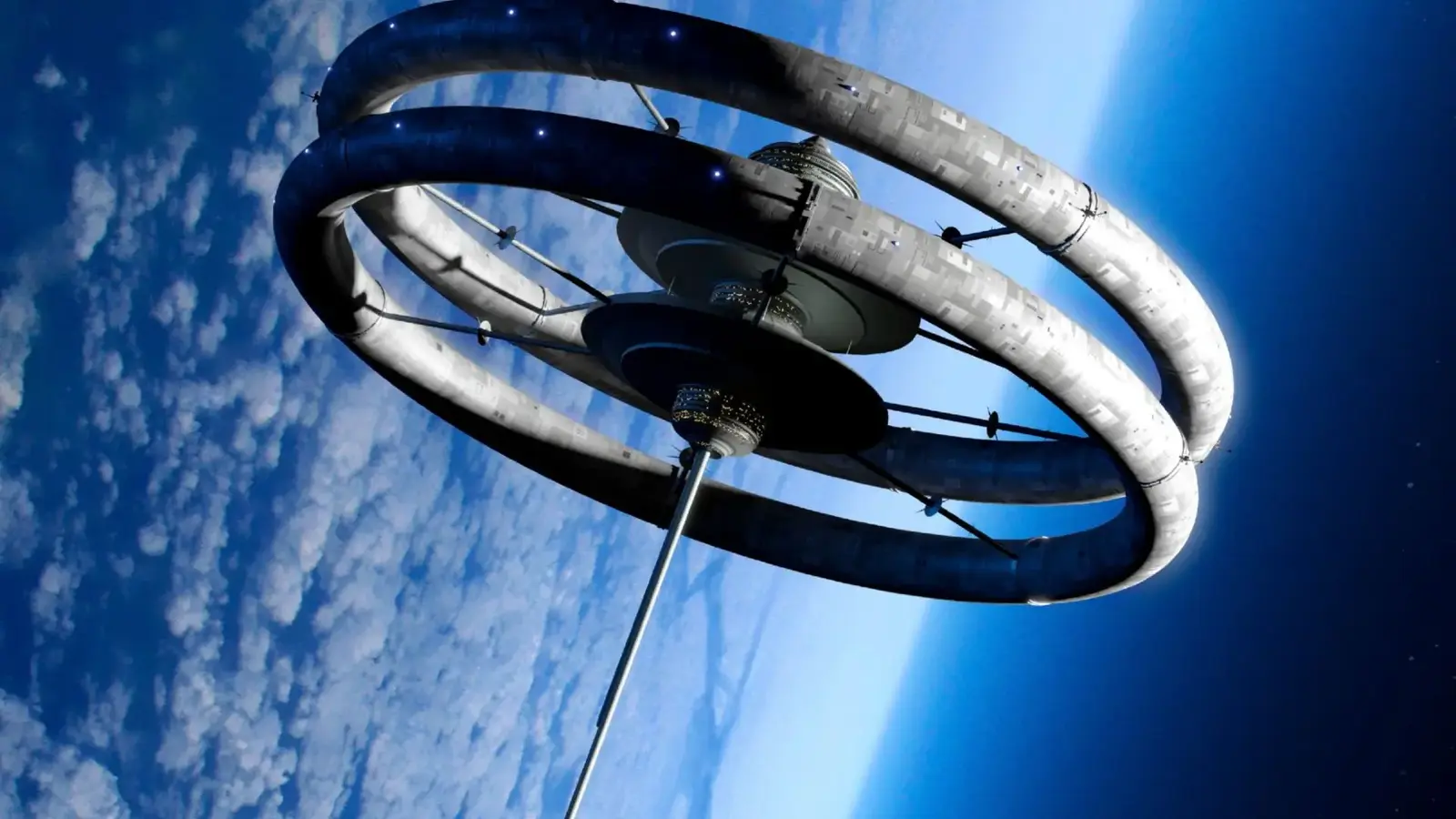
Private companies are pitching a radical rethink of orbital living: inflatable habitats that launch compact and expand in space. With the International Space Station nearing retirement, startups say these balloon-like modules could deliver more usable volume per launch, faster and cheaper than traditional hardware. But engineering and orbital safety hurdles remain.
From Bolted Modules to Inflatable Shells — A New Model for Orbital Homes
The International Space Station was assembled piece by piece over decades, each module ferried into low Earth orbit on expensive rockets. That approach produced the largest human-made structure in space, but it is logistically complex and costly. Now a new generation of orbital habitat designers is proposing a different path: pressurized inflatable habitats that arrive compact and then expand to provide wide interior volume.
One prominent example is MaxSpace and its Thunderbird habitat concept. According to the company, Thunderbird can unfold to roughly 348 cubic meters of internal volume — about one-third of the ISS’s total pressurized volume — yet can be delivered to orbit on a single SpaceX Falcon 9 launch. MaxSpace has publicly targeted 2029 as a tentative date for a full-scale launch, with a smaller demonstration module potentially flying as early as 2027 on a rideshare mission.
Design Advantages and Onboard Features
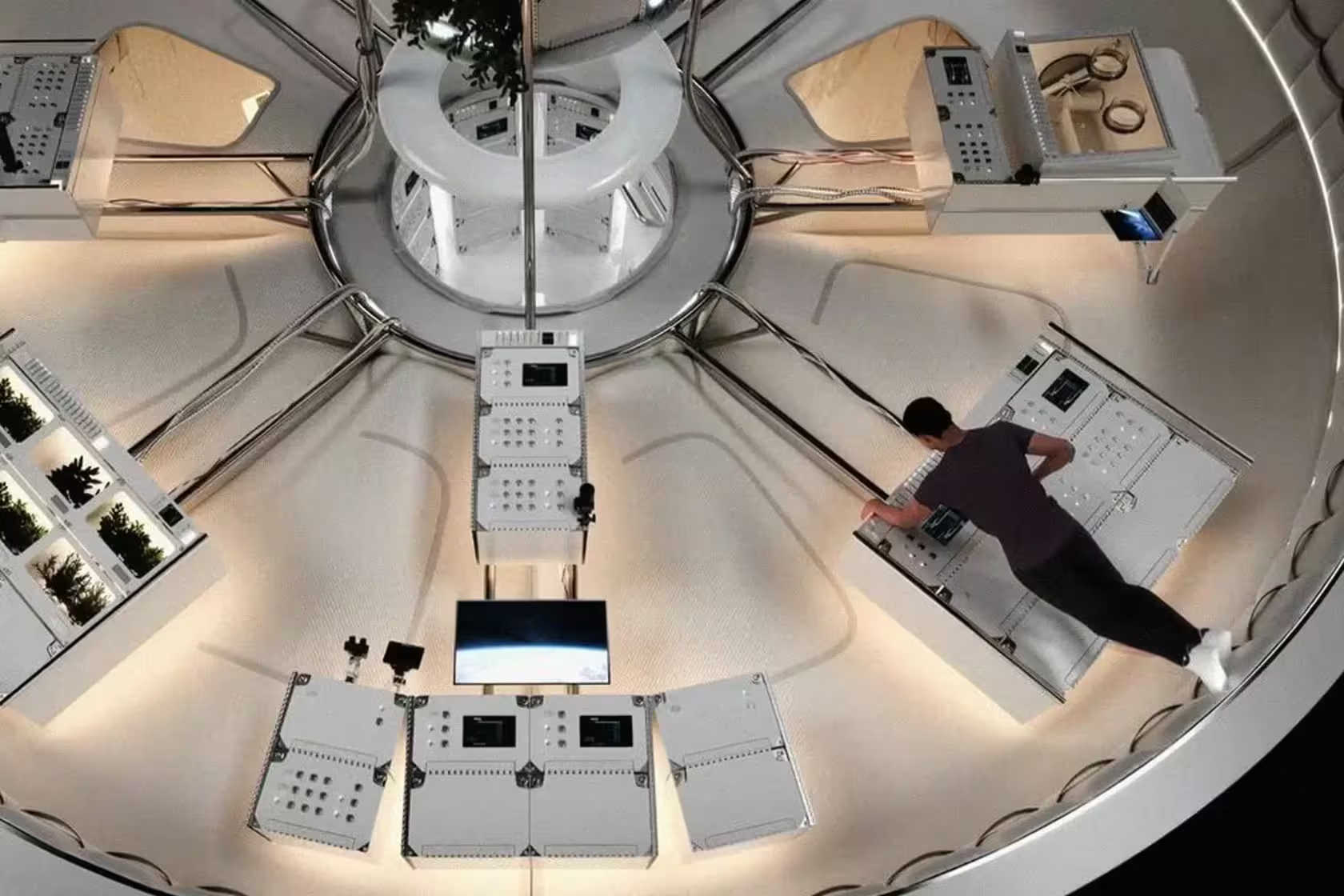
Inflatable habitats offer several attractive benefits for commercial and research use in low Earth orbit (LEO). Because the structure is compressed for launch, the system maximizes the usable interior per kilogram and per dollar of launch mass. That enables broader layouts: Thunderbird’s concept includes large dome windows for panoramic Earth views, configurable living and workspaces, private sleeping capsules, and integrated large-format displays for live Earth imagery and communications.
Designers also emphasize modularity and reconfigurability. Interior partitions and workstations could be rearranged mid-mission, letting crews adapt research and living spaces to evolving needs — a flexibility that traditional rigid modules struggle to match. For commercial operators, such versatility could support tourism, research labs, media production, and manufacturing demonstrations in microgravity.
Technical and Economic Challenges Ahead
Translating a concept into a sustainable orbital facility is far from guaranteed. Inflatable habitats must resist micrometeoroids and orbital debris — high-speed particles that can puncture gas-filled shells. Engineers design multi-layered fabric and shielding systems, but proving their resilience in the increasingly cluttered LEO environment is a major technical milestone. Recent activities by national space agencies underline the risk: spacewalks to install protective shielding after damage to visiting spacecraft demonstrate how real and immediate debris threats are.
Beyond impact protection, developers must validate life support systems, long-term thermal control, radiation protection, docking interfaces, and crew safety procedures. Economically, the startup must convince customers and government partners that an inflatable station can deliver reliable operations and cost-effective access compared with other commercial LEO offerings. NASA’s Commercial Low Earth Orbit Destinations (CLD) program — designed to transition LEO research and operations to private platforms as the ISS winds down — has become a focal point for companies proposing replacement habitats.
Mission Profiles and Future Prospects
MaxSpace and its competitors pitch inflatable habitats not only as LEO outposts but also as adaptable components for deeper-space missions. Company leadership envisions modified inflatable modules being repurposed for cislunar stations, lunar surface support, or transit habitats for Mars missions. The fundamental idea — delivering high internal volume with low launch footprint — scales well to scenarios where launch mass and fairing volume limit traditional rigid constructions.
However, operational timelines are uncertain. While MaxSpace lists 2029 as a target for a large Thunderbird deployment, the firm acknowledges that prototype testing, regulatory approvals, and partner contracts will influence final schedules. A smaller demonstrator by 2027 would serve to validate deployable structures, thermal behavior, and radiation mitigation approaches in an operational environment.
Policy, Partnerships, and Commercial Demand
As NASA plans for the ISS retirement roughly five years from now, public-private partnerships will shape who fills the resulting gap. NASA’s CLD program is actively soliciting and funding commercial platforms to preserve research capabilities in orbit. For startups, winning CLD contracts or securing commercial customers — from research institutions to space tourism firms — will be pivotal. Partnerships with launch providers, insurers, and international stakeholders will also determine whether inflatable habitats become mainstream.
Expert Insight
Dr. Amina Patel, a fictional aerospace systems engineer with two decades of experience in orbital habitats, offers a cautious endorsement: "Inflatable modules solve a real constraint — the tradeoff between launch volume and usable space. But success depends on rigorous testing under micrometeoroid flux, validated life support redundancy, and clear operational procedures. If teams can demonstrate repeatable safety and affordability, inflatables could be a transformative step for commercial LEO and beyond."
Patel adds that international collaboration and open debris remediation standards will be essential: "As more commercial platforms enter orbit, traffic management and debris mitigation become central to viability. Technology alone won’t be enough without coordinated policy and shared best practices."
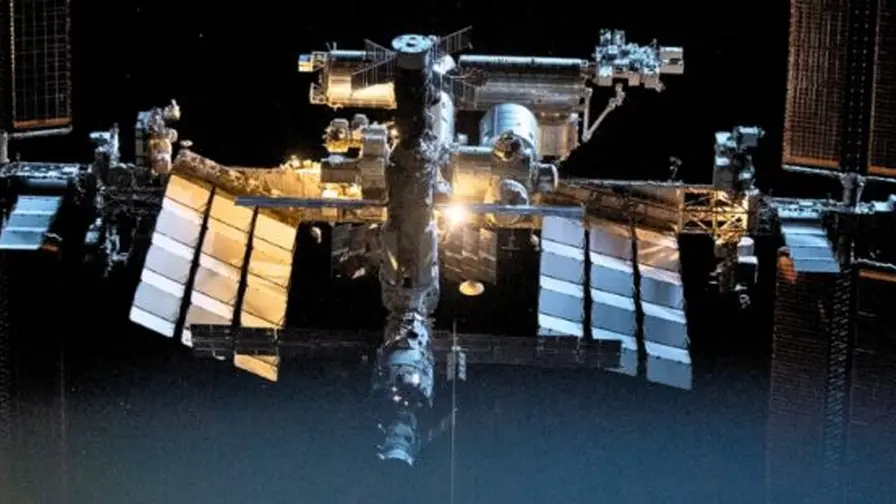
Inflatable habitats are an intriguing and plausible answer to the coming transition in low Earth orbit. They promise more living and working space per launch and new kinds of commercial activities, but the path from concept to crewed, long-duration operations will demand thorough testing, robust shielding, and supportive policy decisions. Over the next several years, demonstration flights and NASA’s CLD selections will be decisive in determining whether balloon-like stations become the next generation of orbital real estate.

Leave a Comment
Comments (2)
seems neat, but is a balloon really safe up there? tiny punctures, radiation, insurance, who handles debris cleanup? not sold yet.
whoa inflatable habitats... big windows and flexible rooms sound dreamy! but the debris risk gives me real pause, weird mix of hype and hope