

6 Minutes
A large real-world analysis presented at the ASMBS 2025 meeting finds a striking difference in long-term weight loss: metabolic and bariatric surgery delivers roughly five times the weight reduction of commonly used injectable GLP-1 drugs such as semaglutide (Ozempic) and tirzepatide after two years. The study raises important questions about expectations, adherence, cost, and who should be offered which treatment.
Real-world comparison: surgery vs. GLP-1 receptor agonists
Semaglutide and tirzepatide—weekly injectable drugs that act on the GLP-1 pathway—have received widespread attention for their ability to reduce appetite and improve blood sugar control. But the new retrospective study led by NYU Langone Health and NYC Health + Hospitals shows that, in routine clinical practice, weight loss with these medications is substantially smaller than outcomes from metabolic and bariatric operations.
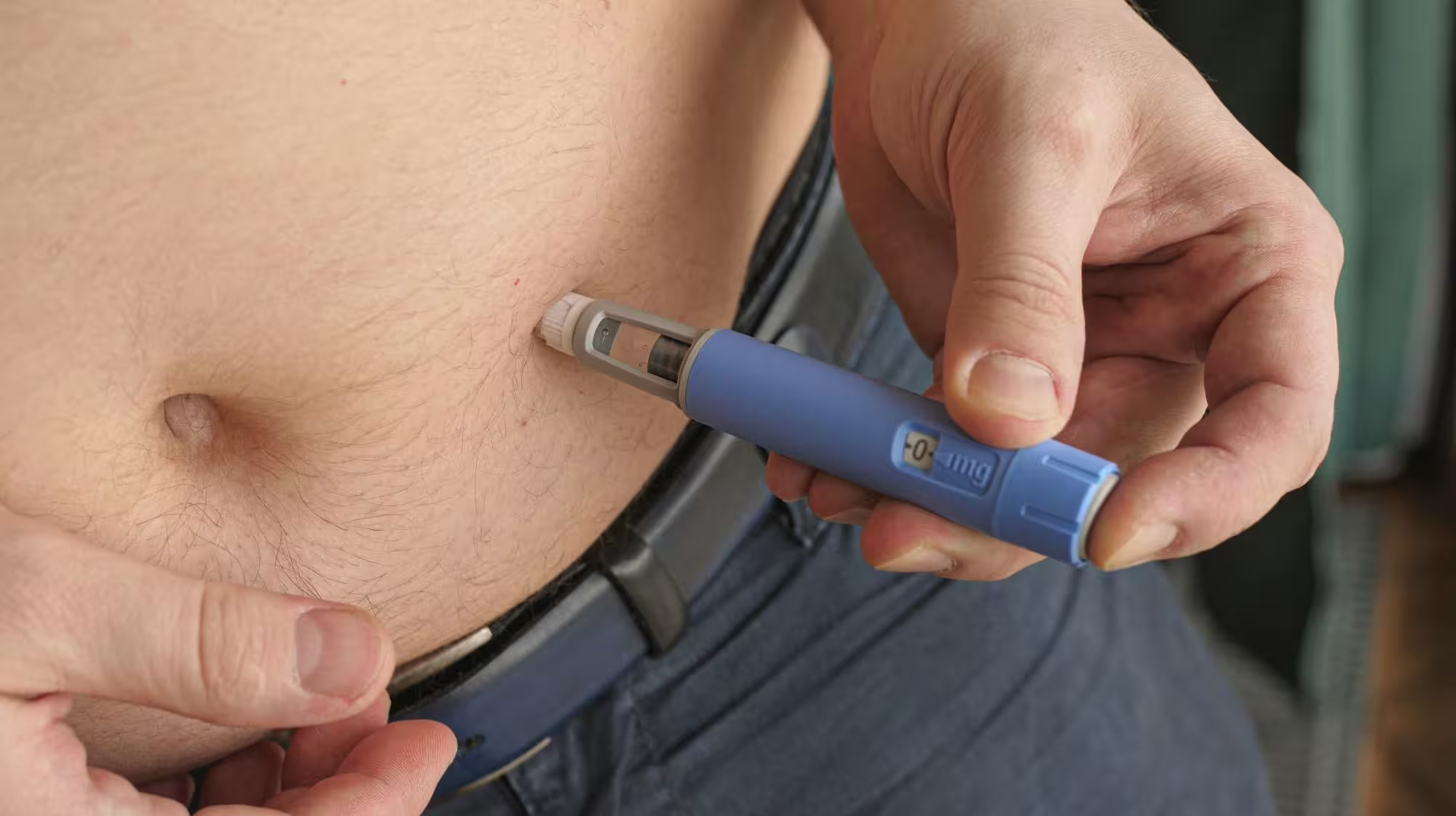
At two years, patients who underwent sleeve gastrectomy or Roux-en-Y gastric bypass lost an average of 58 pounds—about 24% total body weight—while patients prescribed GLP-1 injections for at least six months lost roughly 12 pounds (about 4.7%). Even among patients who remained on GLP-1 therapy continuously for a year, average weight loss remained far lower than surgical results (around 7% total weight loss).

How researchers reached these numbers
The team performed a comparative effectiveness analysis using electronic medical records from 2018–2024 covering 51,085 patients with body mass index (BMI) ≥ 35. To reduce bias, they used average treatment effect weighting to adjust for differences in age, baseline BMI, and comorbid conditions. That statistical step aims to make the surgical and medication groups more comparable, although unmeasured factors can still influence outcomes in observational data.
Lead author Avery Brown, MD, noted the gap between randomized clinical trials and everyday practice: clinical trials of GLP-1s often report 15–21% weight loss, but in the real world—where discontinuation, access, side effects, and adherence vary—results were much lower. The study also highlights a high discontinuation rate for GLP-1 therapy: prior analyses suggest as many as 70% of patients stop within one year, limiting long-term benefit.
Why bariatric surgery produces larger, more durable weight loss
Bariatric procedures such as sleeve gastrectomy and gastric bypass change both stomach anatomy and gut hormones. Reducing stomach volume limits food intake, while alterations in gastrointestinal signaling affect appetite, satiety, and glucose metabolism. Those combined mechanical and hormonal effects help explain why surgical weight loss tends to be larger and more sustained than medication alone.
“Metabolic and bariatric surgery is much more effective and durable,” said ASMBS President Ann M. Rogers, MD, FACS, FASMBS. She emphasized that patients who experience insufficient weight loss with GLP-1 medications—or who struggle with cost or side effects—should consider surgery, or a combined approach when appropriate.
Clinical implications: who should consider what?
The study doesn’t argue that GLP-1 drugs have no role. They can produce meaningful weight loss for many people, improve glycemic control, and may be appropriate for patients who are not candidates for surgery or who prefer non-surgical care. But for patients with severe obesity (BMI ≥ 35) who are seeking the largest and most durable weight loss, metabolic and bariatric surgery remains the more powerful option based on current real-world evidence.
Senior author Karan R. Chhabra, MD, MSc, explained that future work must define which patients will do well with long-term medication, which should be directed to surgery earlier, and how factors such as out-of-pocket cost and insurance coverage shape real-world outcomes.
Costs, adherence, and access: practical barriers
One striking context to the findings is access. Although GLP-1 usage has surged—about 12% of Americans report ever taking a GLP-1 and roughly 6% currently using one—persistence on these drugs is limited. Estimates show over half of patients discontinue within a year, rising to more than 70% by two years in some data sets. Cost, side effects, and the need for ongoing prescriptions are common reasons for stopping.
Conversely, uptake of metabolic and bariatric surgery remains low relative to eligibility. In 2023, roughly 270,000 bariatric procedures were performed in the U.S.—only about 1% of those who meet BMI-based eligibility. Barriers include limited surgical capacity, variable insurance coverage, and patient or clinician hesitancy.

What the findings mean for long-term disease risk
Obesity is tied to chronic inflammation and increased risk of type 2 diabetes, cardiovascular disease, stroke, and certain cancers. Larger and more durable weight loss is associated with greater improvement in those downstream conditions. That makes the gap between average surgical and medication outcomes clinically meaningful—not just for body weight, but for long-term health and healthcare costs.
Future research priorities and combined strategies
Key questions remain: Can GLP-1 outcomes be improved with better adherence programs, behavioral support, or lower-cost access? Are there patient characteristics that predict better response to drugs vs. surgery? And how will combination approaches—using medications before or after surgery—alter outcomes?
The study team plans to investigate modifiable factors that could optimize GLP-1 therapy and to clarify which patient groups benefit most from each pathway. They also highlighted the need to quantify the role of out-of-pocket cost and insurance policy in shaping real-world success.
Expert Insight
Dr. Maria L. Chen, an obesity medicine specialist and clinical researcher not involved in the study, commented: “This analysis reinforces what many clinicians suspect: interventions that produce structural and hormonal changes in the gut tend to yield larger, more durable metabolic effects. That said, GLP-1s are an important tool—especially for patients who can’t or won’t have surgery. The next step is personalizing treatment so each patient gets the right tool at the right time.”
Research context and acknowledgments

The findings were presented at the American Society for Metabolic and Bariatric Surgery (ASMBS) 2025 Annual Scientific Meeting and were supported in part by NYU CTSA grant KL2 TR001446 from the National Center for Advancing Translational Sciences at the NIH. The retrospective analysis used data from NYU Langone Health and NYC Health + Hospitals and included adults with BMI ≥ 35 who received either bariatric surgery (sleeve gastrectomy or Roux-en-Y gastric bypass) or a prescription for injectable semaglutide or tirzepatide between 2018 and 2024.
As GLP-1 therapies and surgical techniques both evolve, clinicians and patients will need to weigh efficacy, durability, side effects, costs, and personal preferences when choosing a treatment pathway. This real-world study adds critical evidence to that discussion by quantifying how outcomes differ outside of highly controlled clinical trials.













Leave a Comment
Comments (2)
is this even true across clinics? trials show bigger drops, but if 70% quit in a year, meds wont match surgery. who pays though?
Wow, 5x difference? That’s wild... GLP-1 hype vs surgery reality, costs & access are huge, ugh