
2 Minutes
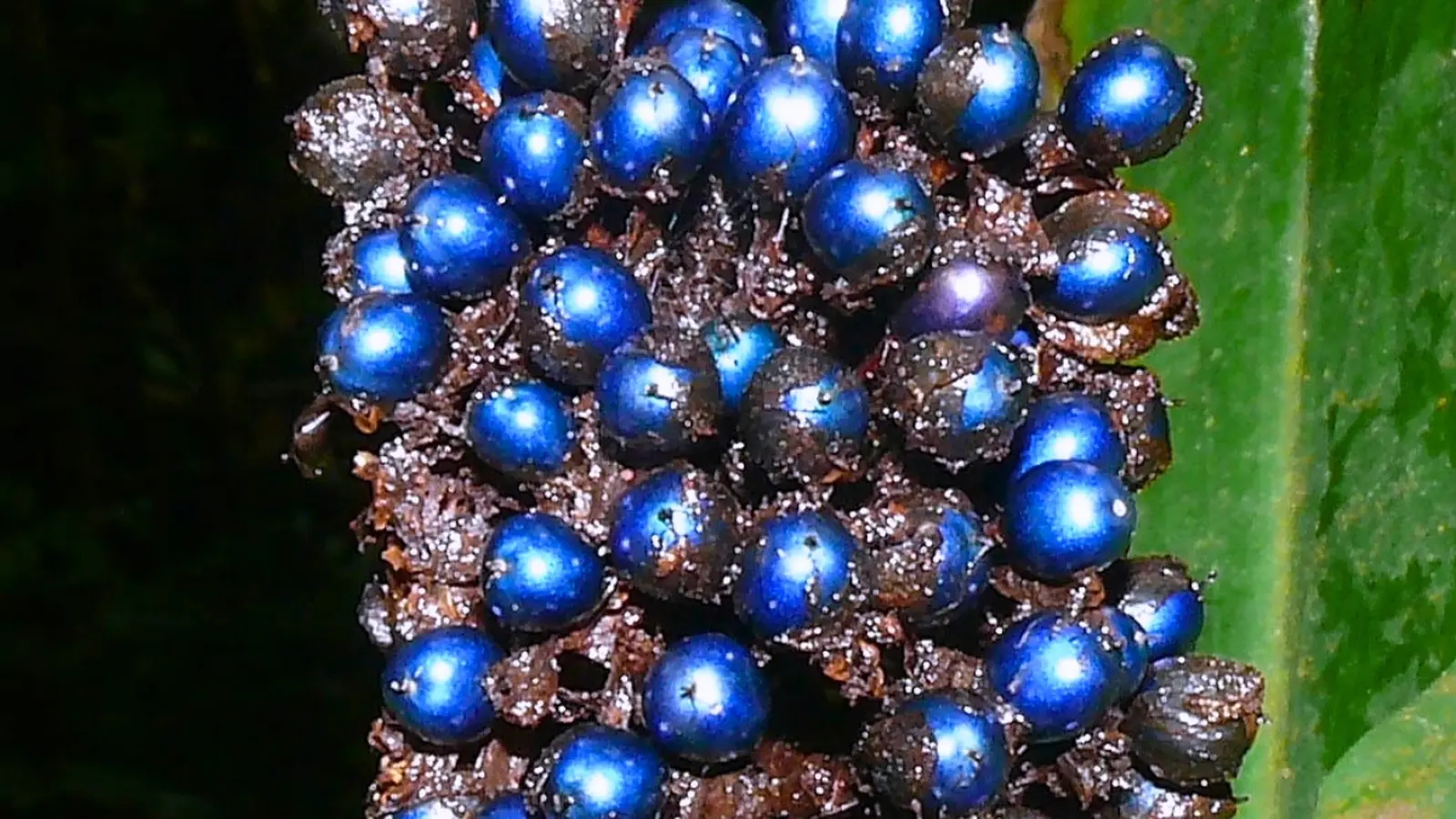
The tiny fruit of Pollia condensata dazzles with a metallic, iridescent sheen that lasts for decades. Rather than offering food, this berry uses brilliant color to attract birds and hitch a ride for its seeds — a startling example of visual signaling in plants.
A color that isn't paint: structural brilliance
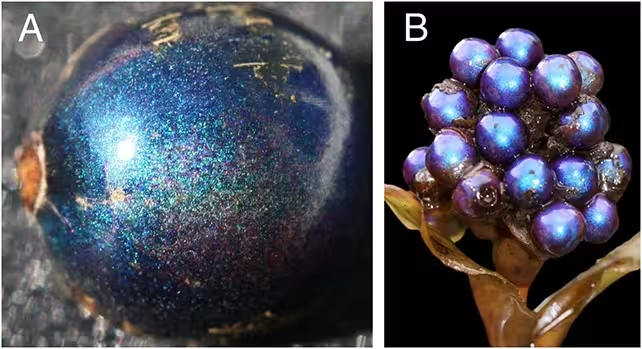
Unlike pigments, which absorb and reflect specific wavelengths, the Pollia berry gets its appearance from microscopic cell structures. Layers of cellulose in the fruit’s skin act like natural multilayer reflectors, producing bright, shifting colors through structural interference. Because this color comes from robust cell architecture rather than fragile chemicals, the effect remains vivid long after the fruit dies.
A strategy without sugar: why birds take the bait
There’s no calorie-rich reward inside the berry. Instead, the plant’s evolutionary strategy is purely visual: by producing an eye-catching, iridescent signal, Pollia condensata lures birds into picking up and dispersing its seeds. In ecosystems where visual cues guide foraging, standing out can be more effective than offering a snack.
From nature to the lab: implications for materials science
Researchers reporting in PNAS note how Pollia’s long-lasting structural color offers inspiration for sustainable color technologies. Designers and materials scientists are curious about creating fade-resistant, pigment-free colors for textiles, coatings, and anti-counterfeiting measures. Biomimicry of such cellulose architectures could reduce reliance on toxic dyes and improve longevity in engineered materials.
Voices from the field
Plant scientist Beverley Glover of the University of Cambridge highlights the efficiency of the strategy: she describes Pollia condensata as having "hit on a fantastic way of making an irresistible shiny, multi-colored signal to every bird in the vicinity, without wasting photosynthetic reserves on bird food." The finding emphasizes how evolution optimizes communication across species.
Why it matters
Understanding Pollia’s structural color deepens our grasp of plant–animal interactions and points to practical advances in color engineering. Imagine durable, pigment-free colors inspired by a humble berry — an elegant reminder that evolutionary insights often spark technological leaps.
.avif "Amazon Leak: Is a Smaller Color Kindle — the 'Kindle Petit Color' — Coming in November?")











Leave a Comment
Comments
No comments yet. Be the first.