
5 Minutes
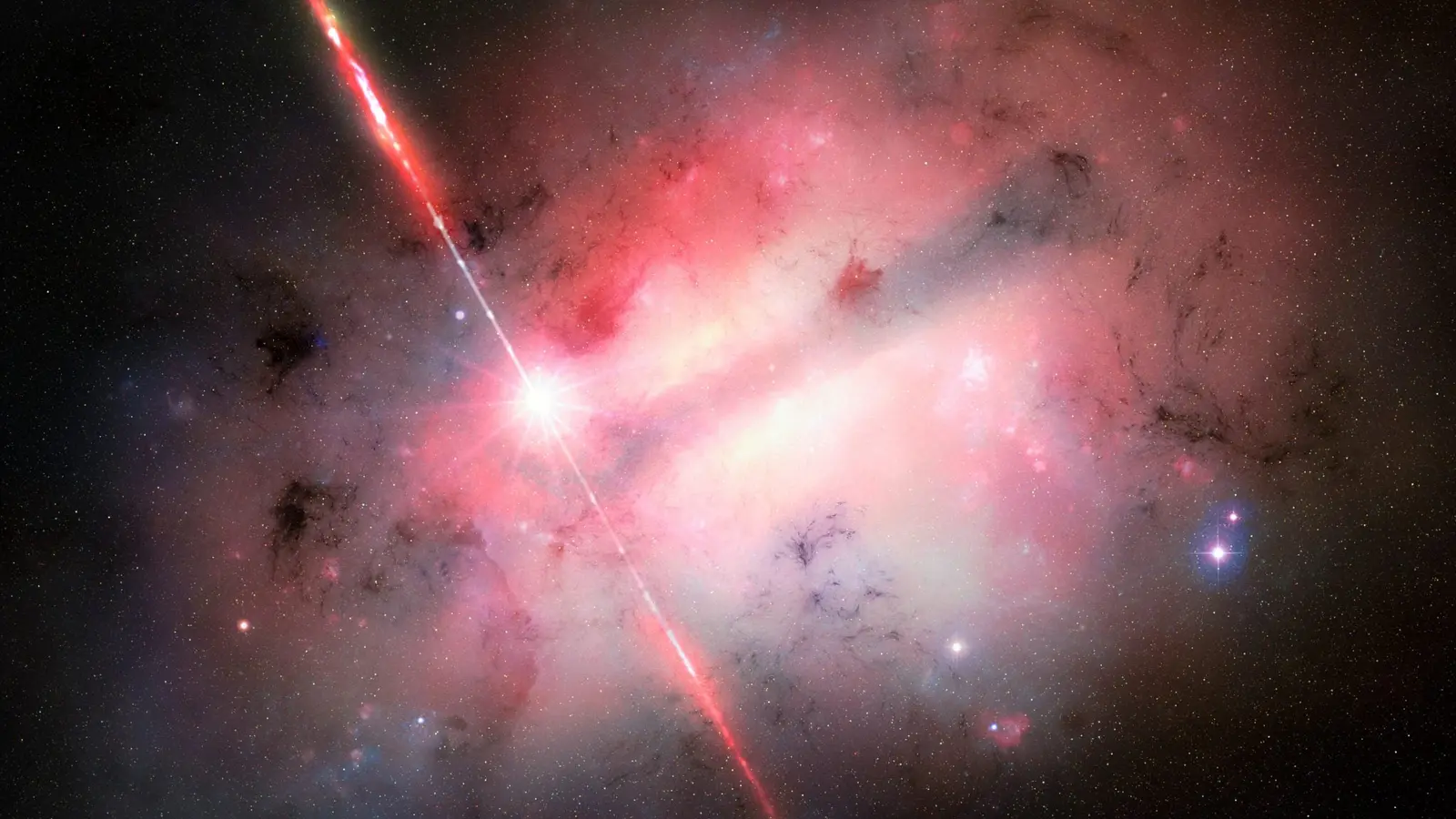
Astronomers have recorded the longest gamma-ray burst on record — a mysterious explosion that persisted for nearly seven hours and challenges existing theories about these extreme cosmic events. The burst, cataloged as GRB 250702B, was first detected by space-based sensors on 2 July 2025 and later tracked by a coordinated network of ground- and space-based observatories.
What made GRB 250702B so unusual?
Gamma-ray bursts (GRBs) are typically fleeting — intense flashes of gamma radiation that last seconds to minutes, produced by catastrophic events such as collapsing massive stars or compact-object mergers. GRB 250702B did not follow that script. Instead of a brief flash, detectors recorded repeated gamma-ray activity stretching over roughly seven hours, a duration far beyond the norm and a new observational record.
The prolonged signal gave researchers an unusual advantage: more time to point large ground-based telescopes at the fading afterglow and probe the burst's host environment. That follow-up revealed a distant, massive galaxy shrouded in dust, which blocked much of the visible light and made the burst detectable primarily in infrared and high-energy bands.
"This was the longest gamma-ray burst that humans have observed—long enough that it does not fit into any of our existing models for what causes gamma-ray bursts," said Jonathan Carney, lead author of the study and a PhD student in physics and astronomy at UNC-Chapel Hill.
How astronomers tracked the event
After the initial alert from orbiting gamma-ray monitors, an international observing campaign swung into action. Teams combined data from major U.S. ground-based facilities with high-resolution imaging from the European Southern Observatory's Very Large Telescope and NASA's Hubble Space Telescope, plus X-ray observations from space telescopes. These multiwavelength data sets allowed scientists to trace the burst to a dusty, star-rich galaxy located billions of light-years away.
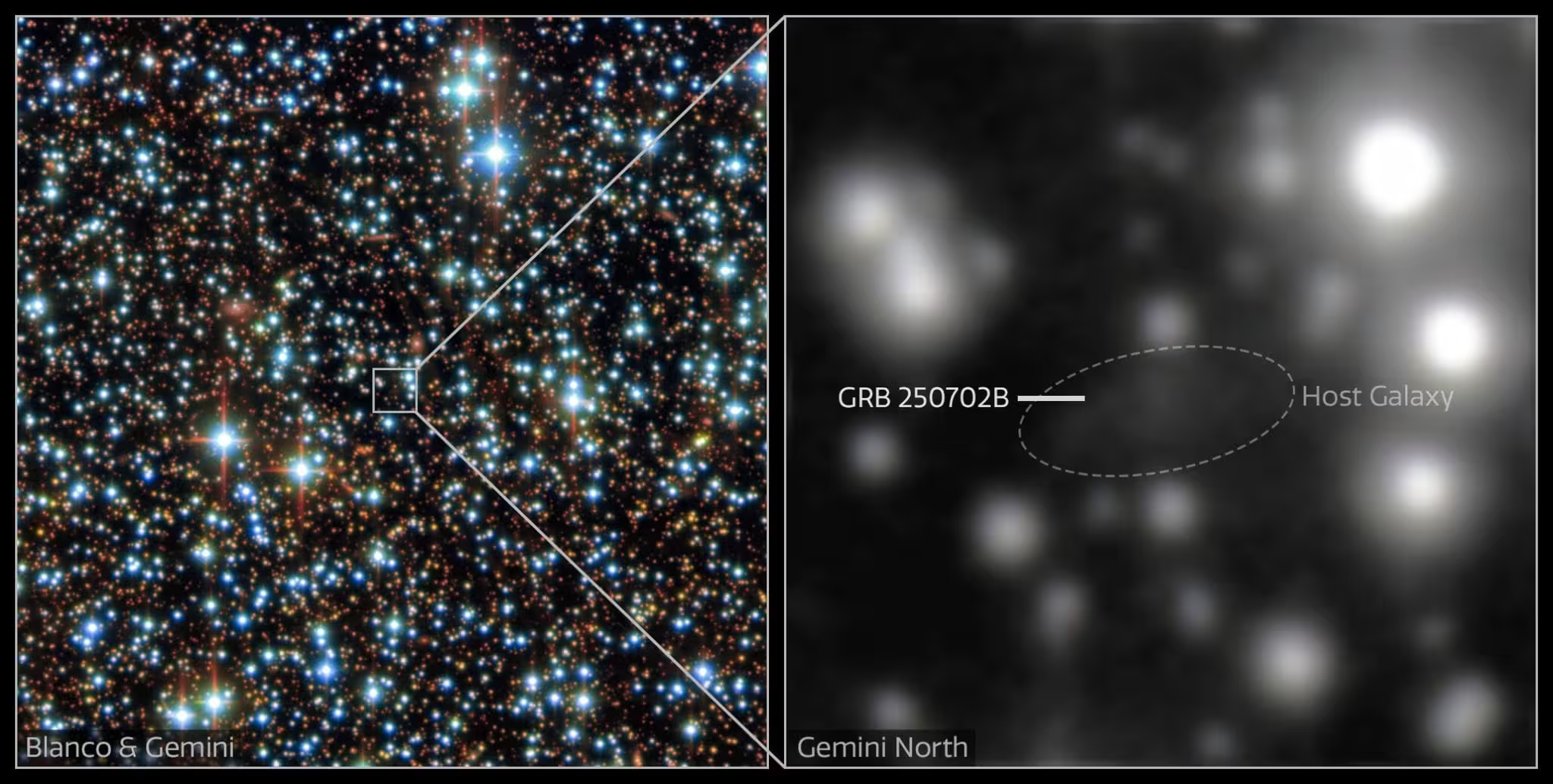
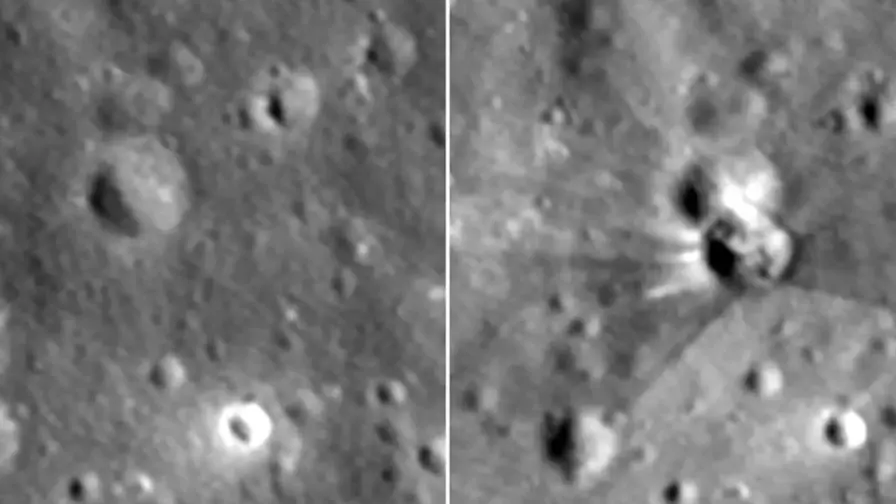
Left: The stellar field around the host galaxy of GRB 250702B — the longest gamma-ray burst that astronomers have ever observed. Right: Close-up view of the host galaxy taken with the Gemini North telescope. This image is the result of over two hours of observation, yet the host galaxy appears extremely faint due to the large amount of dust surrounding it.
Possible origins — and why none fit neatly
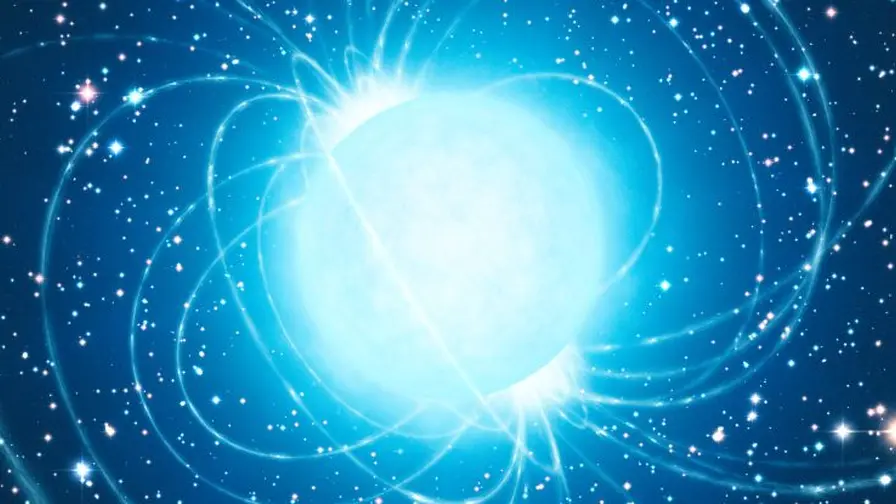
The team considered several physical scenarios that could produce such a long-lived gamma-ray signal. Candidates include the collapse of an exceptionally massive star with an extended engine, the merger of exotic stellar remnants such as helium stars or magnetized neutron stars, or a tidal disruption event in which a star is torn apart by a supermassive black hole. Each hypothesis has strengths and weaknesses when matched to the observed timing, spectrum, and the dusty host galaxy.
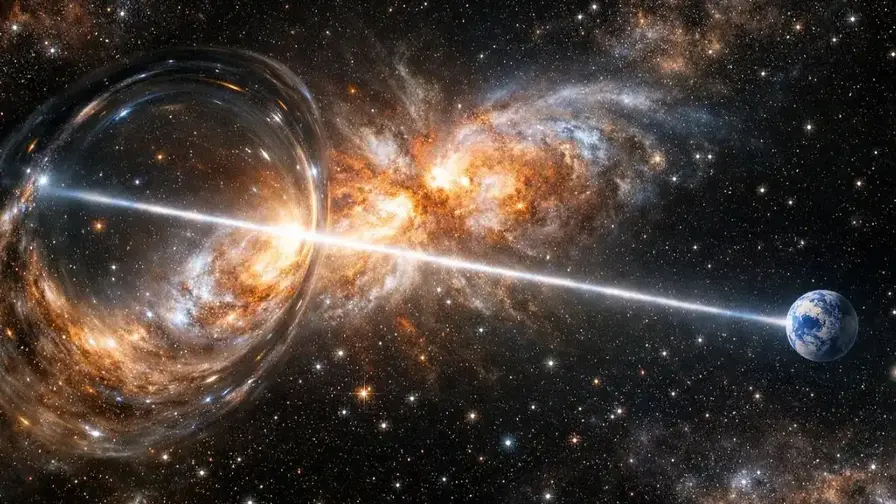
One striking finding is that the explosion launched a narrow relativistic jet aimed toward Earth, with material moving at least 99% of the speed of light. That jet apparently punched through dense layers of dust, producing high-energy emission while most visible light was obscured. "We’re not sure what caused this record-breaking event," said Igor Andreoni, co-author and assistant professor of physics and astronomy at UNC-Chapel Hill. "We know it occurred billions of light-years away in a very complex galaxy. Our data revealed that an energetic phenomenon launched a narrow jet of material in our direction that traveled at least 99% the speed of light, piercing through thick layers of cosmic dust."
Because the host galaxy is so dusty and faint in visible wavelengths, infrared and X-ray follow-up were critical. The combination of instruments allowed astronomers to study both immediate gamma-ray emission and the persistent afterglow, giving clues about the burst energy, jet structure, and the surrounding medium.
Why this matters for gamma-ray astronomy
GRB 250702B forces theorists to revisit models of central engines — the compact, ultra-dense cores that power GRBs. The unusually long duration suggests either an exceptionally long-lived engine or repeated reactivation of the jet, mechanisms that standard short- and long-GRB classifications do not fully capture. Understanding such outliers is essential: GRBs probe extreme physics where matter reaches relativistic speeds, densities can exceed atomic nuclei, and gravity strongly curves spacetime. They also disperse heavy elements forged in stellar furnaces across galaxies, contributing to cosmic chemical enrichment.
Practically, GRB 250702B will serve as a benchmark. Future bursts with similar durations will be compared against its multiwavelength fingerprint to determine whether they represent a new class of explosions or rare variants of known phenomena.
Expert Insight
"Events like GRB 250702B are both frustrating and thrilling," says Dr. Lena Morales, an astrophysicist not involved in the study. "They expose gaps in our theoretical framework while providing rich datasets to test new ideas. The multiwavelength follow-up — from gamma rays to infrared and X-rays — is exactly what we need to piece together the engine and environment."

Ongoing analysis will continue to refine the burst's parameters and rule in or out specific scenarios. As observatories increase sensitivity and coordination, astronomers expect to find more unusual transients, some of which may finally explain how GRB 250702B unfolded.








Leave a Comment
Comments (2)
Wait, seven hours? Could sensors have glitched or was it repeated flaring from the host galaxy? If that's real then...
wow, seven hours of gamma rays... honestly didn't expect that. Our models are gonna get a rude awakening, if it's real. mind blown