
4 Minutes
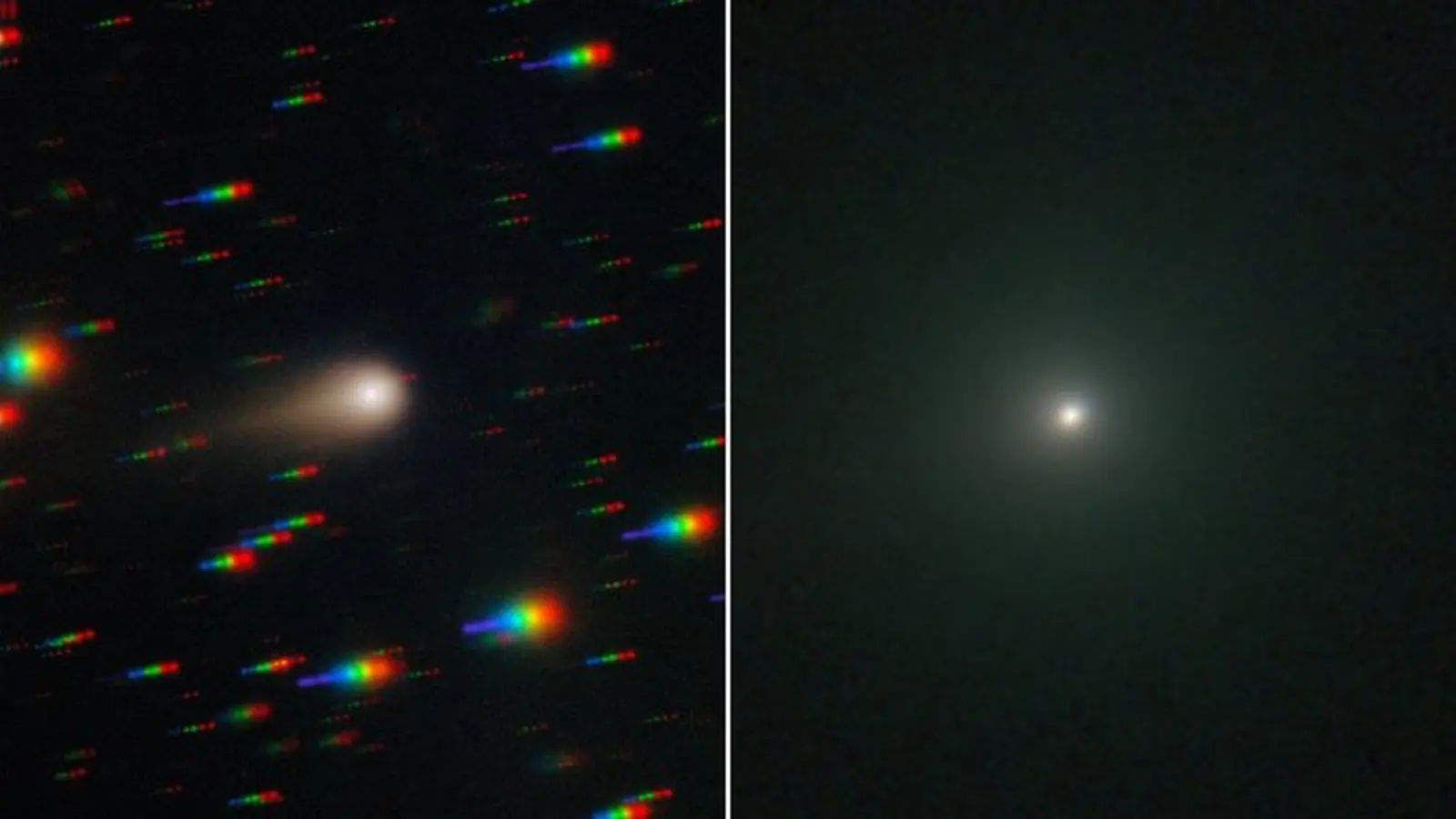
When the interstellar comet 3I/ATLAS swept through the inner Solar System it offered a rare chance to listen for artificial radio signals. Scientists used one of Earth’s most sensitive radio dishes to scan the object for technosignatures — and heard nothing coming from the comet itself.
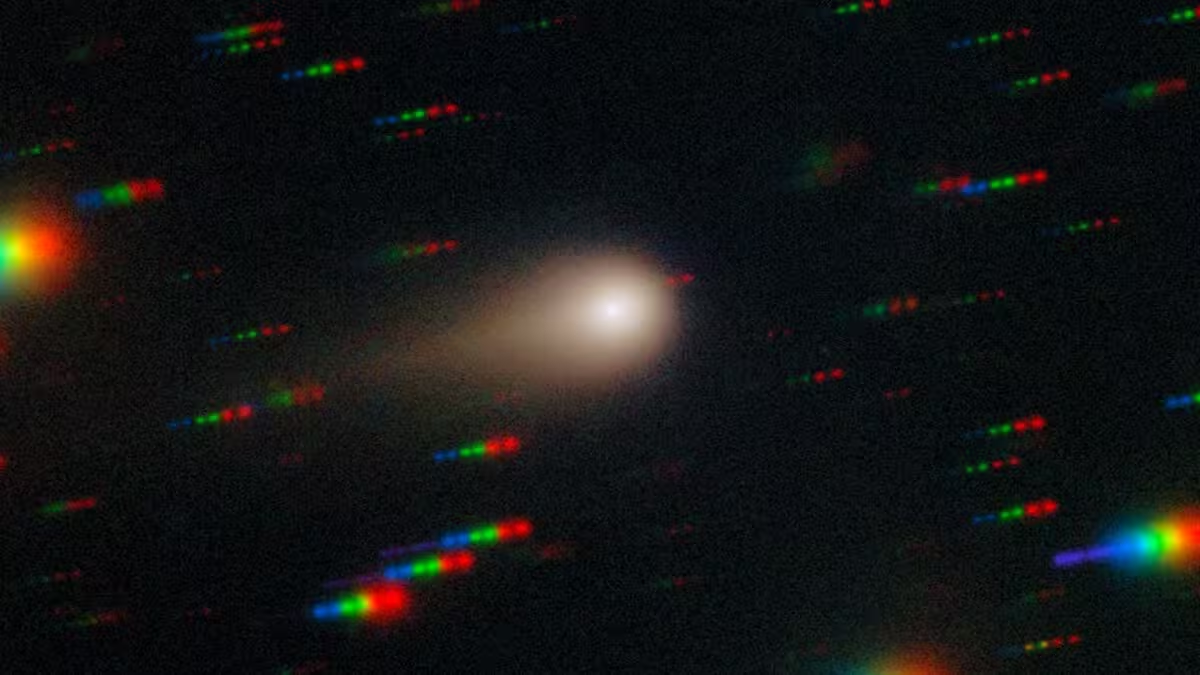
Comet 3I/ATLAS captured by the Gemini South telescope in September 2025
Listening to an interstellar visitor
Discovered on 1 July 2025, 3I/ATLAS was soon identified as an interstellar object: its trajectory showed it had arrived from beyond our Sun. After passing perihelion in late October and heading back out toward interstellar space, the comet made its closest approach to Earth — perigee — in mid-December. At roughly 270 million kilometers (168 million miles) away, it was far from the inner planets but still close enough for detailed radio observations.
That proximity presented a golden opportunity for Breakthrough Listen, the large-scale program that searches for technosignatures — signs of technology produced by an extraterrestrial intelligence. On 18 December 2025 a team led by UC Berkeley astronomer Ben Jacobson-Bell used the 100-meter Green Bank Telescope in West Virginia to listen to the comet for five hours. Observing that close to perigee (the comet was expected near perigee on 19 December) maximized the sensitivity to any narrowband or persistent transmissions the comet might emit.
How the search worked — and why it’s robust
Radio searches for technosignatures must separate Earth-based interference from extraterrestrial sources. To do that, the Green Bank observations alternated between pointing at 3I/ATLAS and pointing at nearby sky patches using an ABACAD pattern: a fractal-like sequence of target and off-target pointings, switching every five minutes. That method lets researchers subtract signals present across multiple pointings, isolating emission confined to the comet’s direction.
After filtering out signals that appeared in off-target pointings, the team identified nine candidate detections. Each candidate was followed up with deeper checks and, in every case, the signals traced back to terrestrial radio-frequency interference (RFI): human-made transmissions from communications networks, satellites, or ground equipment. In short, the comet itself produced no detectable artificial radio emissions during the observing window.
What—and who—this result tells us
Null results are still useful. The Green Bank non-detection does not definitively rule out all forms of alien technology on 3I/ATLAS — a silent or intermittent transmitter would be missed, and any device could be beamed at frequencies or times not observed. Still, the data strongly constrain the simplest hypothesis: 3I/ATLAS is not broadcasting a continuous, narrowband radio beacon aimed at the Solar System.
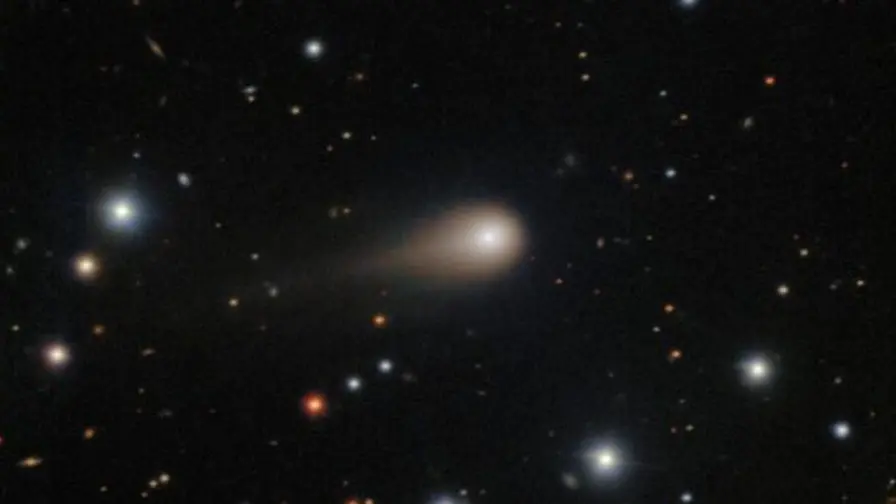
All other observations of the object also point to a natural comet. It behaved like a comet—developing a coma and tail under solar heating—and its physical and dynamical properties match expectations for an icy interstellar body. "This object is a comet," said NASA associate administrator Amit Kshatriya in November. "It looks and behaves like a comet, and all evidence points to it being a comet. But this one came from outside the Solar System, which makes it fascinating, exciting, and scientifically very important."
The broader value of such searches goes beyond the immediate target. Observing unusual objects with state-of-the-art instruments helps refine detection techniques, improves methods to reject terrestrial interference, and trains teams to respond rapidly to transient opportunities. As physicist Paul Ginsparg has noted, speculative ideas often seed new instrumentation or analysis that can confirm or refute surprising possibilities — and sometimes reveal unexpected phenomena.
Related science and future prospects
Searching for technosignatures uses tools developed for radio astronomy, planetary radar, and SETI. The Green Bank Telescope’s sensitivity to faint, narrowband signals makes it ideal for constraining potential transmitters at large ranges. Future searches will benefit from broader frequency coverage, longer monitoring campaigns, and coordinated observations with other facilities such as the Very Large Array, FAST, and optical telescopes that can provide context on activity levels and composition.
Lessons from the 3I/ATLAS campaign will inform protocols for the next interstellar interloper—whenever it arrives. Rapid response, careful off-target control observations, and transparent data sharing (the campaign’s results are available on the arXiv preprint server) will remain critical to distinguishing intriguing anomalies from everyday RFI.
Expert Insight
"A targeted radio scan like this is low-cost, high-return science," says Dr. Elena Moreno, a radio astronomer who works on transient detection. "Even a nondetection tightens constraints on what kinds of technology could be present, and it helps us improve RFI mitigation. And if next time we do hear something unusual, the lessons learned here will help us verify it quickly."

Ultimately, the Green Bank campaign demonstrates scientific rigor: test the most interesting hypotheses with available tools, report the outcome, and refine future searches. The silence from 3I/ATLAS narrows one avenue of speculation, but it leaves many others open — and preserves the possibility that a future interstellar visitor might surprise us.








Leave a Comment
Comments (2)
Is this even true? RFI is messy, 5 hours feels short and they could've missed intermittent beacons... or maybe it's just a normal comet. hmm
Whoa, kinda thrilling we actually listened! Sad to get silence, but those constraints make sense. still hoping tho...