
3 Minutes
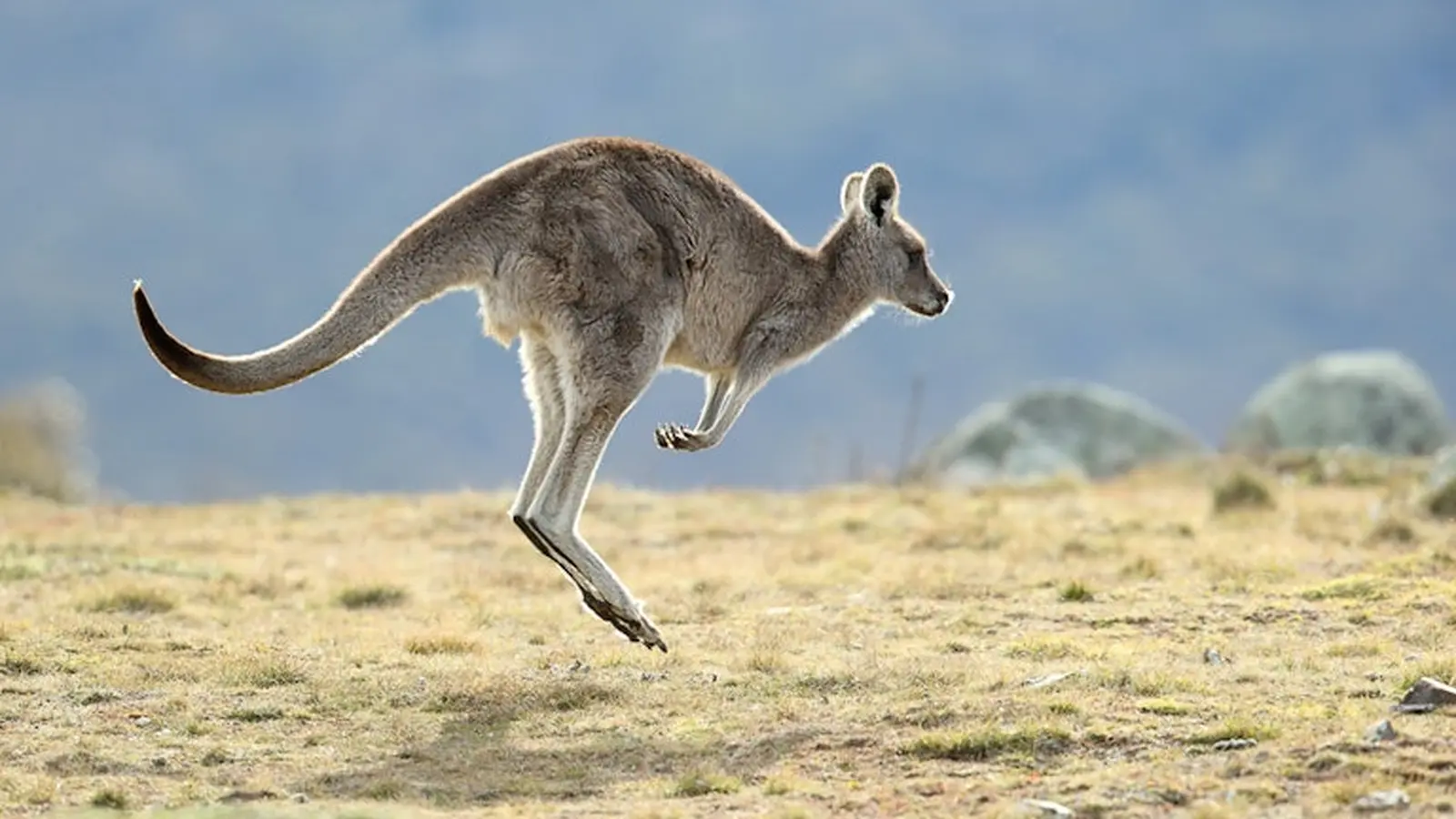
The familiar sight of kangaroos bounding across Australia feels timeless — but could the continent's massive, Pleistocene-era kangaroos hop like their modern relatives? New research combining fossil anatomy and biomechanics suggests these giants may not have been limited to a lumbering stroll.
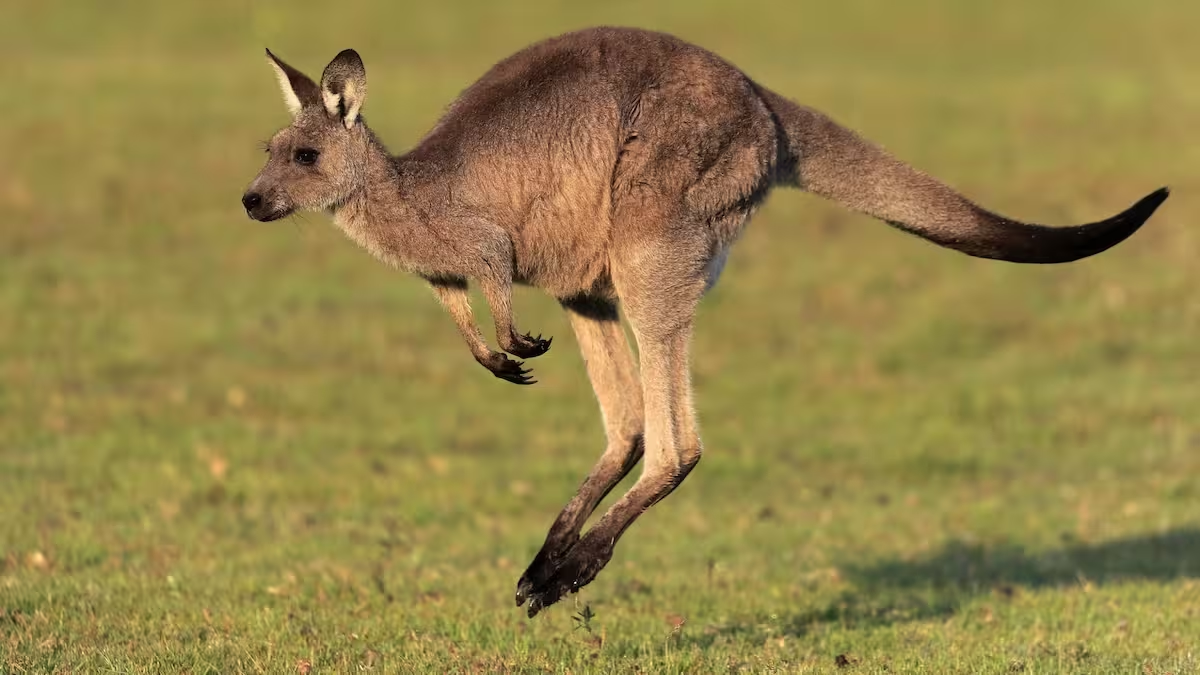
Modern kangaroos hop – but did their giant ancestors?
Rethinking a prehistoric stereotype
For decades palaeontologists assumed that Australia’s megafauna, including the largest kangaroo species Procoptodon goliah, were too heavy to hop. Standing roughly 2 meters tall and weighing up to 250 kilograms, Procoptodon dwarfed today's largest kangaroos (roughly 90 kg). The intuitive view: extreme body mass would overload tendons and leg bones during repeated hopping, so these animals must have walked with a more upright, almost human-like gait.
Bones, tendons and a surprising capability
Researchers from the Universities of Manchester and Bristol and the University of Melbourne revisited that assumption with a comparative anatomical study. They measured limb elements from 63 species of kangaroos and wallabies—including 94 modern specimens and 40 fossil bones—to estimate whether the tendons and foot bones of giant species could tolerate the forces produced by hopping.
What the team measured
- Heel bone attachment areas, which indicate the likely cross-section of Achilles-type tendons.
- Length and diameter of the fourth metatarsal, a foot bone prone to bending stresses during hopping.
- Comparisons with living species to scale tendon size and bone strength according to body mass.
The results were unexpected: the fossils showed large tendon attachment areas on the heel bones and metatarsals robust enough to resist the bending moments of a hop. In short, the skeletal hardware to support at least short bursts of hopping appears to have been present in Procoptodon and other giant kangaroos.
How they probably moved in real life
That capability doesn't mean these megafauna spent their days bounding like today's agile macropods. Instead, the study suggests a mixed locomotor repertoire: mostly slow, powerful strides when foraging or moving across level ground, with the ability to produce rapid hops for negotiation of rough terrain or escape from predators. As the authors put it, "While hopping may not have been their primary mode of locomotion, our findings suggest that it may have formed part of a broader locomotor repertoire, for example, for short bursts of speed."
.avif)
A CGI model of Procoptodon goliah.
Why this matters
Reevaluating locomotion in extinct species affects how we reconstruct behavior, ecology and predator-prey dynamics in ancient environments. If giant kangaroos could hop in emergencies, they might have been better adapted to fragmented habitats or sudden threats than previously believed. The study also highlights how combining modern biomechanics with fossil anatomy can overturn long-held assumptions about extinct animals.
Future research will refine these biomechanical models, incorporate soft-tissue reconstructions and simulate how hopping stresses scaled with speed and terrain. For now, the image of a towering, bounding kangaroo across a Pleistocene plain looks a little more plausible—even if it was a rare sight.










Leave a Comment
Comments
No comments yet. Be the first.