

2 Minutes
New research suggests expanding oxygen-poor zones in the northeast Pacific may squeeze out tiny but vital deep-sea species known as 'zombie worms'. Scientists warn that ocean warming and the resulting OMZ expansion could damage whale-fall and wood-fall ecosystems that rely on these bone-digesting organisms.
How oxygen minimum zones reshape the deep sea
Oxygen minimum zones (OMZs) are naturally low-oxygen layers in the ocean, but climate-driven warming intensifies and expands them. Warmer water holds less oxygen and alters circulation, shrinking habitable pockets for oxygen-sensitive species. That process is especially acute along continental margins, where whale carcasses and sunken wood create isolated hotspots of biodiversity.
Field experiment and what scientists observed
Researchers led by De Leo and University of Hawai'i oceanographer Craig Smith deployed controlled whale-fall experiments to observe community responses as oxygen levels fell. The initial study, published in Frontiers in Marine Science in 2024, found worrying signals: species composition shifted, and organisms that require higher oxygen, including Osedax 'zombie worms', appeared at risk.
Who are the 'zombie worms'?
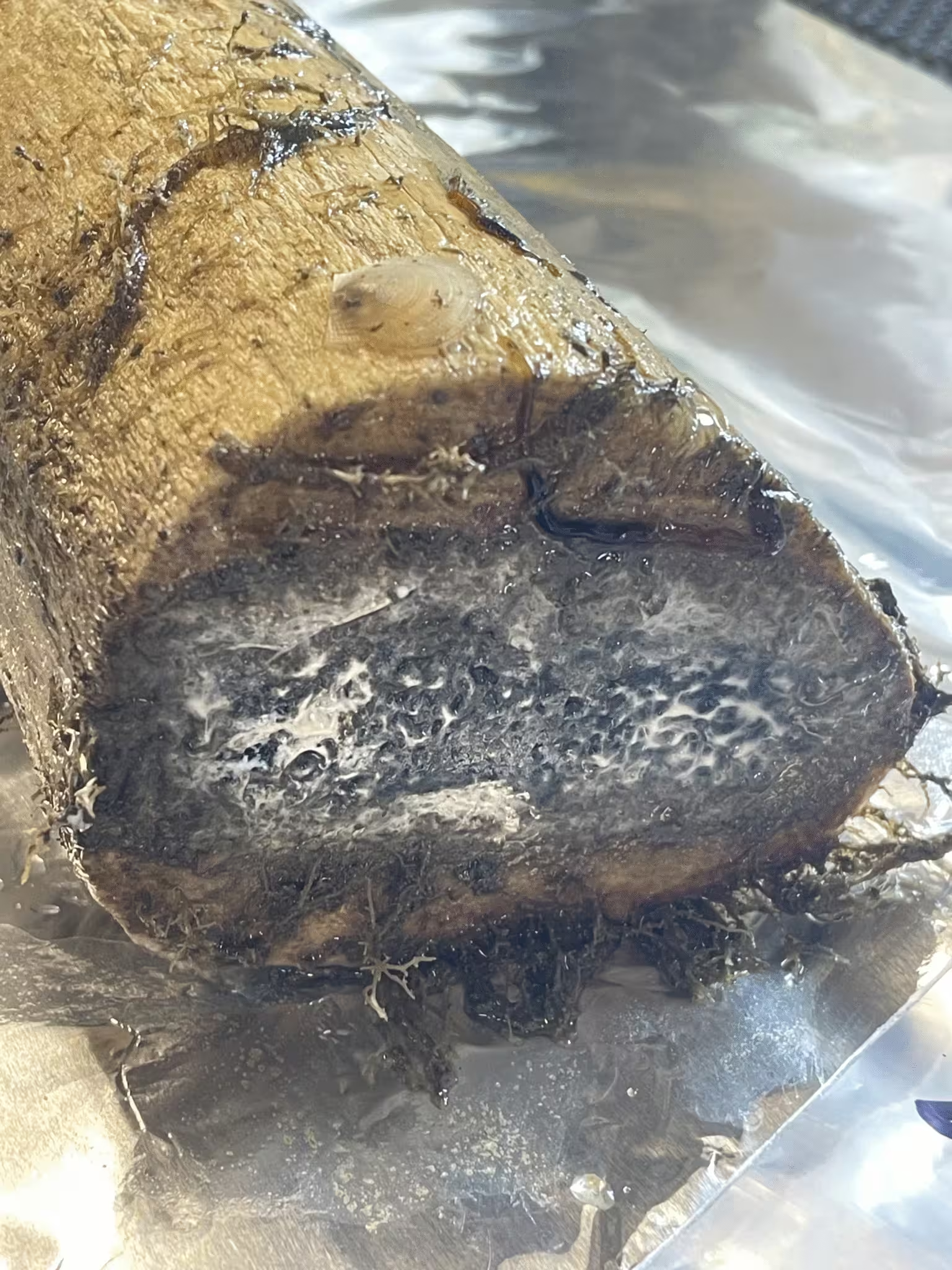
Osedax are specialized annelids that bore into bones and release nutrients back into the deep-sea food web. They play a unique role in recycling carbon after whale and large-animal falls, sustaining diverse microbial and invertebrate communities around bone and wood substrates.
Why this matters beyond the bones
'It looks like the OMZ expansion, which is a consequence of ocean warming, will be bad news for these amazing whale-fall and wood-fall ecosystems along the northeast Pacific Margin,' says Craig Smith, who co-led the experiment with De Leo. De Leo also notes shifting patterns of species across regional spatial scales, highlighting cascading impacts for deep-sea biodiversity and carbon cycling.
Next steps: monitoring the Clayoquot Slope
Scientists are now monitoring another whale fall at the Clayoquot Slope off Vancouver Island to track whether Osedax populations decline as OMZs advance. Continued observations will help predict how widespread local extinctions might become and inform conservation actions aimed at preserving deep-sea ecosystem functions in a warming ocean.













Leave a Comment
Comments
No comments yet. Be the first.