
5 Minutes
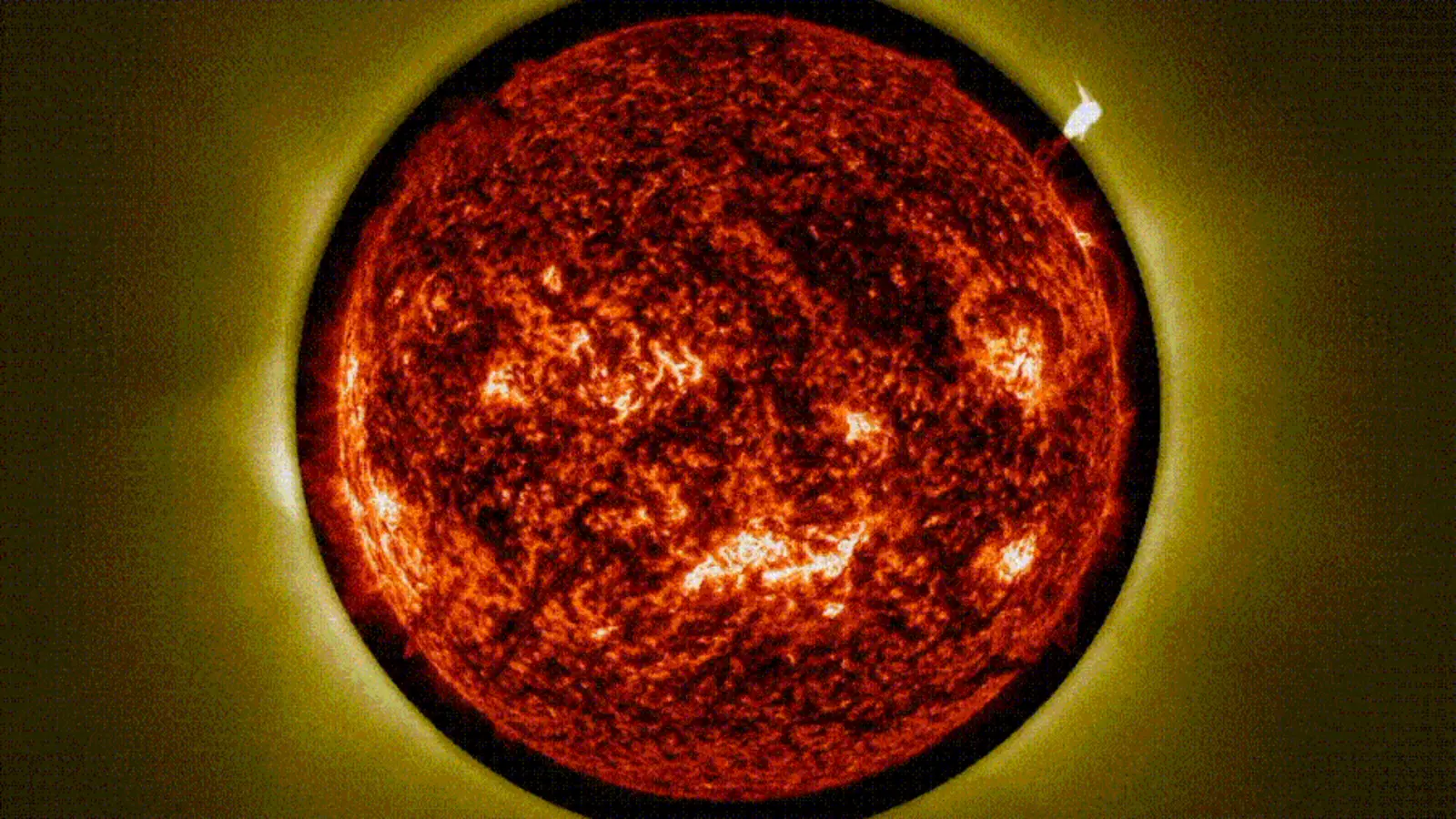
A new time-lapse from ESA’s Proba-3 mission peels back the Sun’s glare to expose the inner corona in faint yellow and captures a sequence of unusual prominence eruptions. By using two spacecraft flying in precise formation, Proba-3 creates artificial eclipses that let instruments study regions normally hidden behind the Sun’s bright disc.
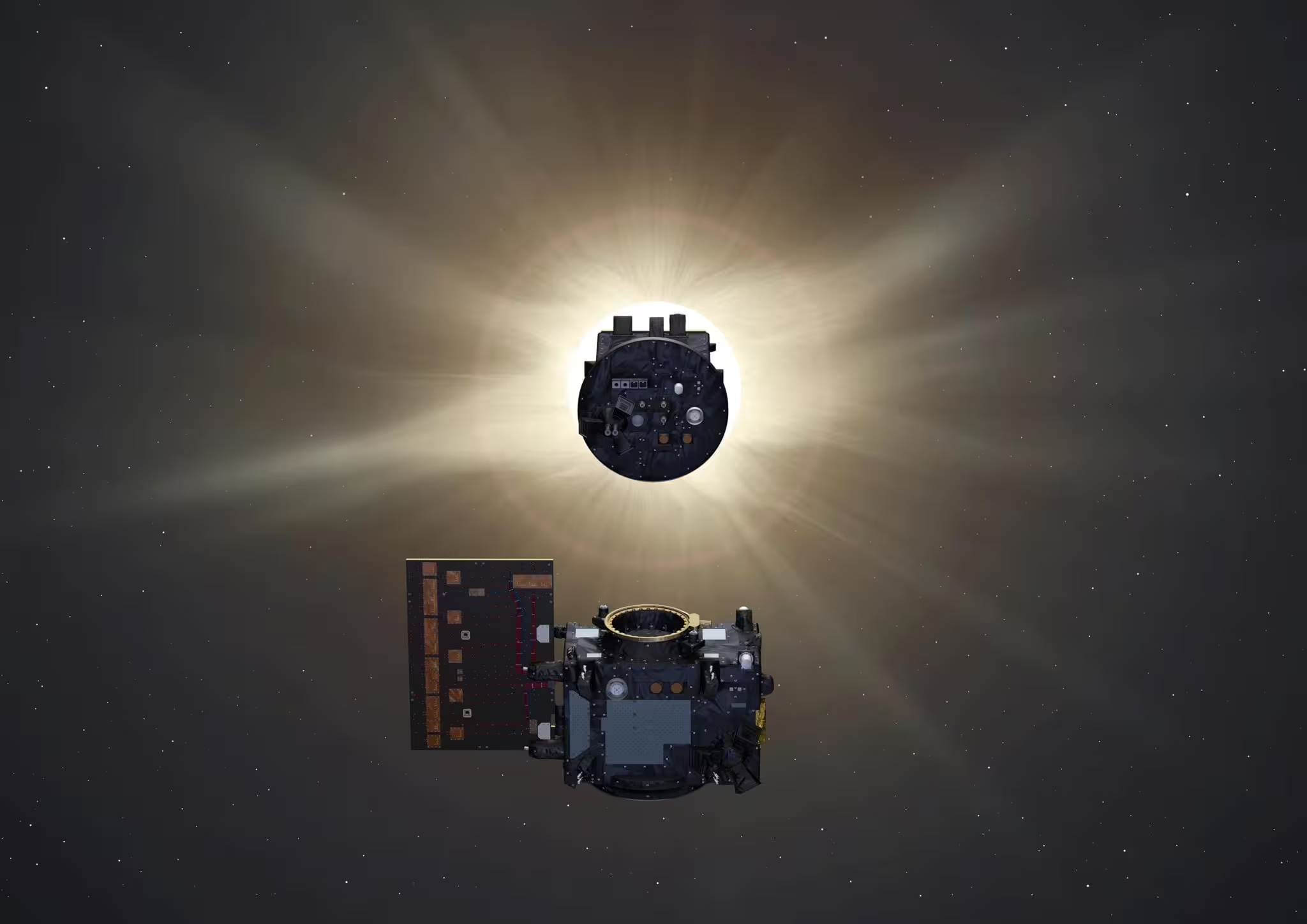
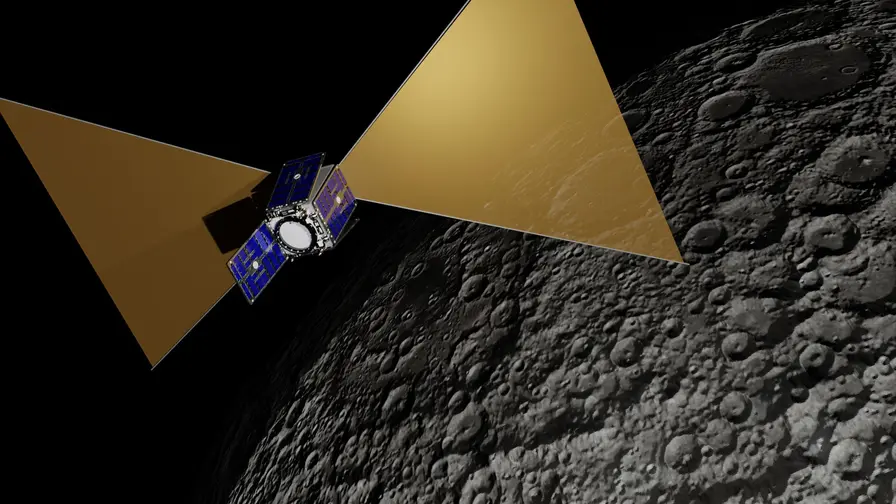
The two spacecraft of Proba-3 fly in precise formation about 150 m apart to form an external coronagraph in space, one spacecraft eclipsing the Sun to allow the second to study the otherwise invisible solar corona.
How Proba-3 forges an eclipse in orbit
Proba-3 is an experimental ESA mission made of two small satellites flying roughly 150 metres apart with extreme positional control. When aligned, the leading satellite blocks the Sun’s photosphere, while the trailing partner carries ASPIICS, an external coronagraph that images the faint corona without interference from direct sunlight. Imagine a total solar eclipse recreated on demand — but from space, repeatable and controlled to expose the Sun’s tenuous outer atmosphere.
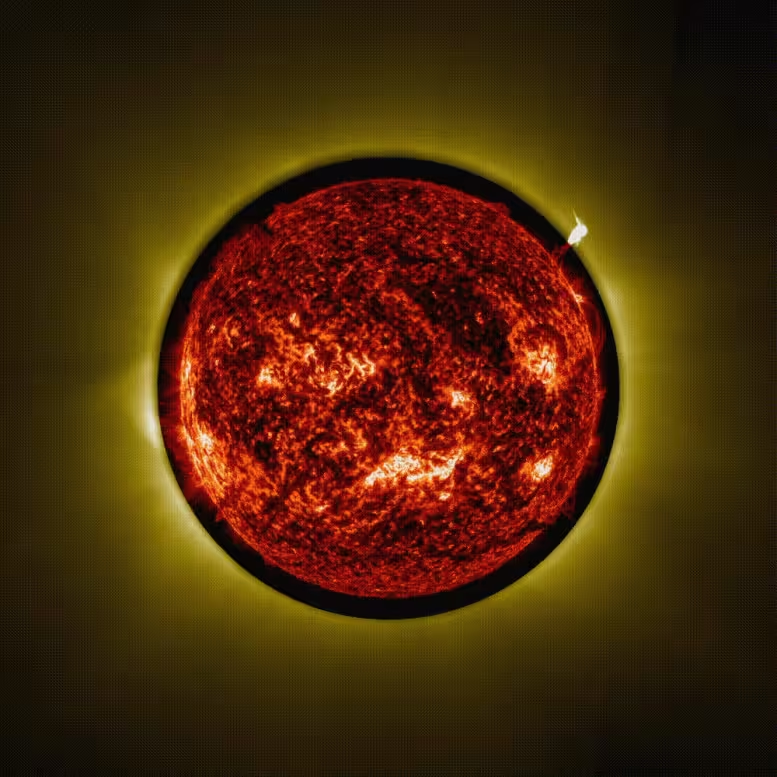
This animation combines data from Proba-3’s ASPIICS coronagraph (inner solar corona in yellow) and from the Atmospheric Imaging Assembly (AIA) aboard NASA’s Solar Dynamics Observatory (solar disc in dark orange).
What the time-lapse shows: rare, fast prominence eruptions
During a concentrated observing window on 21 September 2025, ASPIICS recorded one frame every five minutes and documented three distinct prominence eruptions within five hours. These events are structures of cooler, denser plasma suspended above the Sun’s surface that can stretch, fragment and erupt — hurling solar material into space. Getting multiple eruptions in such a short span is uncommon; the Proba-3 sequence captures their dynamics with clarity.
“The corona is extremely hot, about two hundred times hotter than the Sun’s surface,” says Andrei Zhukov of the Royal Observatory of Belgium, Principal Investigator for ASPIICS. “Sometimes, structures made of relatively cold plasma (charged gas) are observed near the Sun — although these are still around 10,000 degrees Celsius, they are much colder than the surrounding million-degree hot corona — creating what we call ‘a prominence’.”

Why the corona appears yellow and what we learn from spectral filters
ASPIICS uses several filters and spectral lines to isolate emissions from specific elements in the solar atmosphere. The prominences captured in the time-lapse were recorded in a helium spectral line, which renders the erupting plasma in a yellow tone similar to what a human eye sees during a total eclipse when viewed through that filter. NASA’s Solar Dynamics Observatory (SDO) supplied complementary images of the solar disc in a different helium line to provide context for the coronagraph views.
The faint yellow glow in the background is not thermal emission from hot plasma but sunlight scattered by free electrons in the corona — the so-called K-corona. This scattered light subtly traces magnetic structures and density variations in the Sun’s outer atmosphere even when there is no dramatic eruption occurring.
Filling a gap in solar observations
Ground-based observations during eclipses offer short glimpses of the inner corona, and conventional coronagraphs on single spacecraft are limited by diffraction and stray light. Proba-3’s paired-satellite technique lets scientists continuously image the innermost corona at high fidelity, closing a long-standing observational gap. Repeated artificial eclipses provide steady access to the region where solar wind acceleration, magnetic restructuring, and the early stages of coronal mass ejections (CMEs) take shape.
That continuous access is crucial for understanding how localized, cooler features such as prominences interact with the surrounding million-degree corona and how those interactions can seed larger space weather events that eventually reach Earth.
Mission and technology highlights
- Formation flying: Two spacecraft maintain relative positions to within metres using onboard sensors and thrusters, a demanding engineering achievement that enables an external coronagraph configuration.
- ASPIICS instrument: Designed to block the solar disc and image the weak coronal light with multiple spectral filters, revealing both electron-scattered light and emission lines from elements like helium.
- Cadence and coverage: Image cadence (one frame every five minutes for the featured sequence) and repeatable eclipses permit time-lapse movies of dynamic coronal processes.
What this means for solar physics and space weather
Proba-3’s ability to resolve the innermost corona helps scientists track how magnetic energy stored near the Sun’s surface is converted into kinetic energy during eruptions. Observations of prominence eruptions inform models of CME initiation and early propagation — a critical ingredient for forecasting space weather that can affect satellites, communications and power grids on Earth.
Expert Insight
“By imaging the inner corona continuously, Proba-3 offers a new laboratory for studying how prominences destabilize and evolve into larger eruptions,” says Dr. Maya R. El-Amin, an astrophysicist working on heliophysics instrumentation. “Combining these high-contrast coronagraph views with other observatories gives us a multi-layered picture of eruption mechanics and improves our predictive capabilities.”
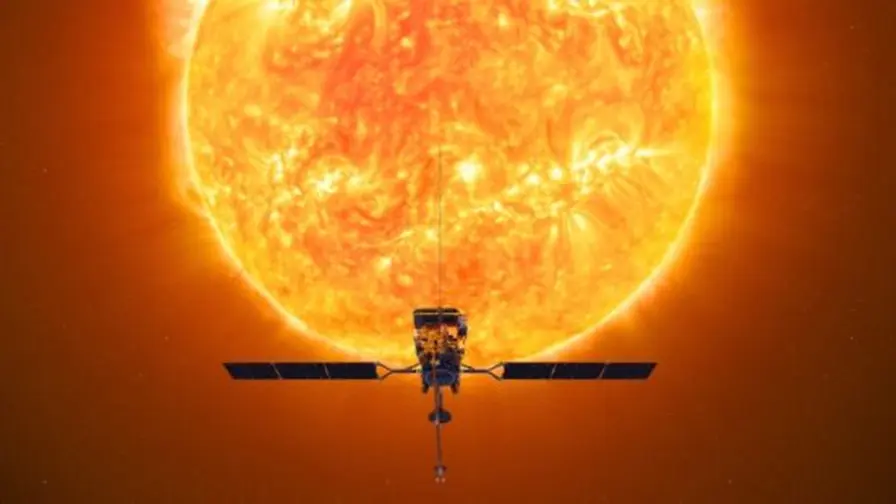
As Proba-3 continues operations, scientists will mine its datasets for clues about coronal heating, magnetic topology, and eruptive triggers. Each controlled eclipse brings the Sun’s hidden structures into plain view, advancing both fundamental heliophysics and practical space-weather forecasting.







Leave a Comment
Comments (2)
Wait, is this even real? They say 150 m formation flying blocks stray light, but how do they deal with tiny misalignments, jitter, diffraction? seems tricky, doubt the stability long term.
wow this is wild, space eclipses on demand! Watching prominences erupt like that gives me chills, and the yellow corona look is eerie but gorgeous. need more data!!