

3 Minutes
Every winter, the common shrew (Sorex araneus) performs a biological feat that reads like science fiction: it shrinks its brain by roughly 30 percent to conserve energy, then restores the original volume in spring. Recent genomic work is tracing the evolutionary and molecular pathways behind this reversible brain shrinkage—offering clues that could inform research into human neurodegeneration.
What is Dehnel’s phenomenon and why does it matter?
The seasonal shrinking and regrowth of brain tissue is known as Dehnel’s phenomenon, named after Polish zoologist August Dehnel who first described the pattern. It’s rare among mammals but not unique to shrews: European moles, common weasels and stoats show similar seasonal reductions in brain size. These species share traits—very high metabolic rates and a lack of true hibernation—that may force them to adopt extreme strategies to survive periods of scarce food.
In practical terms, reducing brain and body size lowers daily energy requirements. But reversible shrinkage poses a biological puzzle: how can animals lose up to a third of brain volume without permanent neuronal loss or cognitive collapse? The answer appears to lie in reversible changes to water balance, blood-brain barrier dynamics, and tightly regulated gene activity that preserves cells while shrinking tissues.
Genetic clues from a full shrew genome
To pinpoint the genes behind this seasonal plasticity, a team led by ecologist William Thomas (Stony Brook University) assembled a complete genome for the common shrew and compared it with genomes from other species that display Dehnel’s phenomenon. The project builds on earlier work profiling seasonal shifts in gene expression across different brain regions.
Which genes stand out?
- Genes tied to neurogenesis (the creation of new neural tissue) showed upregulated expression across multiple species with Dehnel-like changes—suggesting a conserved genetic program for reversible brain remodeling.
- The VEGFA gene, which influences blood-brain barrier permeability and vascular responses, was particularly active in shrews. Changes in barrier permeability could help the brain sense and redistribute nutrients as volume changes.
- Genes involved in DNA repair and longevity were enriched, pointing to protective mechanisms that prevent long-term damage during repeated seasonal shrinkage.
Water-regulation genes were also implicated, supporting the 2025 finding that much of the brain-volume reduction stems from reversible water loss rather than permanent neuron death.
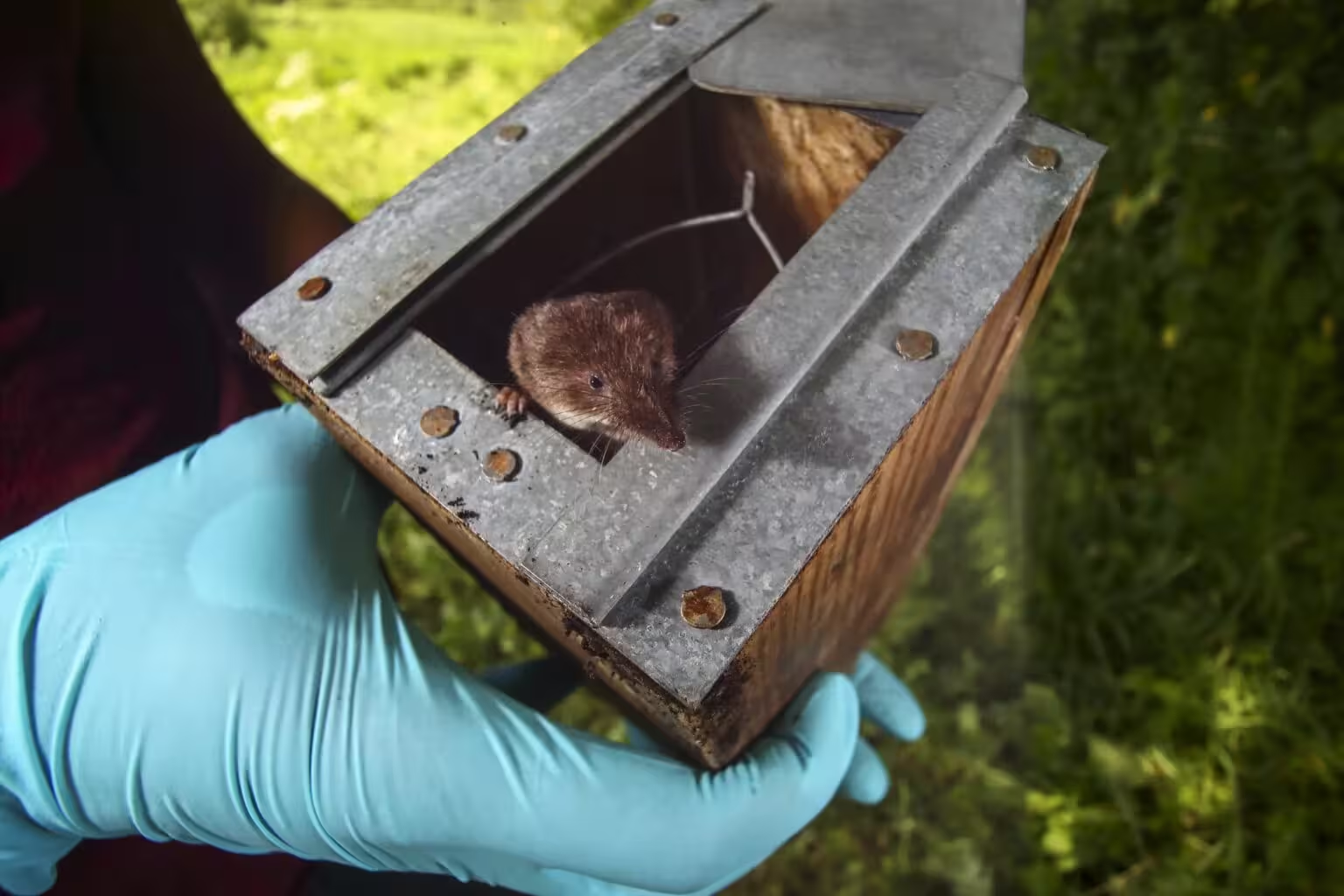
In 2025, researchers discovered that the shrew's seasonal brain shrinkage is caused by water loss, and yet brain cells survive.
What this means for human health and future research
The discovery of a coordinated genetic program that permits reversible brain shrinkage without neurodegeneration raises exciting possibilities for human medicine. Scientists emphasize caution: mammals with Dehnel’s phenomenon have unique ecologies and physiology that don’t map directly onto people. Yet the enrichment of DNA-repair and energy-homeostasis genes suggests potential biomarkers or therapeutic targets for conditions characterized by neuronal loss or metabolic stress.
Aurora Ruiz-Herrera, a cell biologist at the Autonomous University of Barcelona, notes that genes controlling energy balance and the blood-brain barrier “point to possible biomarkers and therapeutic targets for neurodegenerative diseases,” while reminding readers that translation to human therapies requires careful validation.
By combining whole-genome sequencing with seasonal expression data, researchers have moved from description to mechanism—revealing a finely tuned system that let common shrews shrink and regrow brain tissue across seasons without the lasting damage typically associated with neurodegeneration. The work opens new lines of inquiry into how brains tolerate extreme physiological change, and whether elements of that tolerance can ever be harnessed for human benefit.













Leave a Comment
Comments
No comments yet. Be the first.