
3 Minutes
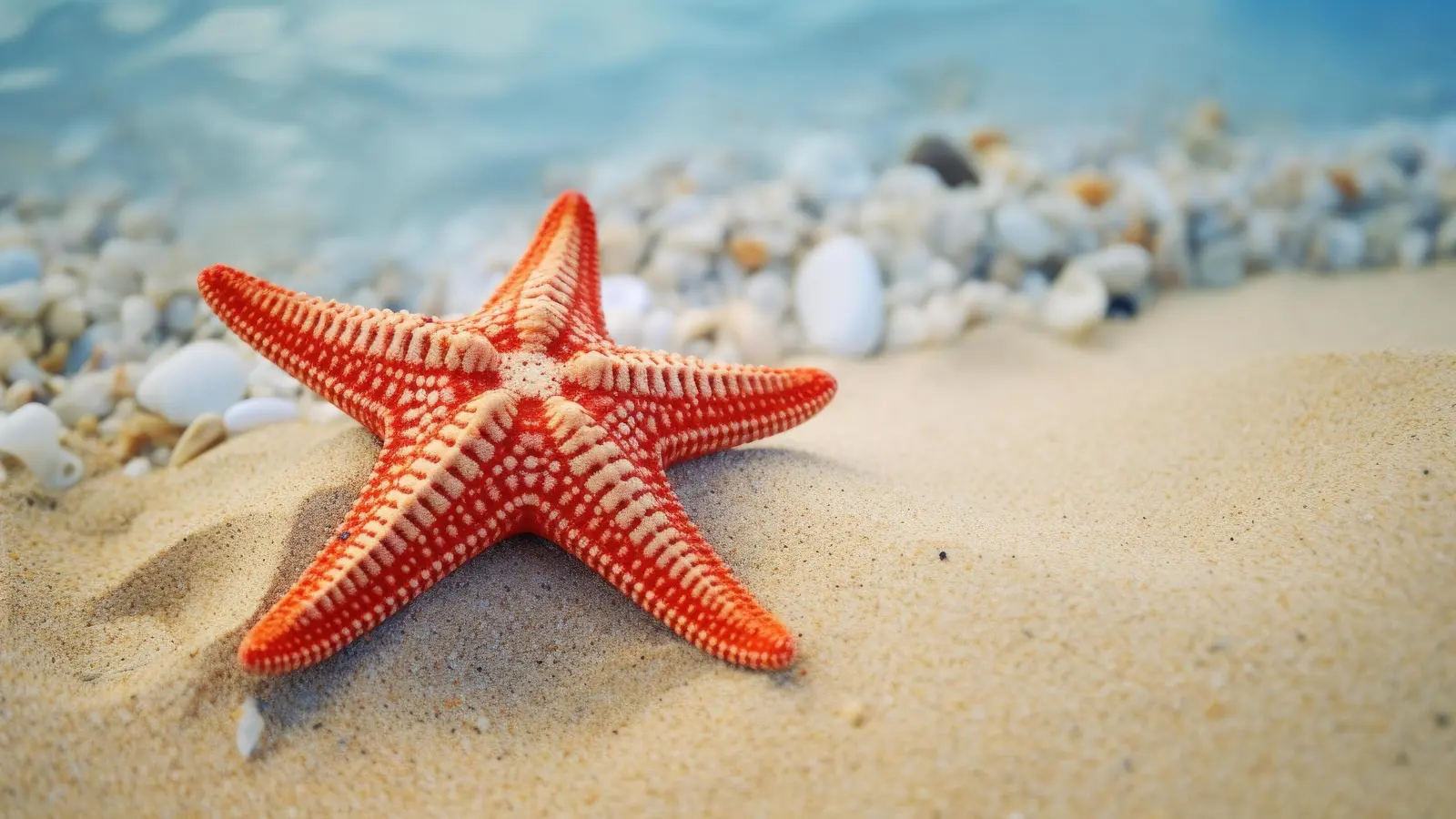
Starfish, or sea stars, move across complex seafloors with remarkable poise — climbing rocks, slipping over sand, and even walking upside down — all without a centralized brain. Recent interdisciplinary research reveals that their secret lies in a decentralized, mechanically informed choreography of hundreds of hydraulic tube feet.
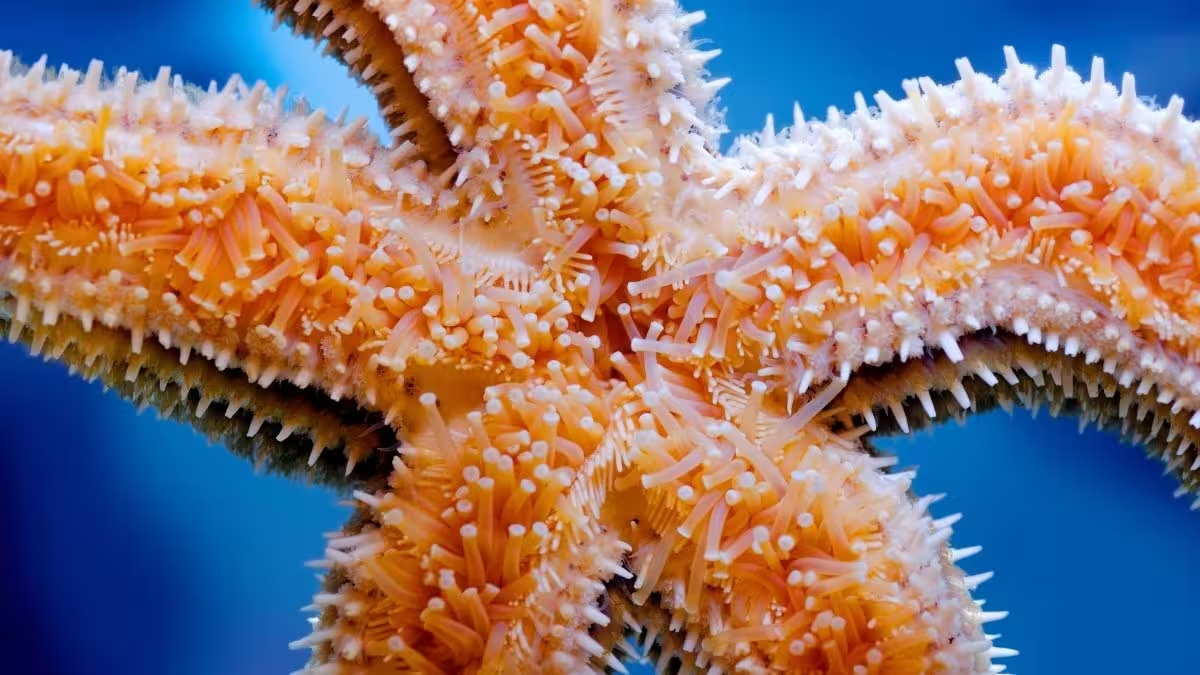
Underside of the common starfish, Asterias rubens.
A decentralized strategy: more feet, not more neurons
At first glance, coordinating dozens or hundreds of appendages seems like a job for a brain. Yet the common starfish Asterias rubens accomplishes this feat with no central command center. Instead, each arm and its rows of tube feet interact locally with the substrate and with neighboring feet to produce coordinated motion. This decentralized control model is surprisingly robust: it allows the animal to maintain speed, change direction, and handle obstacles simply by adjusting how long each tube foot stays stuck to the surface.
How tube feet do the heavy lifting
Each tube foot is a small hydraulic system. A flexible stem pumps fluid from the water vascular system into a flattened sticky disk that acts as the foot. That disk secretes an adhesive, protein-rich slime to grip surfaces, and may also release a different secretion to unstick when it’s time to move. Asterias rubens has four rows of these podia along each arm, so an individual must coordinate the timing of hundreds of independent contact events while crawling.
Mechanical load, not central timing
Researchers used a clever optical method to map which feet were in contact at any moment. When starfish crawled across a lit, highly refractive glass plate, each foot altered the light path and produced a bright footprint. By tracking those dots, the team discovered that the animals maintain roughly the same forward speed regardless of how many feet are touching down. What changes, however, is the adhesion time: feet under greater load stay attached longer.
Experiments that reveal adaptive gait
To test whether mechanical load controls gait, scientists added small weighted backpacks equal to 25% or 50% of the starfish’s body weight. With the extra burden, tube feet increased their contact duration and the animals slowed down — exactly what one would expect if individual feet modulate timing in response to local strain. The same adaptability showed up when starfish crawled inverted along the ‘ceiling’ of their enclosure: tube feet adjusted contact behavior to oppose gravity and prevent slips.
These observations support a model where each foot couples mechanical sensing with a simple local rule: increase attachment time when load rises, shorten it when load falls. Together, many such interactions produce coordinated motion without a central nervous controller.
Why this matters beyond the tide pool
Understanding starfish locomotion has practical implications. Engineers designing soft robots, robotic grippers, or autonomous climbers can borrow the sea star’s decentralized strategy: distribute sensing and control among many simple actuators that react locally to force. This approach improves resilience — if a limb fails, the whole system can continue — and simplifies control algorithms by embedding adaptation in the mechanics of the device itself.
Expert Insight
“Starfish show how physics and biology can replace bulky computation,” says Dr. Elena Morales, a biomechanics engineer at a major robotics lab. “By letting each actuator sense its own load and alter its engagement time, systems become fault-tolerant and energy-efficient. That’s exactly what we need for robots that operate in unpredictable environments.”
The study, published in Proceedings of the National Academy of Sciences, combines biology, optics, and modeling to demonstrate a robust, decentralized locomotion strategy. For science communicators and engineers alike, the sea star is a living lesson in how simple, local rules can produce complex, adaptive behavior.









Leave a Comment
Comments (2)
Is it really just mechanical load? sounds neat but im wondering about neural signaling or chemical feedback too... could be oversimplified?
Whoa, starfish with no brain coordinating hundreds of tube feet? wild. didnt expect nature doing distributed control, kinda poetic wow