
3 Minutes
A new study suggests the liver can be coaxed into temporarily restoring youthful immune function by producing signals normally made in the thymus. In mice, a targeted mRNA treatment revived T-cell production and improved responses to vaccines and tumors — a potential route to safer immune rejuvenation in older adults.
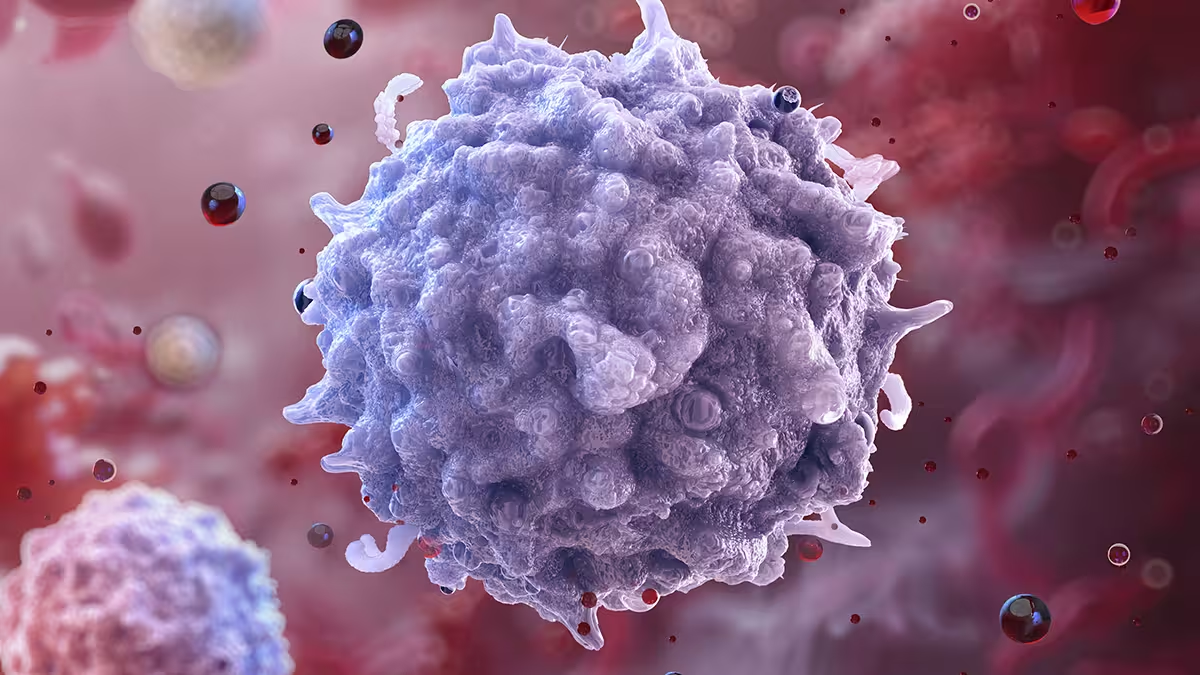
T cells are a key part of the body's immune system.
Why the thymus matters — and what goes wrong with age
The thymus is a small organ just above the heart that teaches immature cells to become T cells, the immune system's frontline sentinels. From early adulthood the thymus gradually shrinks and slows, a process called thymic involution. As a result, fewer new T cells are produced and the pool of immune defenders becomes less diverse, leaving older people more vulnerable to infections, cancers, and weaker vaccine responses.
Researchers at the Broad Institute of MIT and Harvard set out to replace some of the thymus’s signaling functions rather than trying to regrow the organ itself. Their approach: enlist the liver — an organ that reliably churns out proteins even in old age — to secrete the molecular cues that spur T-cell development.
Turning the liver into a thymus-like protein factory
First, the team compared immune systems in young and old mice to identify key signals that decline with age. They focused on three proteins that help direct cell fate and keep developing T cells healthy: DLL1, FLT3-L, and IL-7. These three factors act like instructions that say "become a T cell" and "stay alive and functional."
mRNA delivers the instructions
Next they packaged messenger RNA (mRNA) encoding these signaling proteins and injected it into the livers of aged mice over several weeks. mRNA functions as a temporary blueprint for cells to make specified proteins — the same platform used in some modern vaccines — and it allowed the liver to produce DLL1, FLT3-L, and IL-7 without permanently altering tissue.

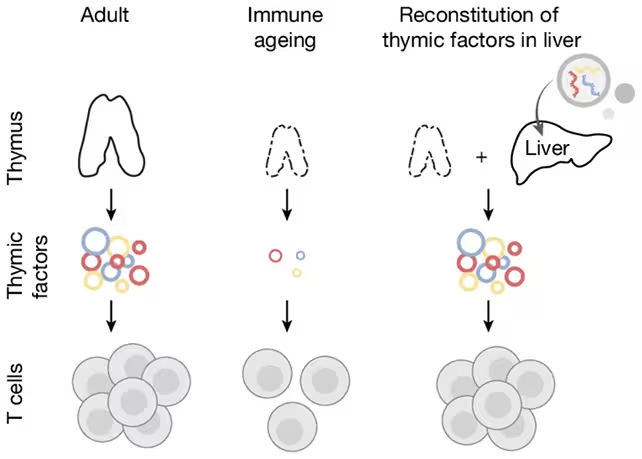
The researchers used the livers of the mice to stimulate T cell production.
Stronger, more diverse T cells — but only for a time
After four weeks of treatment, older mice showed clear improvements: higher numbers of T cells, greater T-cell diversity, better antibody responses to vaccination, and improved tumor control in cancer challenge tests. In short, their immune profiles looked younger and more resilient.
Importantly, the effect was transient. The liver’s boosted secretion waned after treatment stopped, which the authors highlight as a safety feature: a temporary increase in T-cell production lowers the risk of chronic overstimulation, which can trigger harmful inflammation or autoimmune reactions.
What this means for human health and next steps
The mouse results point to a promising alternative to systemic immune-boosting strategies that flood the bloodstream and can cause side effects. Because the liver filters blood and is relatively accessible to targeted therapies, it may be a practical delivery site for controlled, organ-specific immune modulation.
But mouse success does not guarantee human benefit. The researchers plan to test the approach in other animal models, refine which signals to deliver and for how long, and explore effects on different immune cell types. Clinical translation will require careful work on dosing, safety, and long-term impacts.
"We aimed to maintain immune protection longer into life by mimicking thymic secretions," said Mirco Friedrich (Broad Institute/MIT) reflecting on the rationale for the liver-targeted strategy. Feng Zhang (MIT) described the method as a synthetic, engineering-minded way to recreate thymic signals without rebuilding the thymus itself.
If validated in humans, a liver-based mRNA therapy could become a tool to reduce age-related immune decline, improving vaccine efficacy and disease resistance in older adults while avoiding some risks of direct bloodstream interventions.










Leave a Comment
Comments (2)
Sounds promising but is mRNA in liver really safe longterm? transient boost is nice, still worried about autoimmunity and dosing. need more animal data
Whoa, liver doing thymus' job? kinda wild, if safe this could boost elderly vaccines big time. curious how long it lasts, and any weird side effects? testing pls