
5 Minutes
One arm may be visibly broken, but the other is often quietly tired. Many stroke survivors live by that uneasy tradeoff: one limb severely weakened, the other pressed into nonstop service. The day-to-day reality can be grinding. Tasks that once took seconds—lifting a cup, buttoning a shirt, passing a plate—become slow, awkward, and exhausting.
For decades, rehabilitation focused where damage was most apparent: the arm on the opposite side of the brain injury. That remains crucial. But new clinical evidence suggests a complementary strategy deserves attention. A randomized trial recently published in JAMA Neurology shows that training the less-impaired arm in people living with chronic stroke can produce meaningful, lasting improvements in everyday hand function. In some cases, those gains rival improvements achieved by working only on the most impaired limb.
Why the supposedly "good" arm matters
Why bother? Because humans adapt. When one arm is unusable, the other takes on everything. This compensatory reliance exposes even subtle weaknesses in the less-affected limb. Strength falls. Speed slows. Coordination frays. The result is slower task performance and greater fatigue during ordinary activities of daily living. A dominant hand that moves slowly can turn independence into a chore.
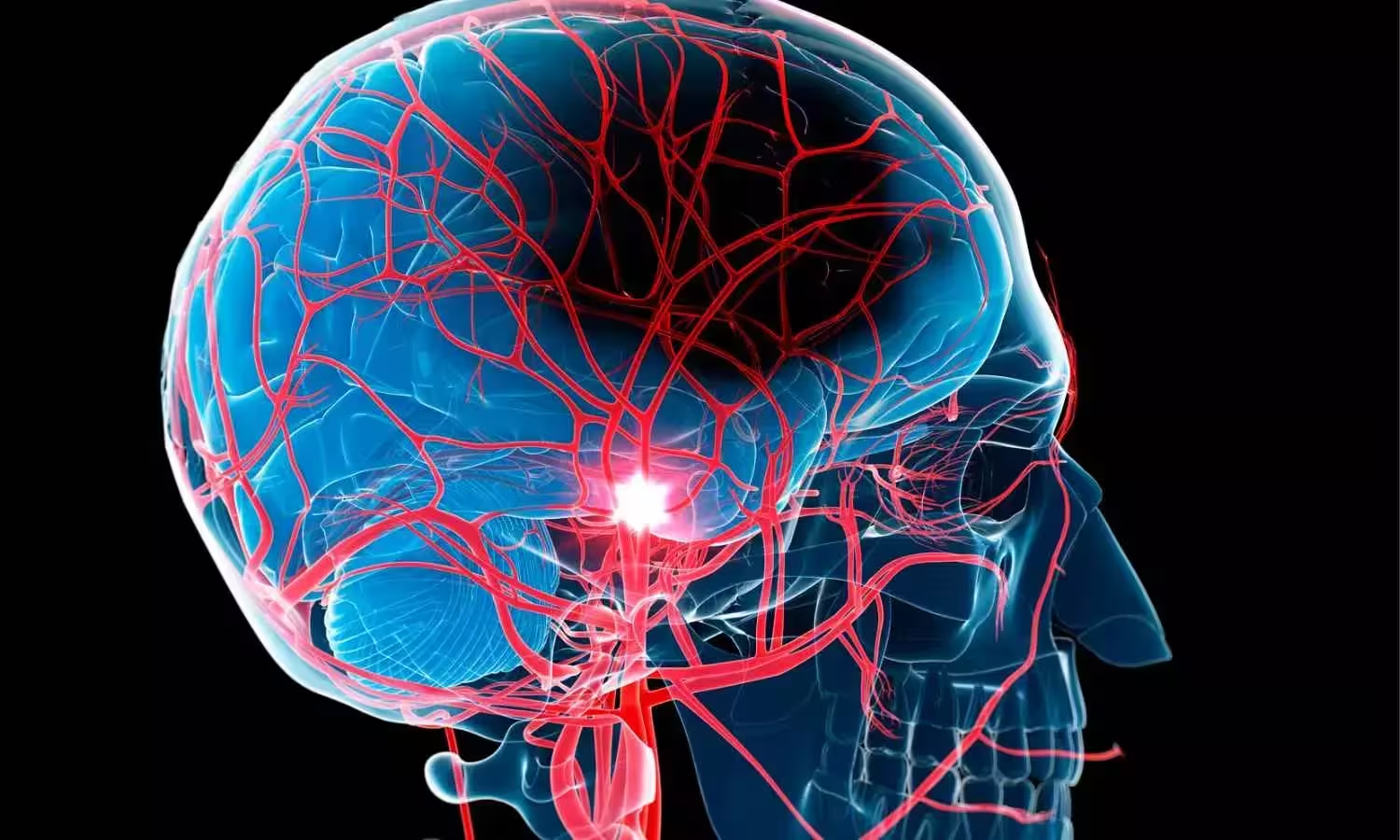
There is also a deeper neurological truth. Control of arm movements is not strictly unilateral. Both hemispheres of the brain participate in shaping coordinated actions, each contributing in different ways. Damage to one side therefore ripples across the system. The less-impaired arm may escape dramatic paralysis but still carry deficits in strength and timing that matter for real-world use.
What the trial did and found
Researchers recruited more than 50 people with chronic stroke who had severe impairment in one arm and relied heavily on their less-impaired side. Participants were randomized to two groups. One group received targeted training for the most-impaired arm. The other focused on training the less-impaired arm. Both programs ran for five weeks and emphasized challenging, goal-directed hand movements. Therapists used virtual reality tasks and precisely timed exercises to sharpen coordination and timing.
The outcome surprised some clinicians. People who trained their less-impaired arm became faster and more efficient at practical hand tasks such as picking up small objects and lifting a cup. Those functional gains persisted when researchers reassessed participants six months later. The working explanation is pragmatic rather than mystical: improved performance encourages more everyday use, and increased use reinforces skill. That creates a positive feedback loop where small training gains compound into lasting improvement.
So what does this mean for rehabilitation models? It does not replace efforts to restore the severely affected limb. Instead, it reframes recovery for many survivors. Full restoration of the impaired arm is not always possible. Strengthening the arm that remains serviceable can reduce effort, speed up routine tasks, and preserve independence.

Scientific context and implications
Stroke rehabilitation sits at the intersection of neuroplasticity, behavior, and biomechanics. Therapies that generate repeated, meaningful practice drive changes in cortical circuits. Virtual reality and task-specific training are tools to focus that repetition on skills that matter. The new trial adds a twist: sometimes the most functional return comes from improving the limb already carrying the load.
Clinicians should ask different questions. Which tasks cause the most fatigue for a given person? Which small gains in speed or coordination would unlock everyday independence? Therapy becomes less about symmetry and more about function. That is a pragmatic shift with potential to change quality of life for many chronic stroke survivors.
Future directions and technology
Several paths now deserve rigorous study. One is combined training protocols that coordinate therapy on both limbs, optimizing how each session supports daily life. Another is tailoring virtual reality and robotic assistance to emphasize the kinds of grasp, lift, and release patterns people use at home. Wearable sensors can also track whether improvements in a clinic translate into more active use at home, which matters more than lab metrics alone.
There are also equity considerations. Access to intensive rehab and technology varies widely. Low-cost adaptations that strengthen the less-impaired arm could produce outsized benefits in settings where advanced robotics are not available. Small, targeted interventions might be the most practical path to better independence for many people.
Expert Insight
Dr Amina Patel, a neurorehabilitation specialist with long clinical experience, said it plainly: "Patients often ask what they should do with the arm that still works. Training it matters. Gains may look modest on paper, but they change how quickly someone can make a meal or get dressed. That restores dignity. That keeps people engaged in life." She added that combining targeted practice with measures of daily use will be essential to translate clinical gains into long-term benefit.
Turning research into routine care will require trials that test combined approaches, cost analyses, and training for therapists to shift emphasis when appropriate. But the principle is simple and useful: recovery can mean regaining lost function, or it can mean strengthening what remains, so daily life becomes less effortful and more possible.
For survivors and caregivers the message is immediate. If one arm still works but feels slow or clumsy, targeted training may deliver practical benefits. Ask clinicians about therapy programs that prioritize the tasks you actually need to do every day. Small improvements can add up to big changes in independence, and often sooner than you might expect.








Leave a Comment
Comments (2)
Is this even true longterm? If the less-impaired arm gets most work, does the brain kinda give up on the bad arm, or does use actually help both? curious, skeptical.
Saw this with my uncle after his stroke. Training the 'good' arm really changed mealtimes, less fatigue, more dignity. small wins, honestly