
3 Minutes
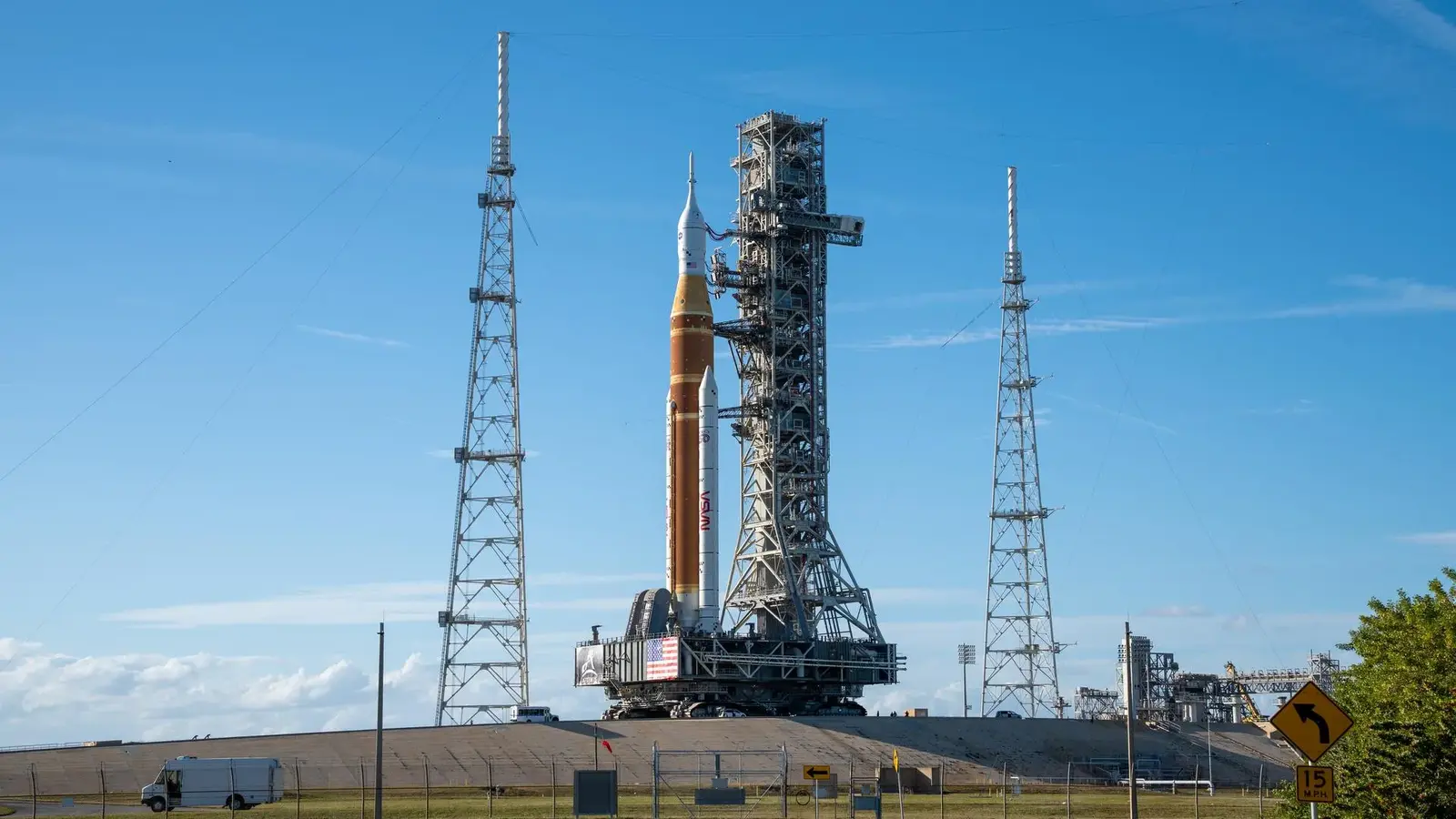
Snow and starlight. Cold air clinging to metal. The Space Launch System sits ready on the pad, its fuel tanks empty for now but primed for a ritual that will decide when humans return to lunar proximity.
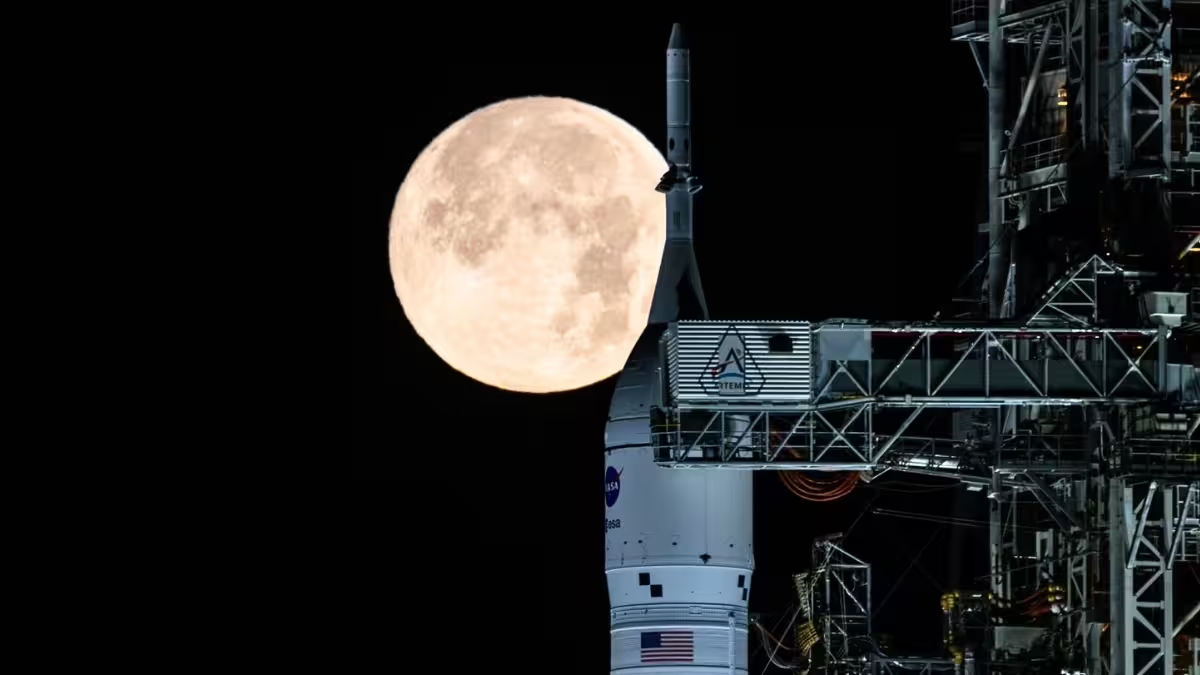
A full Moon is seen shining over NASA’s SLS (Space Launch System) and Orion spacecraft, atop the mobile launcher in the early hours of February 1, 2026.
NASA has started a tightly choreographed, two-day practice countdown ahead of a critical fueling demonstration for its new moon rocket. The exercise is simple in theory: load more than 700,000 gallons of super-cold propellant into the 322-foot rocket, then stop the tanking sequence roughly 30 seconds before ignition would normally occur. In practice, it is anything but simple. Cryogenic plumbing, temperature-sensitive purging systems and human timing all have to sync perfectly.
Mission and technical background
Commander Reid Wiseman and his crew are already isolated in quarantine to reduce infection risk before launch. They will monitor the dress rehearsal from Houston and only travel to Kennedy Space Center once flight clearance is granted. If Monday’s fueling test completes without critical faults, NASA could attempt liftoff within the week; weather and mechanical checks will ultimately set the clock.
Heaters are keeping the Orion capsule’s systems warm atop the stack while engineers adapt purging and venting procedures to recent bitter cold at Cape Canaveral. A brief deep-freeze delayed the fueling demonstration and nudged the earliest possible launch from the start of February to the 8th. Mission managers have also identified February 11 as the last viable launch day for this month; if the moonflyby slips past that date, subsequent schedules—most notably a crew rotation bound for the International Space Station—will need to be reshuffled.
This Artemis-era flight is a circumlunar mission: the crew will ride in Orion, loop around the far side of the Moon and return directly to Earth, concluding roughly 10 days after launch with a Pacific splashdown. Unlike Apollo landings, the brief will not include a surface visit. Still, it marks the first human voyage beyond low Earth orbit since 1972, underscoring decades of engineering progress and programmatic complexity.
Twenty-four astronauts traveled to the Moon during the Apollo program; twelve walked its surface. This modern mission uses different hardware and aims to demonstrate systems that will enable longer-term lunar operations—advanced crew systems, deep-space navigation, and integrated launch procedures with the SLS rocket and Orion spacecraft at the center.
There is operational pressure beyond the technical checklist. NASA must also launch a fresh crew to the ISS soon because the last station team returned early for medical reasons. That makes scheduling a high-stakes juggling act: if the Artemis flight launches by February 11, it will take priority and the ISS crew launch will wait until the lunar team has returned. As astronaut Jack Hathaway, a member of the next station crew, put it: "It couldn't be cooler that they're in quarantine and we're in quarantine, and we're trying to launch two rockets roughly around the same time."
Technologists will watch the live pad streams and telemetry once tanking begins, tracing temperatures and pressures in real time. If all systems behave, the rocket moves from a rehearsal to a real launch attempt, and a new chapter of human spaceflight—measured in orbits and engineering milestones—unfolds.









Leave a Comment
Comments
No comments yet. Be the first.