
3 Minutes
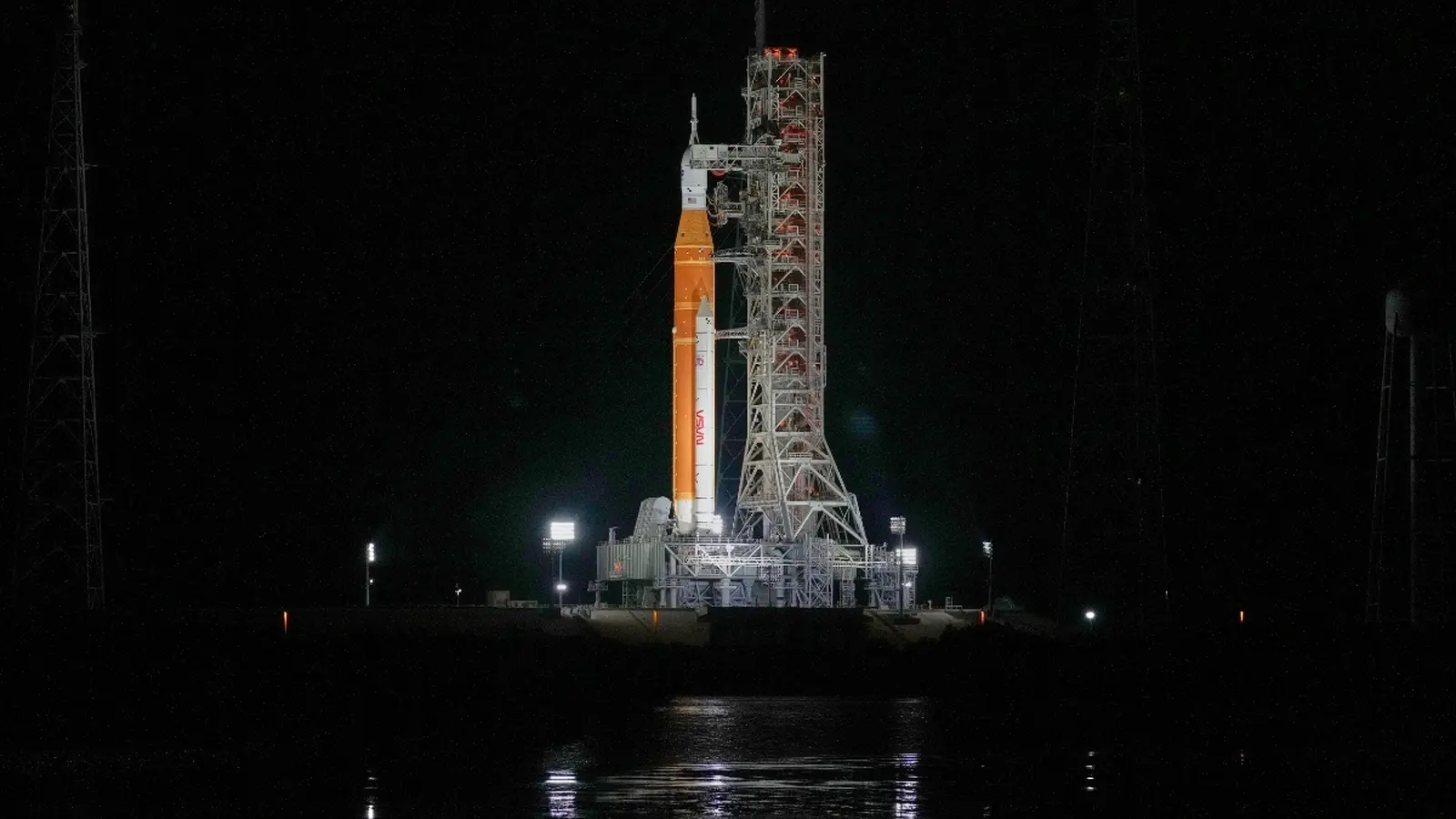
Hydrogen shouldn’t be dramatic. It’s a simple element, invisible and quietly abundant across the cosmos. Yet on Monday at NASA’s Kennedy Space Center it turned the Artemis II dress rehearsal into a tense, hands-on problem-solving exercise.
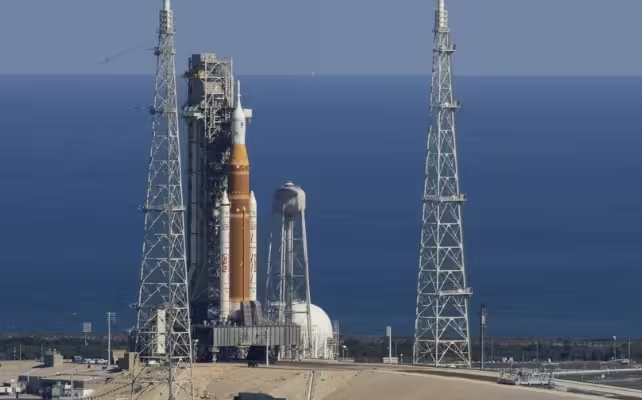
Technicians began filling the 322-foot Space Launch System (SLS) with super-cold liquid hydrogen and oxygen around midday, attempting to recreate the hours-long fueling process that precedes a real launch. The plan was straightforward: load more than 700,000 gallons into the core stage and hold it there, simulating the moments just before liftoff. But within a couple of hours, teams detected an unexpected accumulation of hydrogen near the rocket’s base and stopped loading twice to investigate.
Scenes like this will be familiar to engineers who weathered the SLS’s halted maiden countdown in 2022. Back then, stubborn hydrogen leaks delayed the rocket’s debut and forced NASA to rethink sealing procedures, ground support configurations and launch-pad workflows. The agency leaned on those fixes Monday, deploying the same mitigation techniques while crews monitored gauges and purge lines.
Four astronauts — three Americans and one Canadian — watched the practice remotely from Houston, where they have been under quarantine. They have been preparing for a roughly 10-day journey that will send them past the Moon and behind its far side before returning them to Earth. No lunar orbit insertion, no landing: this is a systems check designed to validate Orion’s life support, navigation and communication systems with humans onboard.
Mission timing, risks and what’s at stake
Why does a fueling hiccup matter so much? The answer is both practical and calendar-driven. Launch opportunities for a lunar flyby are constrained by orbital mechanics and ground support logistics; for February, NASA had a narrow window and only a handful of viable days. The agency announced that, at best, the earliest possible crewed departure could slip to Sunday. If the rocket isn’t cleared to fly by Feb. 11, the mission would be deferred to March, since the deep-space geometry and the availability of tracking, recovery and range assets leave little flexibility.
Ground teams are balancing caution and schedule pressure. Filling the tanks with cryogenic propellants is inherently risky: hydrogen molecules are tiny and leak-prone, and they behave differently at cryogenic temperatures than at room temperature. Engineers use layered diagnostics — pressure trends, leak detectors, visual inspections and repeatable purge maneuvers — to pinpoint and resolve seepage without introducing new failure modes.
At the human level this is about confidence. The crew’s quarantine period has already lasted more than a week and a half; every hold, scrub or stretch adds stress to planning timelines and to public expectations. A successful troubleshooting run would restore momentum. A prolonged delay would give teams more time to analyze materials and seals, but it would also push back subsequent Artemis milestones that depend on this flight’s data.
NASA’s Artemis program aims to establish a sustained human presence on and around the Moon, a far more ambitious goal than the Apollo-era quick sorties. Artemis II is a stepping stone — a demonstrator that must show spacecraft systems perform as advertised when humans are involved. Small issues now, like a stubborn hydrogen accumulation, are the sorts of problems engineers prefer to resolve on the ground rather than in flight.
NASA will continue troubleshooting, swapping procedures and running diagnostics until the teams are comfortable with the propellant system’s integrity. The clock is ticking, the valves are cold, and the agency’s next move will shape the near-term future of human lunar exploration.











Leave a Comment
Comments
No comments yet. Be the first.