
3 Minutes
Engineers at NASA Goddard turned the telescope on its side and, for a few deliberate minutes, simply looked — the kind of quiet scrutiny that follows years of design, late nights, and incremental victories. That final inspection, carried out in late spring, marks the end of one chapter: the Nancy Grace Roman Telescope is cleared to travel to Florida for launch.
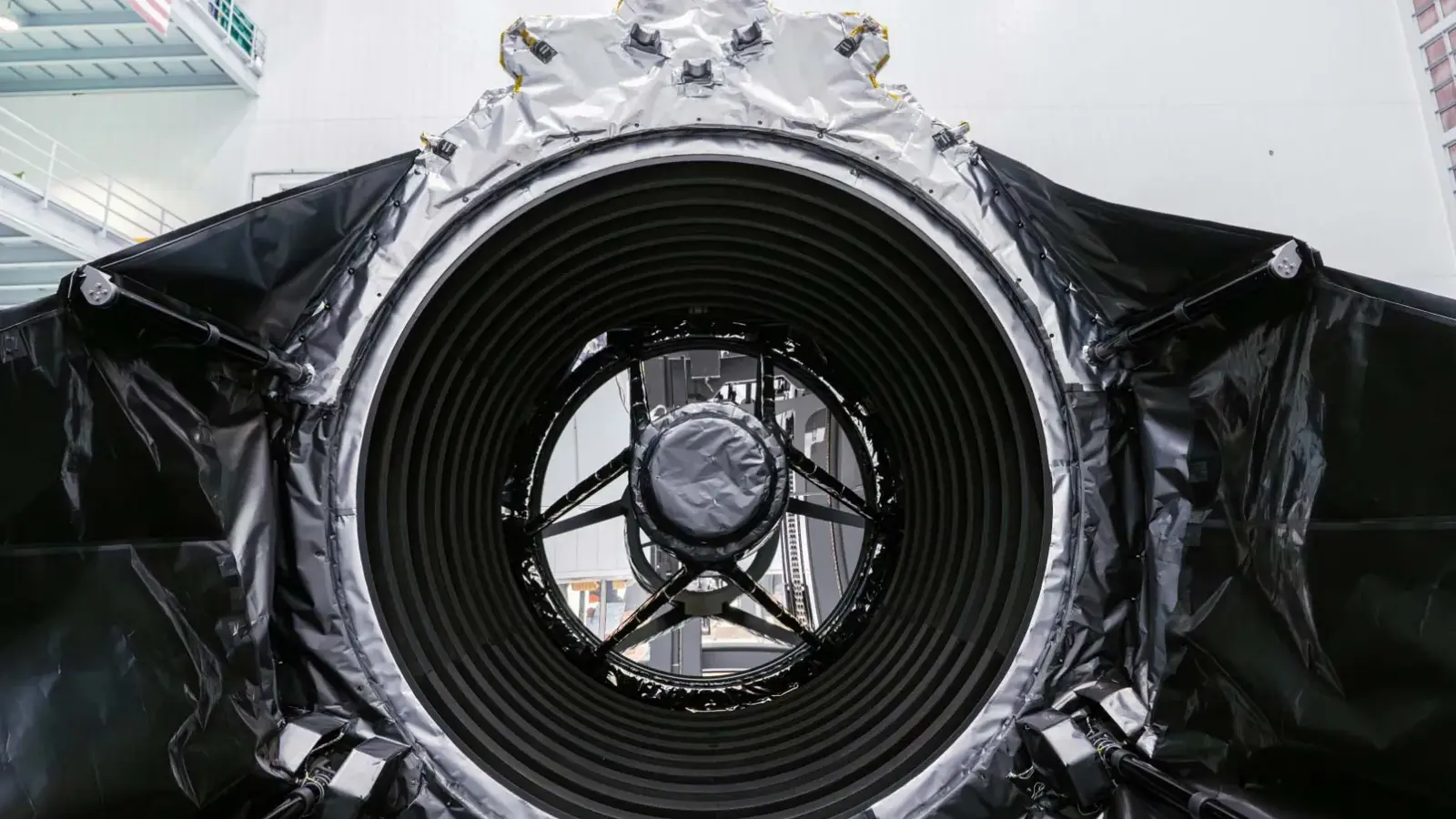
NASA announced the telescope's completion in April, and by late May teams had finished a hands-on assessment of the 2.4-meter primary mirror, the critical optical heart that will collect and focus light from across the cosmos. Technicians opened the protective aperture cover and inspected the mirror visually for contamination. They checked alignments. They traced the light path to the Wide Field Instrument to confirm nothing had shifted during testing.
The work included a rigorous vibration campaign designed to simulate the stresses of a rocket ascent. Vibration tests can reveal hidden issues; they can also rattle components loose. After the tests the Roman team followed the beam from mirror to instrument with a high-resolution camera and a long-range lens system to verify that the optical train remained perfectly in place. The mirror passed.

The 2.4-meter primary mirror met the program's tight tolerances, allowing the telescope to be readied for shipment to Kennedy Space Center and a planned launch around August 30.
Beyond hardware checks, engineers removed and inspected a large sunshade-like aperture cover that shields the telescope from stray light during integration. That cover will be stowed for transport and reinstalled or deployed as needed once the observatory is on its way. The readiness of these systems — optics, shielding, and the Wide Field Instrument itself — is what makes the upcoming launch campaign realistic rather than aspirational.
Some reports suggest Roman could be moved to the launch pad even earlier than the current target date. If that happens, it will be a welcome contrast to the long delays experienced by previous flagship missions. The Roman Telescope is designed to perform wide-field surveys of galaxies, map dark energy, and hunt for exoplanets with an unprecedented combination of field of view and sharp resolution. In short, it will deliver data that complements and extends what telescopes like James Webb provide.
For the people who built it, the moment of shipment carries a particular gravity. Project leads and optics engineers describe it as humble and exhilarating at once: seeing a complex machine become an observatory ready to act as humanity's eye on the universe. Soon, from a launch pad in Florida, Roman will begin a mission that could reshape how we see the sky. What surprising discoveries will follow once those mirrors open to the stars?

Leave a Comment
Comments
No comments yet. Be the first.