
3 Minutes
Imagine peering at a coin-sized colony and finding muscle fibers and membrane sacs preserved inside like a snapshot from half a billion years ago. That is what paleontologists unearthed in southern Shaanxi, China: exquisitely detailed fossils that force us to rethink when and how a whole branch of life first appeared.
The Cambrian explosion—roughly 540 million years ago—is famous for suddenly populating the seas with strange, armored, and specialized animals. Bryozoans, tiny filter-feeding 'moss animals' that build honeycomb-like colonies, were the odd exception; the fossil record seemed to pick up their trail only in the Ordovician, some 50 million years later. New finds from the Xiannüdong Formation change that story.
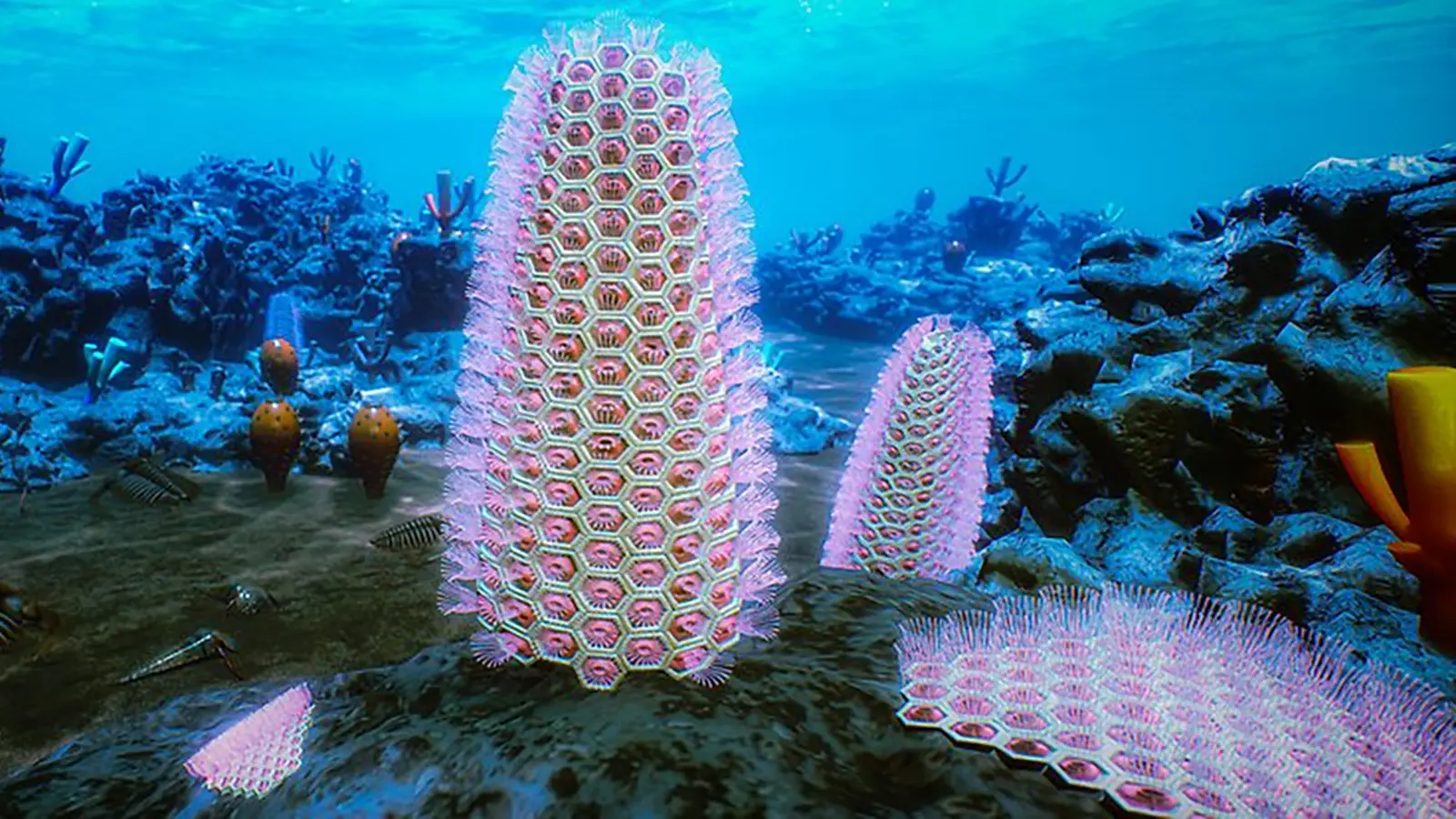
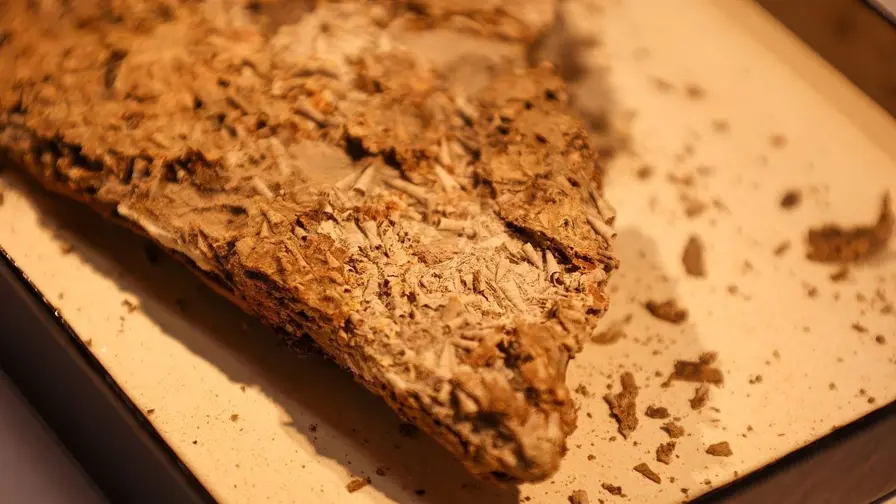
Thirty-eight specimens, studied with fine-scale microscopy, reveal not only the outer skeletal lattice of these colonies but their soft anatomy as well. Researchers from Northwest University identified two species: the already-known Protomelission gatehousei and a newly described Dayingomelission hexaclitia. Inside the tubes, scientists saw zooids, muscle threads, and membranous sacs—anatomy that matches living bryozoans and settles long-running debates that once labeled some of these fossils as algae.

The location and identification of the fossils.
The anatomy is decisive: these are true bryozoans present during the Cambrian radiation.
What makes this discovery striking is more than age. The two species show structural complexity that aligns them with Stenolaemata, one of the main classes of modern bryozoans. In other words, these are not primitive precursors clumsily crowding the edge of multicellular life. They are modular, organized colonies—already evolved in key ways—suggesting the lineage began even earlier than we can currently document.
How did such delicate tissues survive half a billion years? The answer lies in unusual geochemical conditions that logged soft parts alongside hard parts during fossilization. Preservation like this is rare, and when it happens, it reshapes evolutionary trees and the questions we ask next. Paleobiologists including Lars Holmer, Baopeng Song and Timothy Topper emphasize that the find closes a long-standing gap: every major animal phylum except Bryozoa had a Cambrian member—until now.

Close-up of the individual zooids or organisms in P. gatehousei.
The wider implications are immediate. With bryozoans placed in the Cambrian fold, researchers can search sedimentary rocks of the same age worldwide for similar fossils, calibrate molecular clocks with new data points, and revisit models of early marine ecosystems. Modern bryozoan diversity—nearly 6,000 species living mostly in warm, shallow seas—now has an older, deeper context.
Science advances when a fragment of rock becomes a time machine. These fossils do more than fill a missing chapter; they push us to imagine what other narratives the Cambrian still keeps hidden under stone.

Leave a Comment
Comments
No comments yet. Be the first.