
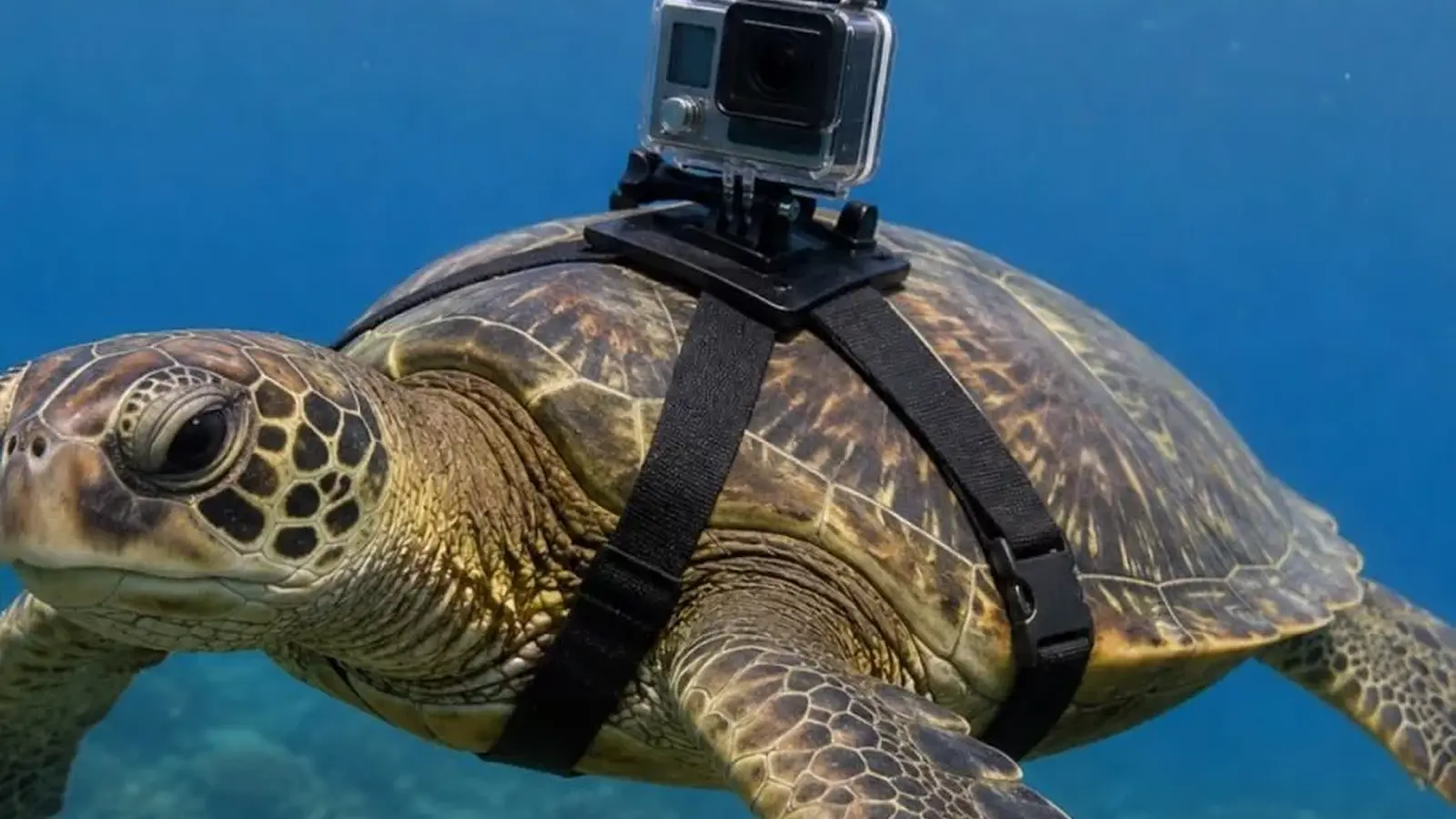
Beneath the chop of waves and the routine of shipping lanes, Beijing says an odd kind of intelligence operation is unfolding: turtles and fish converted into mobile sensors, gathering ocean data and beaming it back to foreign satellites. The claim landed in a terse post on China’s domestic social platform, where the Ministry of State Security accused foreign intelligence agencies of equipping marine animals with specialized instruments to map currents, temperature distributions and seafloor features.
On the face of it, the image is cinematic. A turtle paddles past a buoy, carrying a tiny recorder, or a fish slips through a cold current while transmitting readings to orbiting receivers. Why would any state covet such measurements? Because oceanographic data are more than climate science. They inform naval operations, undersea navigation, acoustic models that affect submarine stealth, and the maritime logistics that feed economies. In short: the sea’s physical fingerprints are strategic.
Extraordinary claims invite a quick look at history. Using animals in intelligence work is not new. In the 1960s, a United States program tried to turn a cat into a listening device, an experiment that has since become shorthand for odd spycraft. More recently, a beluga observed near Norway wearing a harnessed rig sparked speculation about animal-borne cameras and cross-border spying, a suggestion some parties denied and others dismissed as misidentified research equipment.
So how plausible is Beijing’s charge? Technically, attaching sensors to animals is feasible. Lightweight tags can record temperature and depth, and biologging has become a legitimate tool in marine biology. Sending those data directly to satellites, however, is harder. Satellite transmitters consume power and rely on predictable surfacing or line-of-sight windows to push information aloft. Animals move on their own timetable. Batteries die. Attachments fall off. Behavior changes. Those constraints make routine, reliable exfiltration of large, time-sensitive datasets from free-ranging creatures challenging.
That does not close the case. Hybrid scenarios exist: animals carrying passive sensors that researchers—or agents—retrieve later, or tags that opportunistically transmit small packets when conditions permit. It is also worth remembering that nations increasingly invest in autonomous underwater vehicles and sensor networks that perform many of the same tasks more predictably than any living courier.
The political context matters as much as the hardware. Accusations like these can serve multiple purposes: a warning to foreign services, a domestic rallying call about vulnerability, or a call for tighter regulation of maritime research and data sharing. They can also be true in part, exaggerated in rumor, or the result of misidentified equipment deployed by scientists studying animal migration and ocean processes.
Independent verification will be the crucible for these claims. Open scientific networks, civilian observers and satellite imagery can help confirm unusual tagging programs or the sudden appearance of sensor rigs. Absent that, the story sits between intrigue and skepticism, a reminder of how the contest for information now reaches into biological behavior and ocean physics alike.
If coastal waters have become chessboards where currents and bathymetry are pieces to be claimed, the question is no longer whether data matter, but who gets to collect them and under what rules.


Leave a Comment
Comments
No comments yet. Be the first.