
4 Minutes
Forget your brown thumb: the story for Earth's plants is far grander than the fate of your houseplant. New climate simulations suggest that the planet's leafy majority might persist for an astonishing stretch of time—on the order of billions of years.
Astrobiologist Jacob Haqq-Misra and planetary scientist Eric Wolf set out to answer a deceptively simple question: how long can Earth's vegetative biosphere keep functioning as the Sun brightens? Their experiment wasn't a lab trial but a suite of computer simulations, run with a three-dimensional climate model that projects how temperature and atmospheric carbon dioxide will evolve across the next two billion years. The results landed in the Journal of Geophysical Research: Atmospheres.
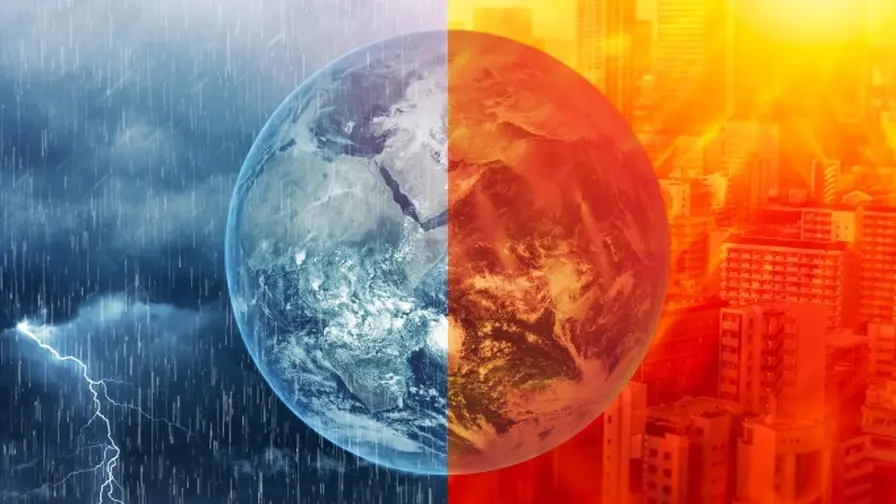
The models track two competing threats to plant life. One is thermal stress: as the Sun grows roughly 20 percent brighter, warming mounts and eventually becomes lethal. The other is carbon starvation: natural weathering of rocks tends to pull CO2 out of the air over geological timescales, and plants need CO2 for photosynthesis. Which danger becomes dominant depends on how strongly that rock-weathering process responds to temperature—a parameter that remains uncertain.
Under a high-weathering scenario, Earth's surface temperature stays relatively steady, but atmospheric CO2 drifts downward until plants can no longer sustain photosynthesis. That simulation places the vegetative biosphere's final breath at about 1.84 billion years from now. In the alternative, low-weathering run, temperatures climb until average land temperatures reach about 65 °C (150 °F)—a threshold beyond which terrestrial plants cannot survive. That case pushes the end to around 1.87 billion years, a figure slightly longer than many previous estimates.

A NASA visualization of Earth's biosphere, measured using satellite data.
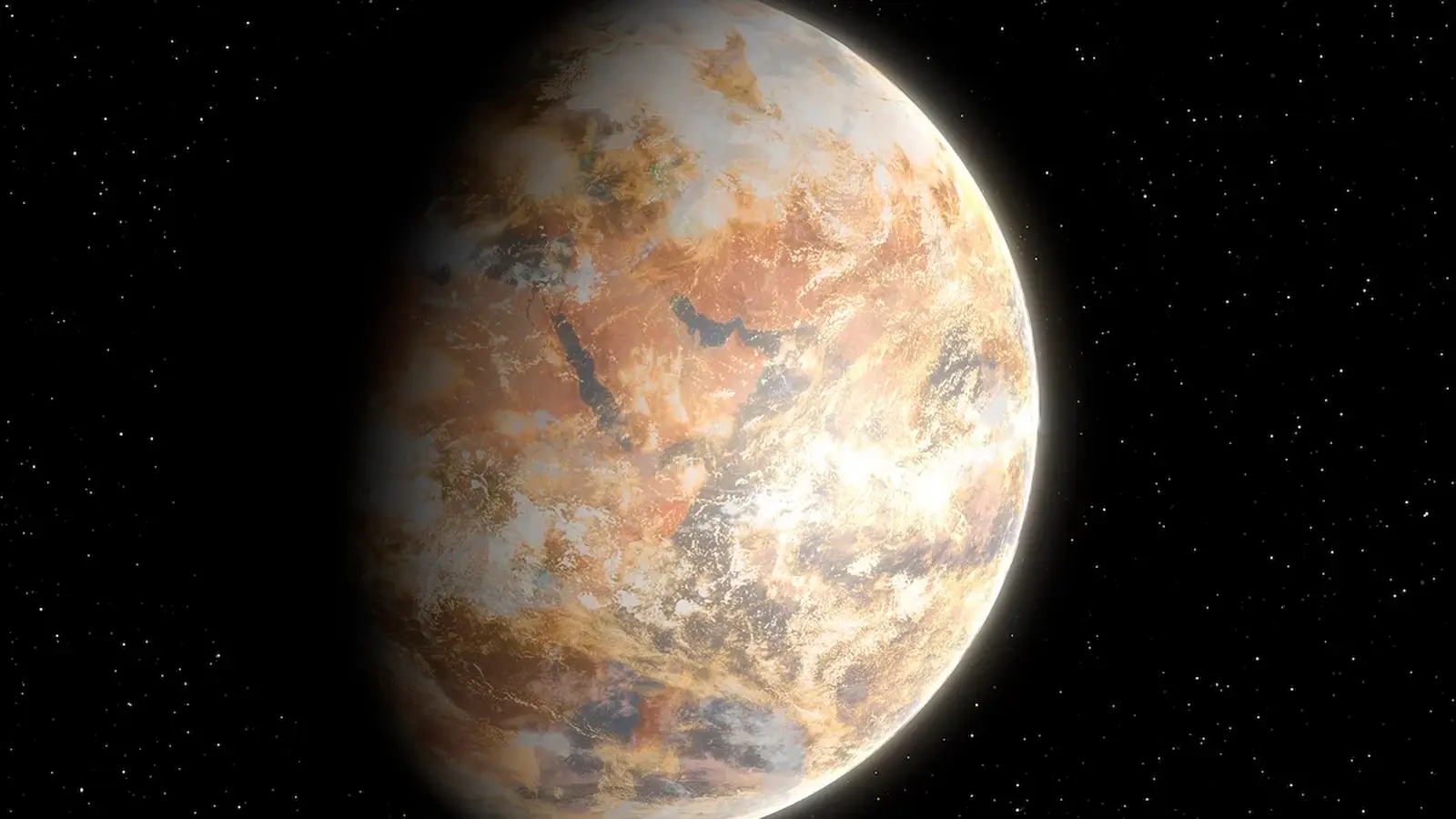
In other words: by some measures, plants could survive on Earth until the planet begins to lose its oceans—roughly 1.87 billion years from now.

Context helps. Plants today make up roughly 80 percent of Earth's biomass, so the persistence of photosynthesis matters for global carbon cycles, climate regulation, and the habitability we take for granted. But the study intentionally omitted two wildcards: biological evolution and technological intervention. Both could rewrite the timeline.
Could plants adapt? Evolution is often slow, but over hundreds of millions of years even incremental changes can add up. The authors sketch imaginative, scientifically grounded possibilities: flora that favors high-altitude niches or develops traits to tolerate higher temperatures and lower pressures; adaptations enabling life to colonize the stratosphere; even mechanisms that allow biological material to hitch rides to low-gravity bodies like the Moon or comets. Evolution, in short, could nudge the biosphere into new envelopes of habitability.

Diagrams illustrating the maximum lifespan of Earth's vegetative biosphere under different scenarios.
Then there is technology. Human or post-human engineering could aim to cool the planet—by injecting reflective aerosols into the upper atmosphere or deploying orbital sunshades—or take the bolder step of nudging Earth's orbit outward. These interventions read like science fiction, and they come with complex risks, but they remain conceivable tools for delaying or avoiding thermal or CO2-driven collapse.
The study's restraint is part of its value: by isolating natural, long-term climate processes, it establishes a baseline expectation for a planet without radical engineering or unforeseen biological innovation. That baseline is surprisingly hopeful. Even with the slowly brightening Sun, the default story for Earth, the authors argue, is one in which life endures at least as long as the oceans do rather than disappearing long before.
There are caveats, of course. The carbonate-silicate cycle—the geochemical engine that regulates atmospheric CO2—depends on details we don't yet fully understand. And the models exclude human-driven CO2 perturbations on shorter timescales. But uncertainty is not the same as impossibility; instead it points to paths where life or ingenuity might buy the green world extra time.
So while your fern may meet an untimely end this weekend, the broader narrative is less dire: Earth's greenery has a long lease, and the future of life on this planet may be stranger and more resilient than our present models can capture.









Leave a Comment
Comments (2)
Wow, didnt expect plants to last billions! kinda comforting, kinda scary. my fern is still dead tho, lol. also, who bets on orbital sunshades?
is this even true? models 2 billion yrs out feel shaky, especially ignoring evolution & tech. neat baseline tho, but curious about rock weathering rates