
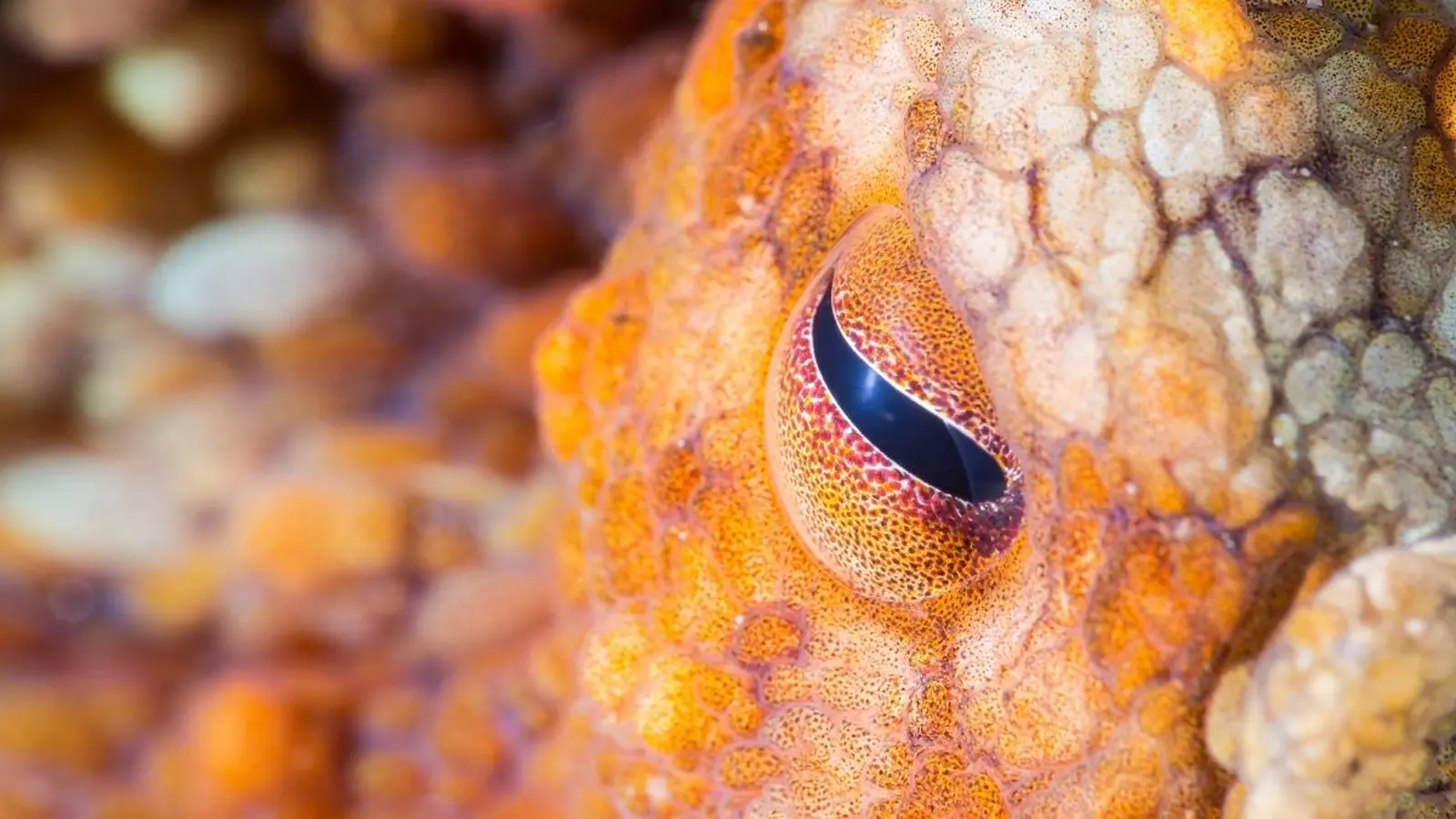
Imagine an octopus folding itself into a crevice, testing the world with eight searching arms and a brain that seems too large for its soft body. Curious, clever, solitary. Strange bedfellows for the classic idea that big brains evolve to manage big social lives.
For decades the social brain hypothesis—brains expanding to keep tabs on ever-larger groups—has dominated discussions about intelligence. It fits humans, wolves, dolphins and many birds. But cephalopods keep throwing curveballs. Squid, cuttlefish and octopuses often lead short, solitary lives, sometimes eat one another, and die soon after spawning. Yet their nervous systems are unusually complex. That mismatch has puzzled biologists.
A fresh analysis published in iScience flips the script. Instead of social complexity, the new work finds a stronger link between brain size and habitat. Researchers collated anatomical and ecological data for 79 cephalopod species and examined where they live, how they feed, and whether they socialize. The result: species that roam shallow, structurally rich seafloors tend to pack larger brains for their body size.
Why the seabed? Because a heterogeneous environment rewards flexible problem solving. Rock-strewn shallows offer hiding places, diverse prey, and tactile challenges that favor exploratory learning and fine motor control. An octopus slipping through a reef, testing shells, opening traps and improvising tools faces a world where information pays—in calories and survival. Brains, in this view, expand to store and manipulate that information, not merely to navigate dinner-table politics.
That argument echoes the cultural brain hypothesis, first proposed in 2018, which suggests brains can enlarge to manage information acquired through learning—social or otherwise. Michael Muthukrishna, one of the original proponents and a lead on the new study, notes that solitary lineages can still evolve big brains if their environments are rich and unpredictable. Cephalopods, with their short lives and inventive foraging, provided a perfect testbed.

The giant cuttlefish that aggregate for breeding in the Spencer Gulf in Australia are some of the only cephalopods known to have large social gatherings. Here, one male fights off another.
The team’s comparative approach weakens a simple social explanation. Among cephalopods, species famed for group gatherings—some squid and cuttlefish—did not show systematically larger brains as sociality increased. Instead, benthic octopuses and other shallow-water specialists stood out. Their neural investment seems tuned to ecological complexity: variable prey types, three-dimensional terrain, and opportunities for trial-and-error learning.
Hold on. Correlation isn’t causation, and the study’s authors are careful about that. But they started from a mathematical model of brain evolution that predicted multiple pathways to intelligence; the empirical data from cephalopods matched those predictions. In short: social life is one route to a big brain, but it’s not the only road on the evolutionary map.
There’s poetry in this finding. Evolution doesn’t write by a single rulebook. Sometimes intelligence blooms where the world is messy and rewarding—where an animal that can learn quickly and act flexibly gains an edge. Sometimes it blooms where gossip and alliances matter. Cephalopods remind us how many options evolution keeps in reserve.
Key takeaway: environmental richness, not social networks, appears to explain much of cephalopod brain enlargement. That simple line reframes how we think about the origins of cognition across distant branches of life, and invites studies that look beyond group size to the sensory and spatial demands that actually shape neural architecture.
As researchers keep untangling the threads—combining models, behavioral experiments and comparative anatomy—the ocean’s oddballs may teach us as much about human intelligence as they do about molluscan mystery. Who knew a reef-dwelling octopus could be a teacher for theories of mind?


Leave a Comment
Comments
No comments yet. Be the first.