
4 Minutes
Imagine losing stubborn fat while your muscles stay intact — no grueling gym sessions, no starvation. Researchers at the University of Southern California pulled off something close to that trick in aging mice by tweaking not how much protein the animals ate, but the mix of its amino acids.
At the heart of the experiment was a purposely low-protein diet with a precisely calibrated amount of methionine, an essential amino acid found in meat, fish, eggs, dairy, legumes, nuts and seeds. The team, led by Maura Fanti and senior author Valter Longo, fed 20-month-old mice — roughly the equivalent of people in their early 60s — either a standard chow, a Western-style high-fat, high-sugar diet, a ketogenic diet, or the experimental low-protein, methionine-adjusted regimen. The result was striking: mice on the experimental diet shed body fat while preserving lean mass, displayed less frailty and kept blood sugar under better control, all while having the freedom to eat as much as they wanted.

A graphical summary of the study, which involved mouse experiments as well as an analysis of human epidemiological data.
There is a story behind the recipe. An earlier version of the low–amino-acid approach caused dangerously rapid weight loss, so the researchers reintroduced a controlled dose of methionine to protect muscle without erasing the metabolic perks. The team modeled the diet on plant- and fish-based protein sources and dialed amino acid levels with surgical precision. This was not a standard Mediterranean diet; it was an engineered nutritional intervention tested in mice and reported in Cell Metabolism.
How did a little methionine do so much? The diet appeared to flip hormone switches. Growth hormone and GLP-1, a gut hormone that helps regulate appetite and glucose, rose. The growth-promoting hormone IGF-1 fell. Most notably, circulating fibroblast growth factor 21 (FGF21) surged — a hormone usually released under fasting or amino-acid stress and increasingly implicated in fuel switching to fat burning.
The study shows FGF21 is required for the fat-loss and insulin-sensitizing effects of the diet.
When the researchers repeated key experiments in mice genetically unable to produce FGF21, the benefits vanished: those animals did not lose significant fat and instead developed insulin resistance. That causal result suggests the diet’s effects are not a vague byproduct of eating less protein but a specific hormonal reprogramming with methionine as the dial.
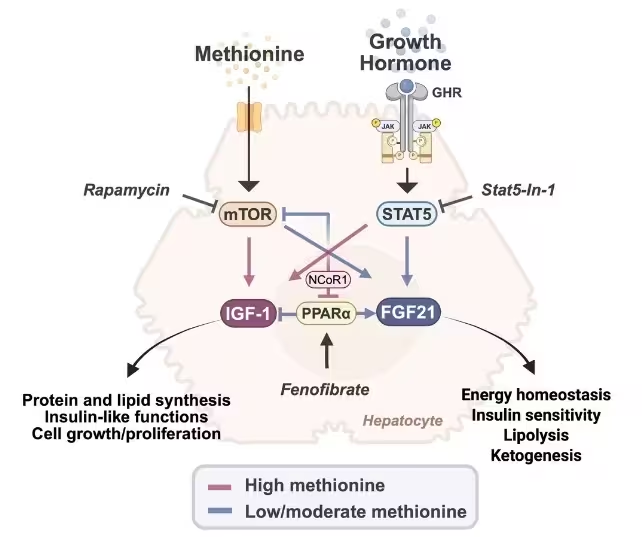
A schematic of the proposed pathways by which methionine affects hormone levels. Different pathway colors indicate high versus low/moderate methionine intake and downstream effects on protein and fat, energy homeostasis, and metabolic health.
The team also mined dietary and health data from more than 200,000 people. Higher reported animal-protein intake correlated with greater prevalence of obesity and nearly double the rate of type 2 diabetes compared with the lowest animal-protein group. Important caveats apply: the human analysis was cross-sectional, a snapshot that can reveal associations but not cause-and-effect. Still, pairing epidemiology with controlled mouse experiments strengthens the case for targeted trials.
So should older adults start cutting protein or popping methionine pills? Not yet. The metabolic benefits depended on a narrow, tested balance in mice. When methionine was increased beyond the sweet spot, advantages disappeared. The authors caution that these findings were observed in mice starting the diet late in life and require validation in humans through randomized clinical trials.
Valter Longo, who notes a financial interest in a company that develops medical foods, recommends roughly 0.37 grams of protein per pound of body weight for adults, with at least half coming from plant sources, and suggests older adults might need 10–20 percent more depending on circumstances. Those practical tips aside, the study’s takeaway is mechanistic: dietary amino-acid composition can rewire hormonal signals to favor fat burning while sparing muscle if done precisely and safely.
The next step is obvious. Can this hormonal switch be nudged the same way in people, without unintended harm? That question will determine whether an amino-acid tuned diet becomes a viable tool for healthy aging or remains an elegant finding confined to the mouse cage.

Leave a Comment
Comments (2)
Tempting result, ngl. Lose fat but keep muscle and eat freely? If only ppl responded like mice. Also Longo's company stake makes me wary, conflict of interest vibes
Wait, so a tiny methionine tweak flipped hormones? Sounds wild but mice arent humans. Hope they test in people first, could be risky if misapplied...