
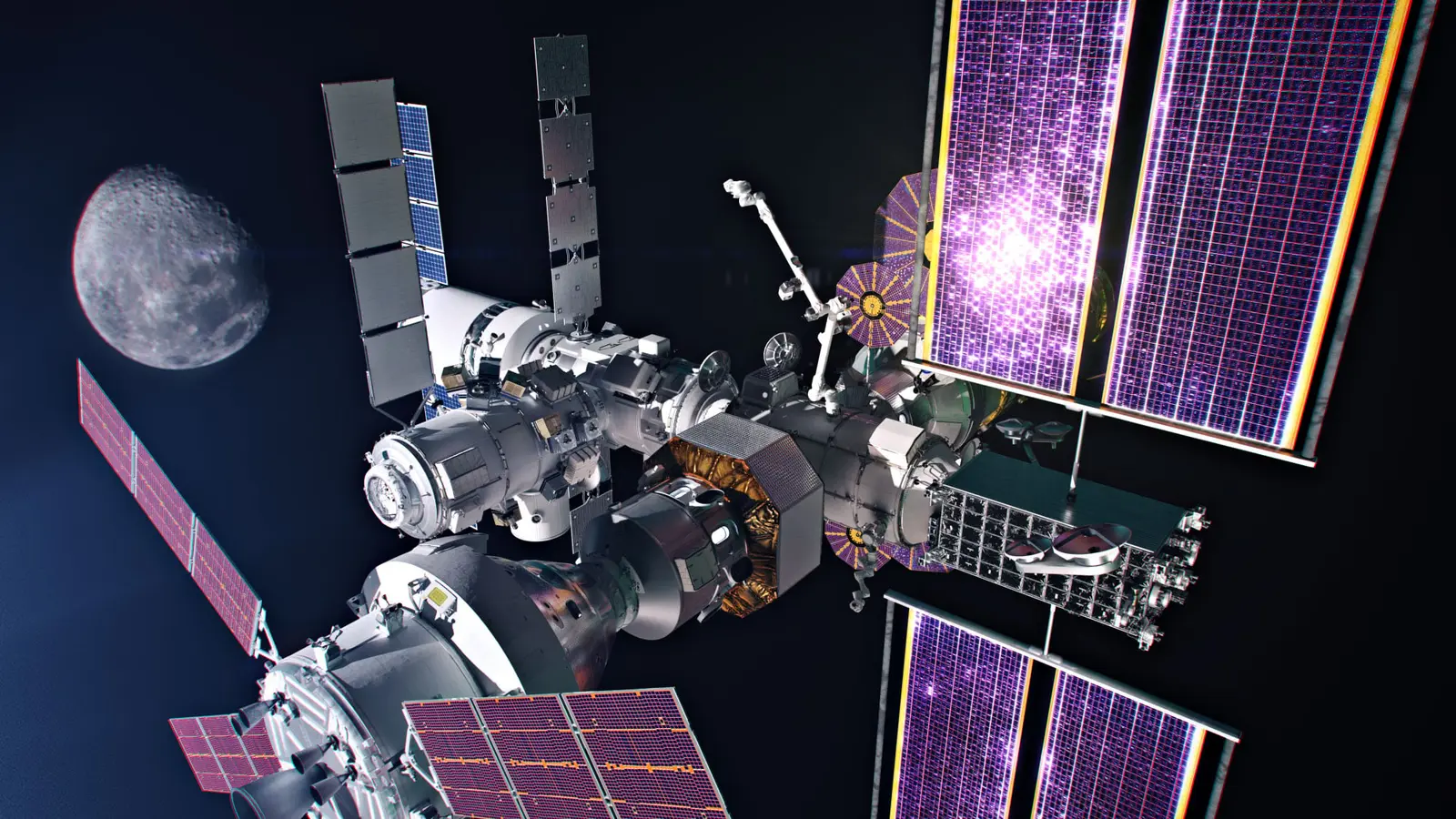
Picture an airport without runways. No terminals. No tarmac. Spacecraft glide along invisible highways carved by Earth and Moon gravity. They do not stop. They orbit. They wait. And someone has to keep them from colliding.
That is the problem Texas A&M engineers, researchers at Purdue, and teams at NASA's Johnson Space Center set out to solve: how to choreograph dozens of vehicles—crew capsules, cargo ships, landers—around Gateway, a planned lunar spaceport in a Near Rectilinear Halo Orbit (NRHO). The orbit is strange, elongated and almost theatrical: one moment Gateway skims within 1,000 miles of the Moon’s north pole; a little later it swings nearly 40,000 miles beyond the south. Beautiful. Unforgiving.
Why does that orbit matter? Because the NRHO is not like low Earth orbit. It is a tug-of-war between Earth and Moon gravity that makes trajectories change subtly, constantly. Small errors add up. A missed thruster pulse here. A navigation uncertainty there. Suddenly, two visiting vehicles that were supposed to be polite neighbors are on an awkward collision course.

Researchers used thousands of computer simulations to study and test how spacecraft can safely position themselves around NASA’s Gateway, balancing precise navigation, fuel efficiency and the challenges of future lunar missions.
To prevent that, the researchers published a set of mathematical guidelines in Acta Astronautica. Not glamorous rules—no uniforms or radios—but algorithms that decide where a spacecraft should loiter, how tightly it can hold station, and when it must burn fuel to stay safe. Think of it as air traffic control for cislunar space: no towers, just physics and math.
Loitering is a deceptively simple idea. A vehicle waits in a carefully chosen orbit segment instead of drifting unpredictably. It remains in motion—always—but its position relative to Gateway is maintained so planners know where it will be an hour, a day, or a week from now. That predictability turns chaos into choreography. Short waits become manageable. Long waits conserve precious propellant.
The team ran thousands of simulations that folded in real-world messiness: navigation noise, imperfect thruster firings, tiny external disturbances. The outcome was hopeful. Modest increases in stationkeeping—small, well-timed burns—produce big improvements in positional accuracy without blowing through fuel reserves. In plain terms: you can keep ships closer to their assigned slots and still save propellant.
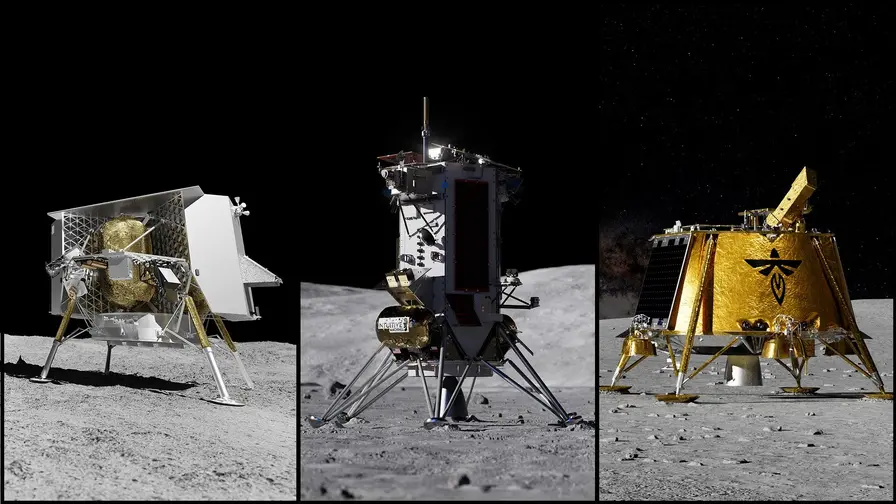

At nearly 240,000 miles from Earth, the moon is getting its first spaceport, Gateway — and engineers developed the mathematical flight manual and orbital “rules of the road” for multiple spacecraft to safely share one of the most challenging environments ever considered for human exploration.
One elegant pattern from the study is evocatively called the 'string of pearls.' Instead of letting visiting craft hang around independently, they line up—ahead of or behind Gateway—like beads on a necklace. Each 'pearl' maintains its place relative to the station, lowering the odds of drift and last-minute evasive maneuvers. It’s simple geometry applied to orbital ballet, and it scales as lunar traffic grows.
‘The future of lunar exploration depends as much on traffic management as it does on rocket science,’ says Dr. Diane Davis, who led much of the work while at NASA and now teaches astrodynamics and mission design. Her team’s approach ties decades of mission planning into a practical framework for the Artemis era and beyond.

From exploring new worlds to building the technology needed to live and thrive beyond Earth, Texas A&M space engineers are tackling the challenges of the next era of space exploration. Their research spans space robotics, long-duration missions, lunar technology and more — helping turn ambitious ideas for the future of space into reality.
There are operational trade-offs. Every burn costs propellant and every minute spent too close to another spacecraft raises risk. But when missions know where one another will be, docking windows tighten, rendezvous maneuvers become more predictable, and the margin for error grows smaller in a good way—smaller in terms of uncertainty, not safety.
We are still early in this story. Gateway’s NRHO will host crewed missions, robotic resupply, and landers that ferry people to the lunar surface. The choreography practiced in simulations will need validation in live operations. Command procedures, navigation updates, and international coordination will follow the math, but humans will make judgment calls.

If human traffic to the Moon becomes routine, it will not be a question of rockets alone. It will be about rules—silent, mathematical rules—that decide who waits, who moves, and how to keep vehicles safely separated nearly 240,000 miles from home.

Leave a Comment
Comments
No comments yet. Be the first.