
4 Minutes
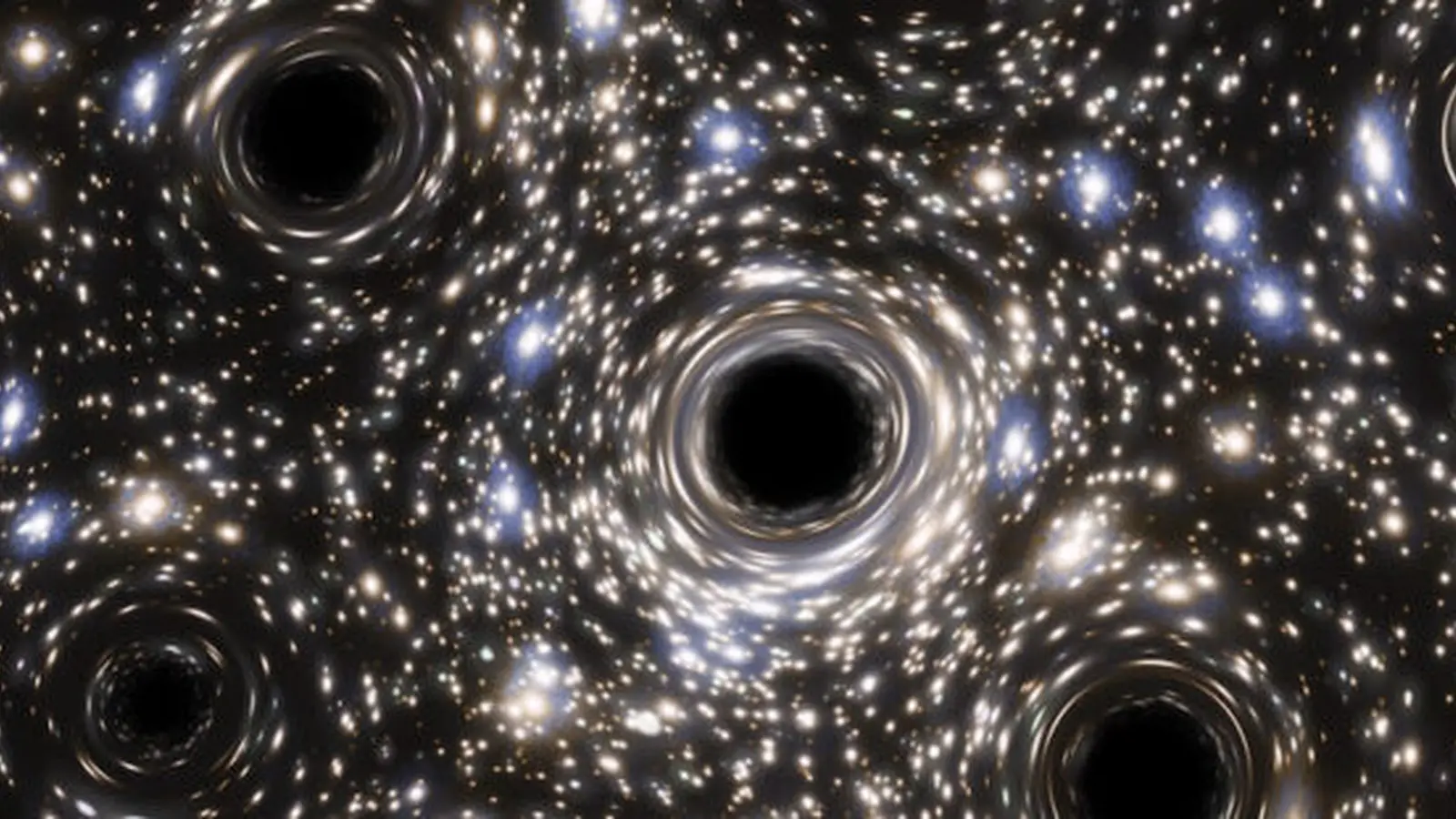
A new theoretical analysis from researchers at the University of Massachusetts Amherst suggests there is roughly a 90% probability that astronomers will observe a black hole explosion within the next decade. The paper proposes these bursts would be the final, violent evaporation of primordial black holes (PBHs) — hypothetical, asteroid-mass remnants formed in the earliest moments after the Big Bang. Detecting such an event would provide direct evidence for Hawking radiation, confirm a population of small black holes, and deliver an unprecedented sample of the universe's constituent particles, including candidates for dark matter and potentially unknown particle species.
Scientific background: Hawking radiation and primordial black holes
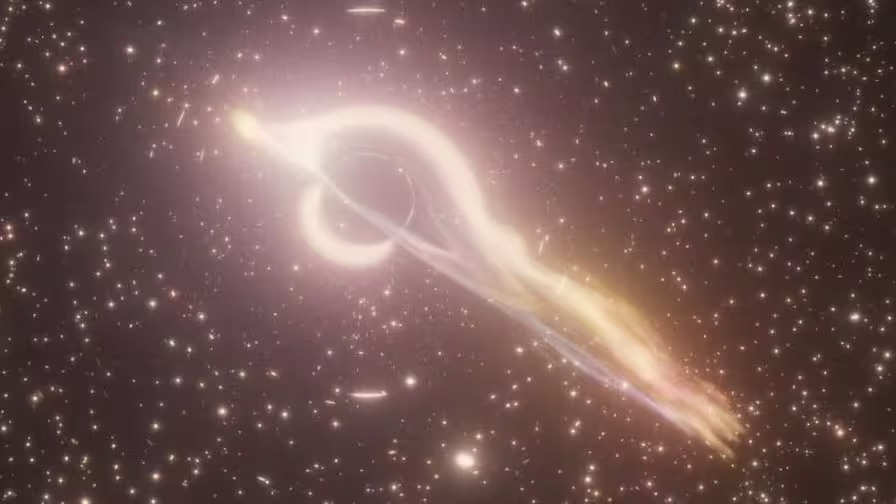
The idea that black holes can emit particles was first introduced by Stephen Hawking in 1974. According to quantum field theory in curved spacetime, black holes should radiate matter and energy — a process now known as Hawking radiation. For large black holes this emission is vanishingly slow, but for very small black holes the radiation intensifies as mass decreases, producing an accelerating evaporation that culminates in a rapid outburst.
Primordial black holes are a distinct theoretical class: instead of forming from stellar collapse, they would have condensed from extreme density fluctuations during the Universe's first fractions of a second. Their expected masses are far smaller than stellar black holes — comparable to asteroids rather than suns — which makes their lifetimes shorter and their final evaporation potentially observable today.
Model refinements and the predicted explosion rate
The UMass Amherst team revisited prior estimates, which placed detectable PBH explosions on average every ~100,000 years. By introducing plausible extensions to the Standard Model of particle physics and exploring alternative charge states for PBHs, they found scenarios where observable explosions occur far more frequently — on the order of once per decade within the observational reach of current gamma-ray telescopes.
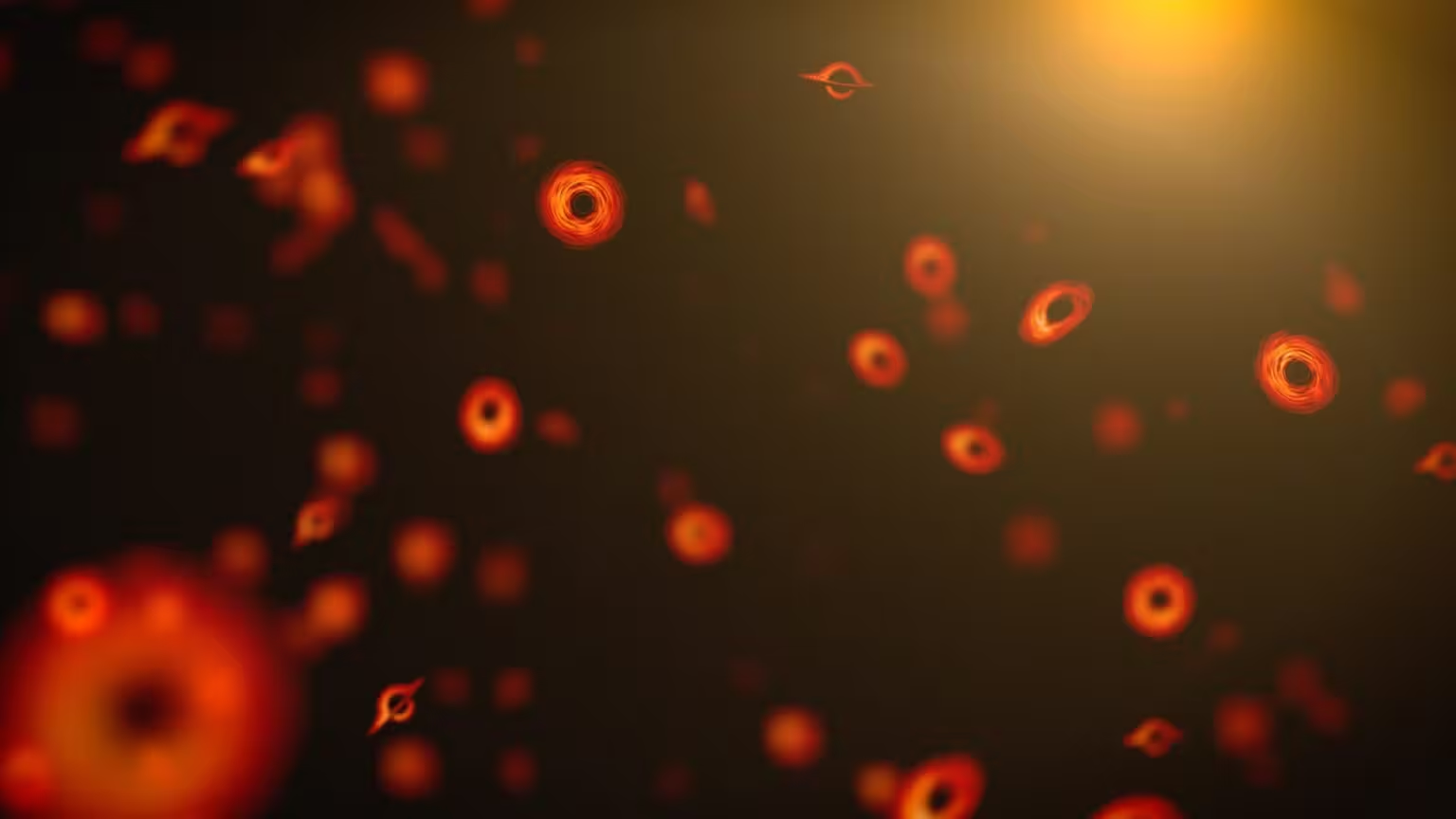
A key modification in several of their simulations is the inclusion of a heavier, hypothesized charged particle sometimes labeled a 'dark electron.' If such particles exist and can be captured by a PBH, they could endow the black hole with an exotic form of electric charge. That charge alters the evaporation dynamics: Hawking emission can be suppressed or delayed while the PBH retains this charge, producing a temporary stabilization. When the stabilization ends, evaporation resumes in a runaway fashion, yielding a final explosive burst detectable across high-energy observatories.
Mechanism and observability

The hotter a black hole becomes, the more and higher-energy particle species it can emit. In the terminal explosion, the spectrum should include the full zoo of fundamental particles permitted by the particle physics framework in effect at those energies. That means not only familiar particles like electrons, protons, and neutrinos, but also any heavier or weakly interacting species — including plausible dark matter candidates — and potentially entirely new particles.
Under the researchers' models, existing gamma-ray instruments could detect such an event roughly once every ten years. A confirmed detection would simultaneously validate PBHs as an astrophysical population and provide the first direct observational evidence of Hawking radiation.
Implications for astrophysics and particle physics
Observing a PBH explosion would be transformative. It would supply a direct laboratory for high-energy particle production in a regime unreachable by terrestrial accelerators, constrain models of early-Universe cosmology, and help narrow the properties of dark matter. Moreover, a detected burst would allow measurement of the emitted particle spectrum, helping to test extensions to the Standard Model that predict heavy charged states or novel interactions.
The study emphasizes that even nondetections over the next decade would be informative: they would place strong limits on the abundance of PBHs and on the properties of any hypothesized charged dark-sector particles.
Expert Insight
Dr. Elena Ruiz, a senior astrophysicist and gamma-ray instrumentation specialist, comments: 'The prospect of observing a PBH explosion is exciting because it ties cosmology, quantum theory, and high-energy astrophysics together. Gamma-ray observatories and particle detectors are better than ever — coordinated searches and rapid follow-up would maximize the science return if a candidate burst appears.'
Conclusion
If the UMass Amherst team's modified models are correct, the coming decade could deliver the first direct observation of a primordial black hole's final evaporation. Such a detection would confirm Hawking's prediction, establish a new population of black holes from the early Universe, and open a window onto the complete particle content of nature — from known standard-model particles to dark-matter candidates and possibly unanticipated species. Either a detection or a strong null result will significantly sharpen our understanding of both cosmology and fundamental particle physics.

Leave a Comment
Comments
No comments yet. Be the first.