
4 Minutes
How a cosmic "accident" exposed hidden silicon chemistry
A faint, ancient brown dwarf nicknamed "The Accident" has delivered the first clear detection of silane (SiH4) in an atmosphere outside Earth — a long‑predicted silicon-bearing molecule that has been notably absent from observations of gas giants such as Jupiter and Saturn. The discovery relied on spectroscopy from NASA's James Webb Space Telescope (JWST) and sheds new light on how silicon behaves in cool, hydrogen‑rich atmospheres.
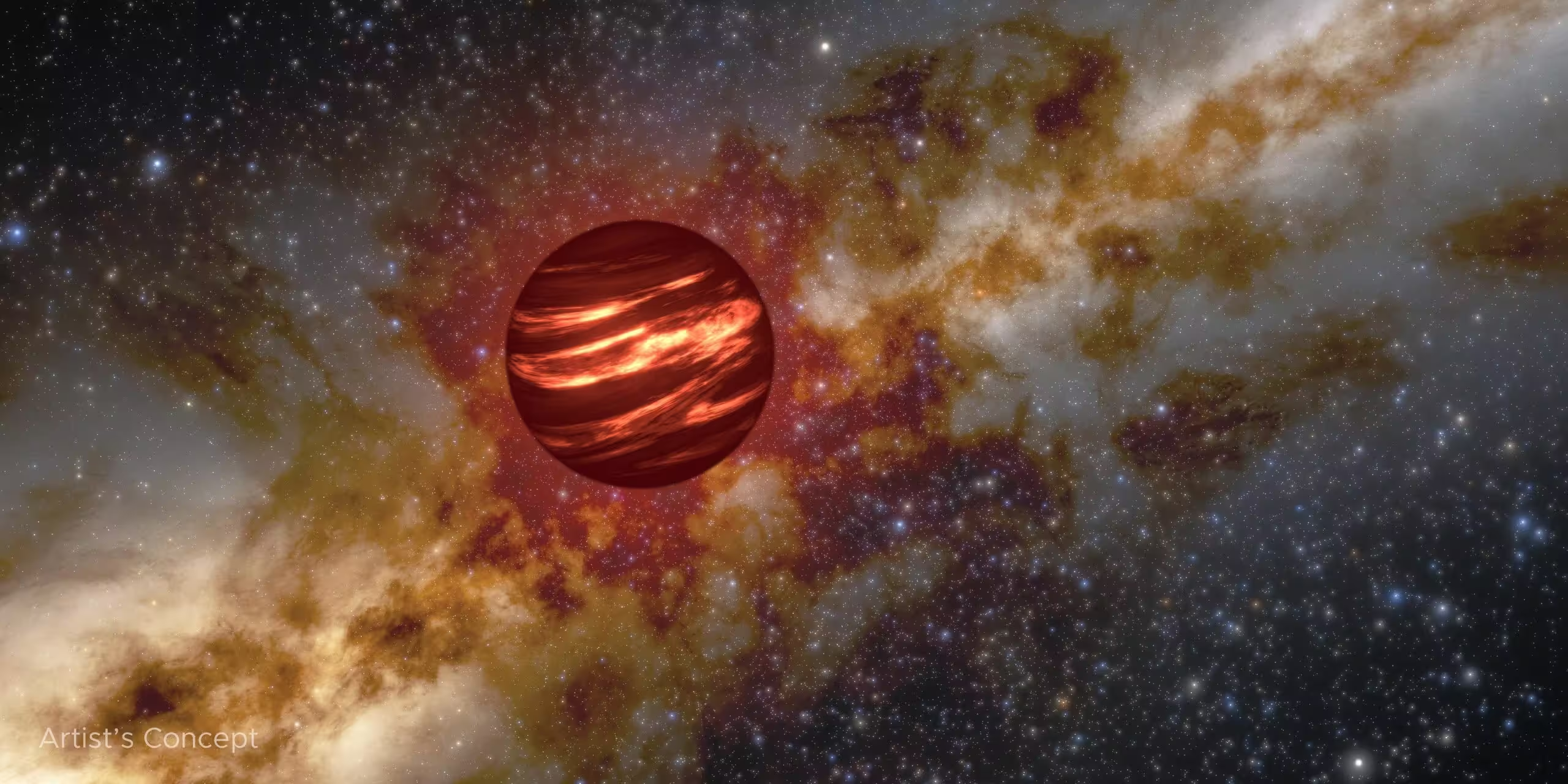
This artist’s concept shows a brown dwarf — an object larger than a planet but not massive enough to kickstart fusion in its core like a star. Brown dwarfs are hot when they form and may glow like this one, but over time they get closer in temperature to gas giant planets like Jupiter.
Discovery: citizen science, NEOWISE and Webb spectroscopy
"The Accident" was first flagged in 2020 by a volunteer participant in the Backyard Worlds: Planet 9 citizen‑science project, using archival data from the NEOWISE infrared survey. The object is a brown dwarf: too small to sustain stellar fusion but large and hot enough at formation to resemble a gas giant in atmospheric structure. Located roughly 50 light‑years away and likely 10–12 billion years old, it stood out because its spectral signatures mixed traits usually attributed to both young and old brown dwarfs.
Because it is faint and chemically unusual, JWST's sensitive infrared spectrometer was required to disentangle its atmospheric composition. Researchers reported the identification of silane in a paper published in Nature on September 4. Silane is a simple molecule of silicon bonded to hydrogen (SiH4) and had been predicted by equilibrium chemistry models to appear in cool, hydrogen‑dominated atmospheres — but direct detections were lacking until now.
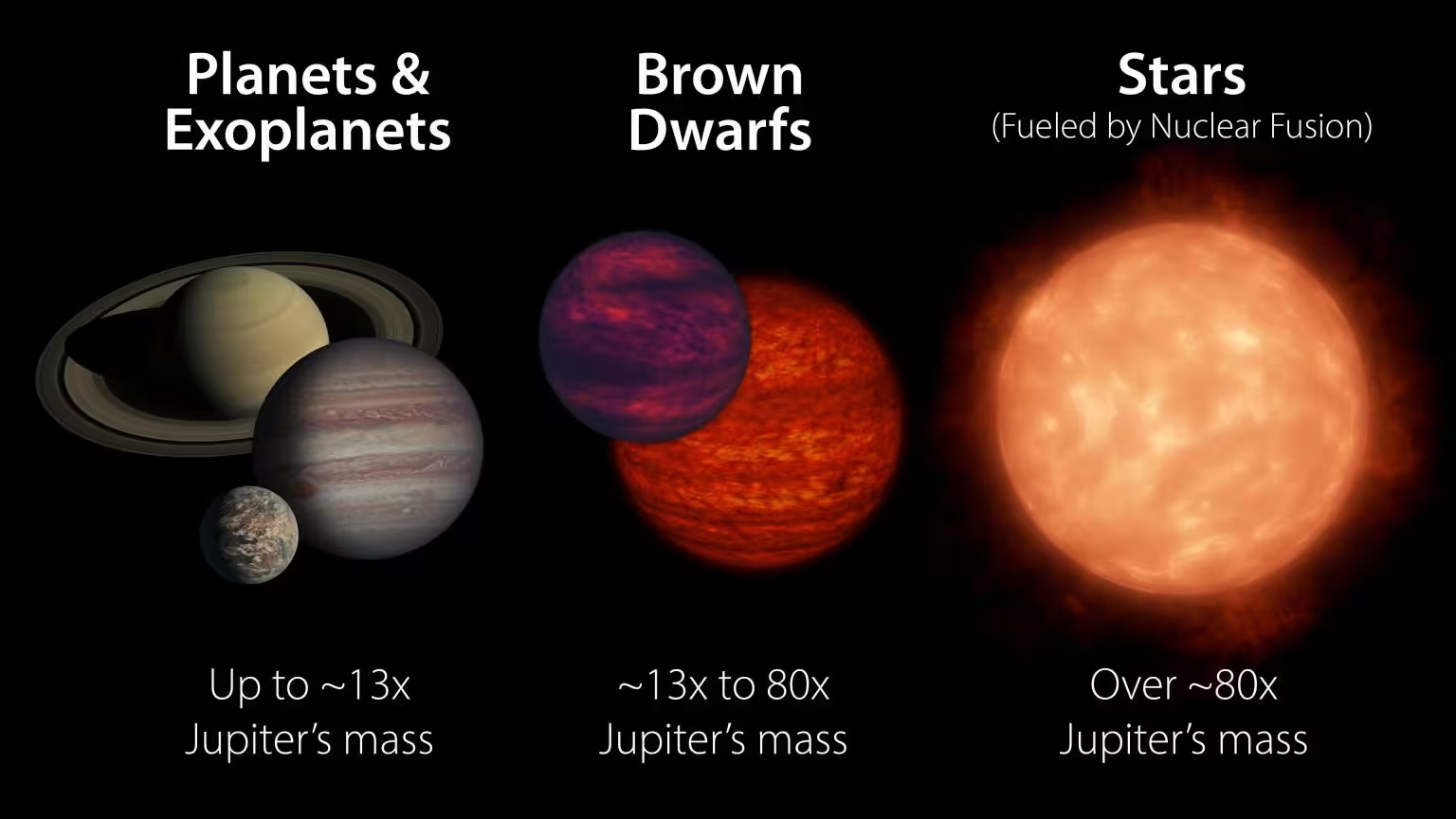
As shown in this graphic, brown dwarfs can be far more massive than even large gas planets like Jupiter and Saturn. However, they tend to lack the mass that kickstarts nuclear fusion in the cores of stars, causing them to shine.
Why silane is rare in observed giant planets
Silicon is abundant in the universe, but in planetary atmospheres it readily bonds with oxygen to form silicate minerals and oxides (for example quartz) that seed clouds and condensates. In hotter gas giants, silicate clouds form high in the atmosphere; on cooler worlds like Jupiter and Saturn, those condensates are predicted to sink beneath layers of water and ammonia clouds, hiding silicon chemistry from remote observations.
Another expectation from models is that if oxygen is scarce, more silicon remains available to form lighter hydrogenated species such as silane. The team proposes that "The Accident" formed early in cosmic history when the interstellar medium contained relatively little oxygen compared with more recently formed objects. With less oxygen to tie up silicon, more silicon could combine with hydrogen to produce detectable SiH4.
Implications for planetary and exoplanet chemistry
Detecting silane in this ancient brown dwarf confirms that silicon can appear as a hydrogenated gas-phase molecule under the right elemental abundances and temperatures. That result helps explain why silane has been missing from spectra of Jupiter, Saturn, other brown dwarfs and many exoplanets: oxygen chemistry dominates silicon under more oxygen‑rich conditions, locking it into condensates deep in the atmosphere.
"Sometimes it’s the extreme objects that help us understand what’s happening in the average ones," said research lead Faherty of the American Museum of Natural History. Peter Eisenhardt of JPL, WISE project scientist, added, "We weren’t looking to solve a mystery about Jupiter and Saturn with these observations... We wanted to see why this brown dwarf is so odd, but we weren’t expecting silane. The universe continues to surprise us."
The finding underscores the value of combining wide‑field infrared surveys, citizen science, and JWST follow‑up spectroscopy. Brown dwarfs, which typically lack a bright stellar companion, provide cleaner laboratories for atmospheric chemistry that can inform models used on exoplanets and, ultimately, on the interpretation of spectra from potentially habitable rocky worlds.
Conclusion
The silane detection in "The Accident" is a targeted confirmation that elemental abundances (especially oxygen) and temperature structure control silicon chemistry in giant‑planet atmospheres. As JWST and future missions expand the sample of characterized atmospheres, the observational picture of silicon, silicates and volatile chemistry will become increasingly complete — improving our understanding of both planets in our solar system and the growing census of exoplanets.


Leave a Comment
Comments
No comments yet. Be the first.