

3 Minutes
The 2024 YR4 Moon Threat and Why It Matters
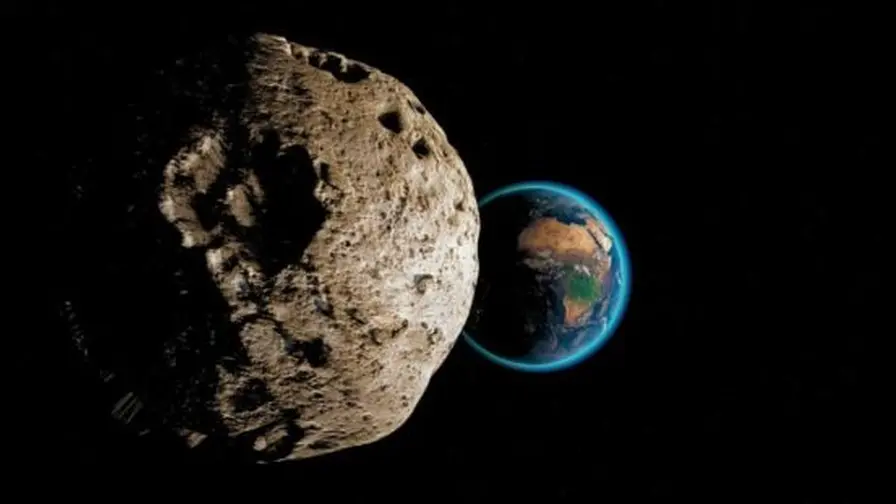
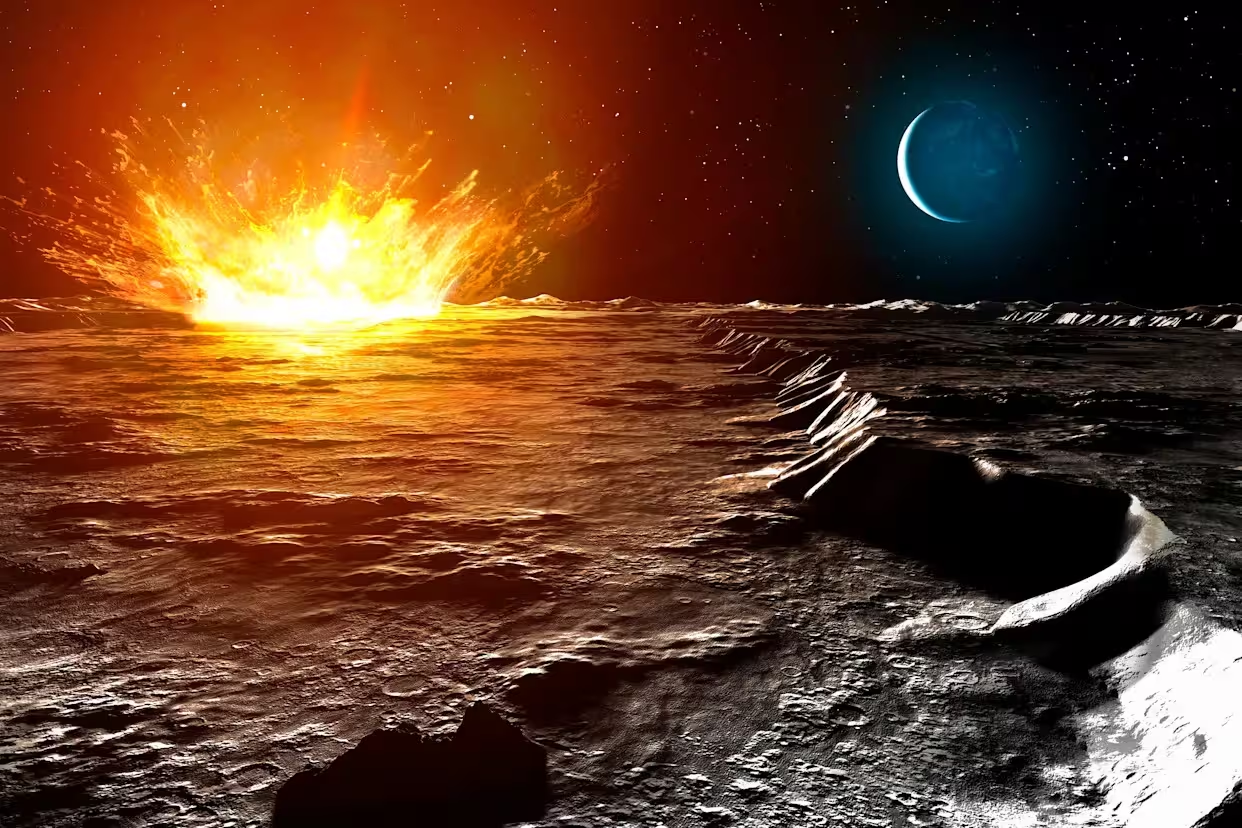
Asteroid 2024 YR4 was initially flagged after discovery because early orbital solutions suggested a non-negligible impact probability with Earth. Subsequent refinements removed any immediate Earth risk, but the object still carries a roughly 4% chance of striking the Moon in December 2032. Although a lunar strike would not directly threaten human bases (no permanent crewed lunar habitats are expected by then), the event could produce a dense debris field and elevate micrometeoroid flux around Earth by orders of magnitude for several days. That surge in debris could damage satellites, pose risk to crewed spacecraft in low Earth orbit, and disrupt critical services that rely on space infrastructure.
Key physical parameters remain uncertain. Telescope observations estimate 2024 YR4’s diameter at about 60 meters ±10%, but mass depends on poorly constrained density. Current mass estimates span from roughly 5.1×10^7 kg to over 7.11×10^8 kg. That wide range changes the kinetic energy required to alter its trajectory or fragment it, and therefore affects mission design and propulsion needs. Accurate mass and structure data are essential before committing to a specific mitigation strategy.
Mitigation Pathways: Deflection, Fragmentation, or Nuclear Disruption
Two principal strategies can prevent a lunar impact: deflect the asteroid onto a safe trajectory, or disrupt it into smaller pieces. Deflection is generally preferred because a modest change in velocity applied early can shift an impact point by thousands of kilometers. The required delta-v scales inversely with lead time, so an earlier mission requires far less propulsive effort. However, precise deflection demands reliable mass and density measurements. The paper from NASA and collaborating researchers recommends reconnaissance in 2028 as the best time to constrain mass—only three years from now—making mission planning and launch schedule tight.
Given the short window, repurposing spacecraft already in development or flight could be faster than building a bespoke probe. Candidate assets include the extended OSIRIS-REx (OSIRIS-APEX) trajectory, the Psyche mission, or even the Janus spacecraft in storage. Redirecting any of these would sacrifice their planned science targets, and reaching 2024 YR4 with sufficient observational geometry to measure mass and internal structure may still be challenging.
If deflection proves infeasible or the mass is misestimated, controlled disruption becomes an option. Kinetic impactors—large masses deliberately collided with the asteroid—can alter trajectory or fragment the body into many smaller pieces. NASA’s DART mission demonstrated the principle of momentum transfer, though intentionally breaking a 60‑meter object into tens of 10‑meter fragments is a different engineering challenge. According to modeling in the study, a nuclear disruption using a standoff detonation (a blast set at an optimal "height of burst" above the surface) is technically feasible: a 1‑megaton yield would be sufficient to disrupt or disperse 2024 YR4 across the plausible mass range. This energy level exists within current national arsenals, but employing nuclear devices in space raises legal, political and environmental questions that go well beyond technical feasibility.
Timelines, Risks and Policy Considerations
Mission windows identified in the analysis range from April 2030 to April 2032 for interceptor launches aimed at fragmentation or disruption. Reconnaissance ahead of that—ideally in 2028—remains the critical step to narrow mass and structure uncertainties. Decision-makers must weigh engineering readiness, international law (including the Outer Space Treaty), and the diplomatic implications of deploying nuclear devices in space. Even if the probability of a lunar strike remains low, developing and validating mitigation options now improves planetary defense readiness for future threats.

In short, 2024 YR4 illustrates the interplay between orbital monitoring, rapid mission planning, and policy: early reconnaissance enables low-energy deflection, while fragmentation or nuclear disruption remain technically viable contingency options if timelines or uncertainties demand them.

Leave a Comment
Comments
No comments yet. Be the first.