
5 Minutes
Early Earth was chemically set — but dry
New research from the Institute of Geological Sciences at the University of Bern shows that the basic chemical composition of the proto-Earth was effectively established within about three million years of the Solar System’s birth. Using high-precision isotope measurements and modelling, the team concludes the young Earth's building blocks lacked the volatile elements essential for biology — notably water and carbon compounds. A subsequent giant impact with a water-rich body, commonly called Theia, likely supplied the volatiles that transformed a barren rock into a blue, life-bearing planet.
Scientific background: volatiles, condensation, and the inner Solar System
In the protoplanetary disk that birthed our Solar System, volatile elements such as hydrogen, carbon and sulfur were abundant in the colder, outer regions. But near the early Sun — where Mercury, Venus, Earth and Mars eventually formed — temperatures were high enough that these volatiles remained gaseous and did not condense into solid grains. Planetary embryos that accreted in the inner disk therefore incorporated very little of these life-essential compounds. Only objects formed in cooler regions could retain large volatile inventories.
This thermal segregation of volatiles is a key reason why understanding when Earth acquired its chemical signature matters for models of habitability and volatile delivery. If Earth’s primary accretion phase concluded while the inner disk remained depleted in condensable volatiles, then late delivery mechanisms become necessary to explain the present-day oceans and atmosphere.
Methods: manganese-53 chronometer and isotopic fingerprints
The Bern team combined isotope and elemental data from meteorites and terrestrial rocks, using model calculations to reconstruct the timing and composition of planetary building blocks. Central to their approach was a high-precision chronometer based on the radioactive decay of manganese-53 (53Mn) to chromium-53 (53Cr). With a half-life of roughly 3.8 million years, the 53Mn–53Cr system can resolve events in the first few million years of Solar System history with sub‑million-year precision.
"A high-precision time measurement system based on the radioactive decay of manganese-53 was used to determine the precise age," said Dr. Pascal Kruttasch, lead author of the study. The University of Bern’s expertise in isotope geochemistry and analysis of extraterrestrial materials enabled these finer age constraints. Comparing the isotopic signatures of meteorites, which sample different formation zones of the early disk, to terrestrial samples allowed the researchers to infer when the Earth’s bulk chemistry reached its present pattern.
Key findings and implications for Earth's habitability

The study indicates that the proto-Earth’s chemical makeup — its relative proportions of refractory and volatile-depleted components — was essentially fixed within about three million years after the Solar System formed some 4,568 million years ago. That rapid chemical closure implies the early Earth was a predominantly dry, rocky body incapable of supporting liquid-water oceans or robust carbon chemistry.
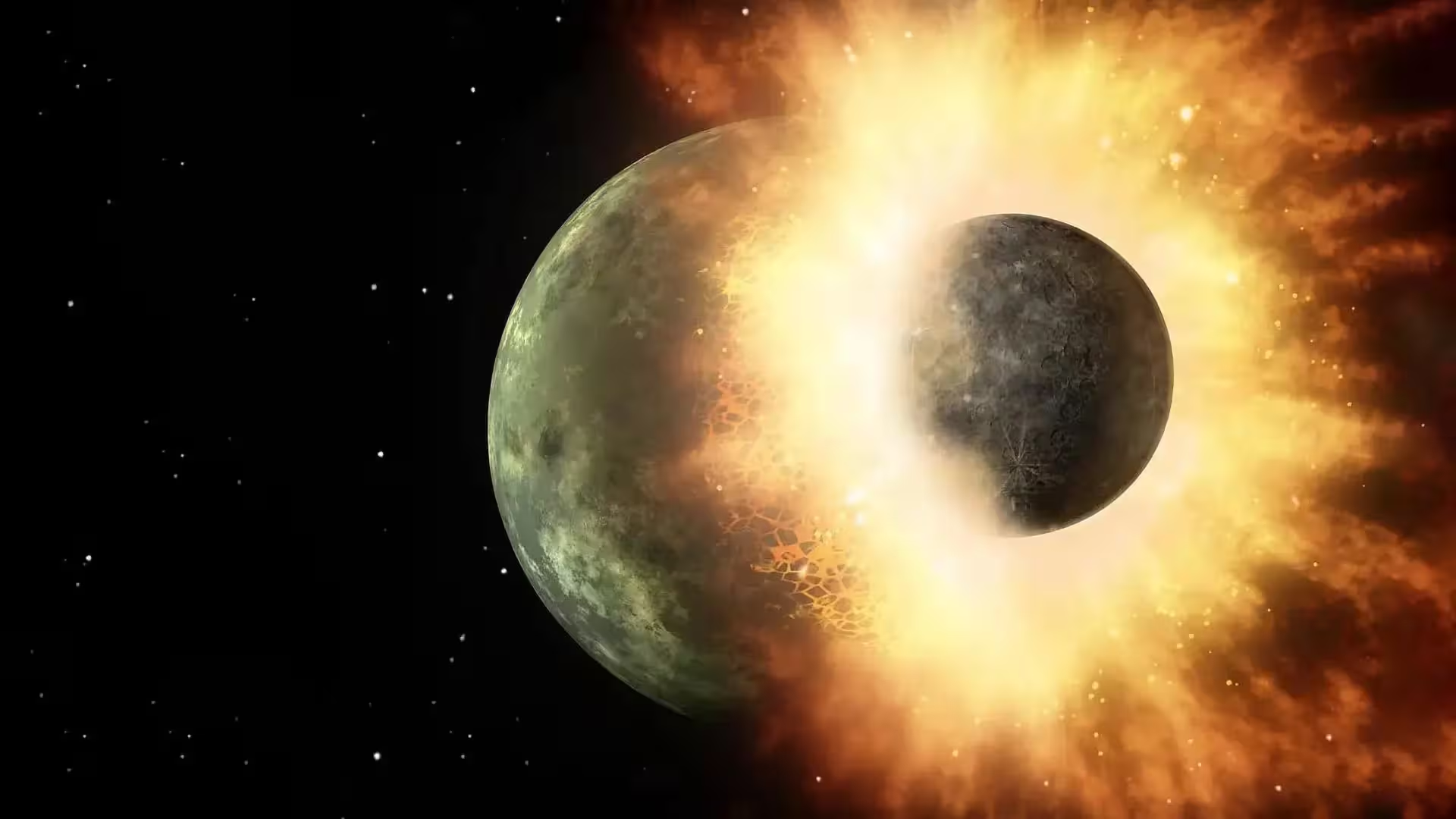
The researchers argue that a later event, most plausibly the giant impact with Theia, provided the decisive pulse of volatiles. Theia is thought to have originated farther from the Sun where icy and volatile-rich materials were more common. A massive collision would both add volatiles and explain the formation of the Moon, reconciling physical and isotopic constraints.
"Thanks to our results, we know that the proto-Earth was initially a dry rocky planet. It can therefore be assumed that it was only the collision with Theia that brought volatile elements to Earth and ultimately made life possible there," Kruttasch said. Professor Klaus Mezger of the University of Bern adds that this scenario emphasizes the role of contingent, stochastic events in creating habitable worlds: "The Earth does not owe its current life-friendliness to a continuous development, but probably to a chance event — the late impact of a foreign, water-rich body. This makes it clear that life-friendliness in the universe is anything but a matter of course."
Broader relevance: planetary formation and the search for habitable worlds
If Earth's habitability depends on a rare late delivery of volatiles, then life-friendly planets may be less common than models that assume uniform volatile distribution predict. The study informs exoplanet science, suggesting that detecting potentially habitable rocky planets requires accounting for their accretion history and possible late impacts. It also constrains dynamical models of planet formation and the conditions under which volatile-rich bodies can migrate inward.
Future work will focus on simulating the Theia impact in more detail to reproduce not only the physical outcomes (Earth-Moon mass and angular momentum) but also the chemical and isotopic signatures preserved in terrestrial and lunar rocks. Improved models, combined with continued isotope measurements of meteorites and lunar samples, will test whether the Theia-impact hypothesis can fully account for Earth's volatile budget.
Expert Insight
Dr. Elena Marquez, planetary scientist at the European Space Agency (fictional for context), comments: "This study elegantly combines high-resolution isotope clocks with dynamical thinking. If validated by further isotopic constraints and impact simulations, it strengthens the idea that terrestrial habitability is often the product of particular, non-repeating events. For exoplanet surveys, that means we should prioritize systems where late-stage delivery of volatiles is dynamically plausible."
Conclusion
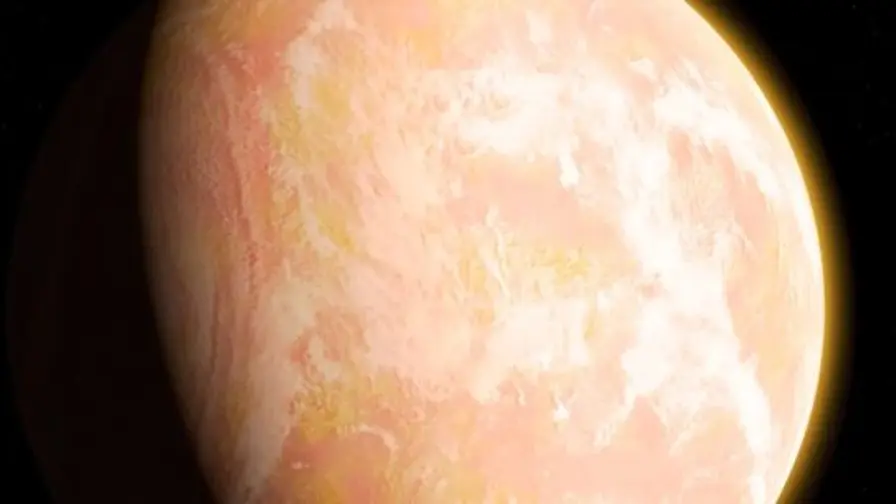
The University of Bern study advances our understanding of early Earth by showing that its bulk chemistry was set quickly and initially lacked the volatiles required for life. A later, stochastic impact with a water-rich body—Theia—remains the most compelling explanation for how Earth acquired its oceans and an atmosphere conducive to life. These findings highlight the importance of timing and chance in planetary habitability, with direct implications for models of planet formation and the search for life beyond our Solar System.

Leave a Comment
Comments
No comments yet. Be the first.