
3 Minutes
NASA assigns ESCAPADE to Blue Origin’s New Glenn for fall 2025 launch
More than two years after NASA selected a launch provider and roughly a year after its original schedule, the ESCAPADE mission is finally set to depart Earth in fall 2025. ESCAPADE (Escape and Plasma Acceleration and Dynamics Explorers) will study how the solar wind interacts with Mars and how solar activity drives atmospheric escape — a process that gradually strips gases from the planet’s upper atmosphere.
Mission design and scientific objectives
ESCAPADE uses two identical small spacecraft placed at different locations around Mars to create a stereo, time-resolved view of the planet’s space environment. Each spacecraft carries a compact science suite designed to measure magnetic fields, charged particles and plasma properties. Instruments include:
Key instruments
- Magnetometer — to map local magnetic fields and detect crustal magnetic anomalies.
- Electrostatic analyzer — to measure ions and electrons and characterize particle energies and flows.
- Langmuir probe — to measure plasma density and solar ultraviolet flux that affect ionization and escape.
Together, these measurements will help scientists quantify how the solar wind and transient space-weather events (such as solar flares and coronal mass ejections) inject energy into Mars’ upper atmosphere and promote loss of volatile species to space. Understanding these processes refines models of climate evolution on Mars and informs design considerations for future crewed missions and surface assets.
Launch vehicle and timeline
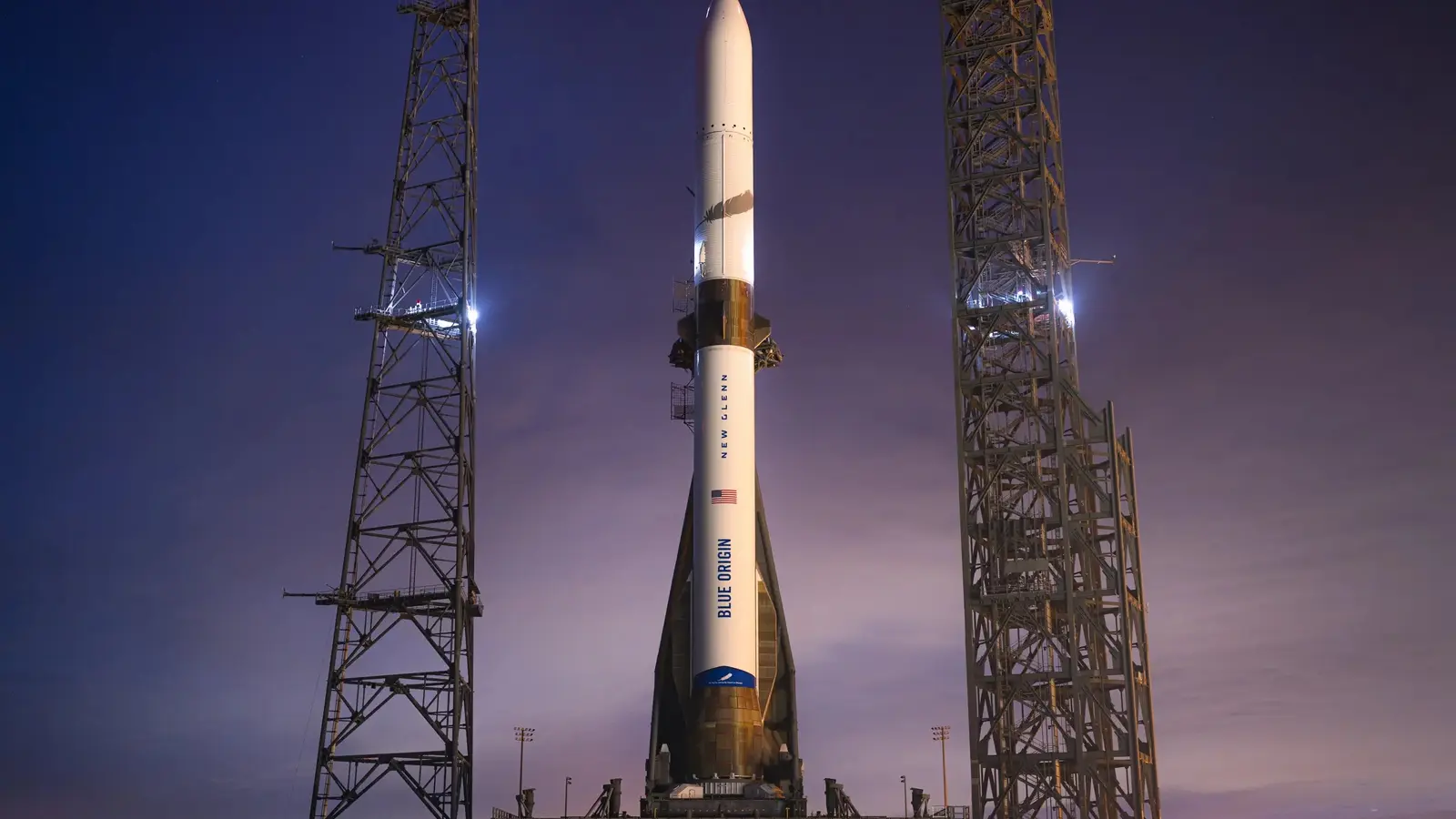
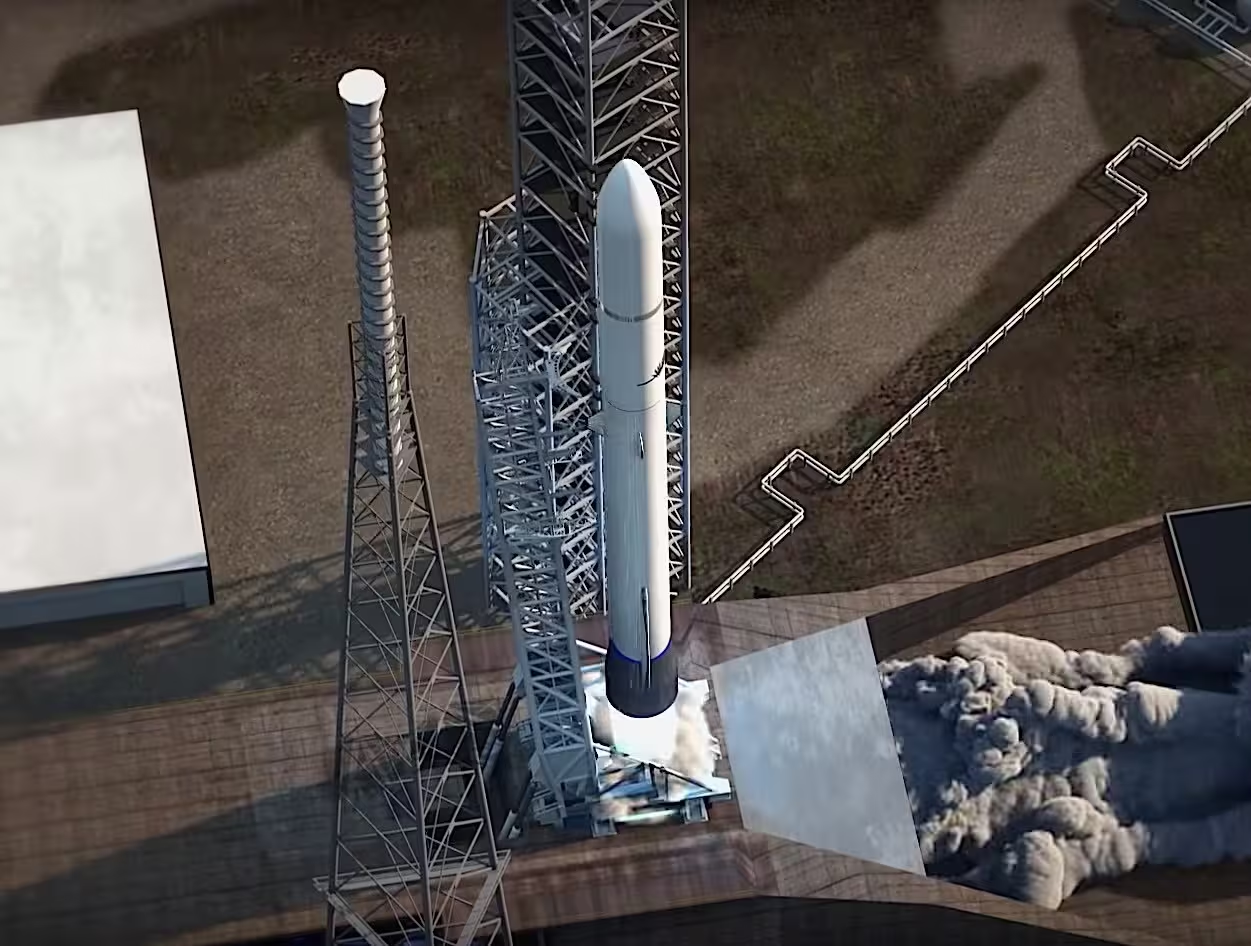
NASA contracted Blue Origin to launch ESCAPADE on its heavy-lift New Glenn rocket from Space Launch Complex 36 at Cape Canaveral Space Force Station in Florida. Originally planned as a New Glenn maiden flight, ESCAPADE is now slated to be carried on the vehicle’s second operational mission after the first flight occurred earlier in 2025 carrying a prototype Blue Ring spacecraft.
The two ESCAPADE spacecraft will perform an interplanetary transfer lasting about 11 months. After arrival at Mars they will use orbital insertion and phasing maneuvers to reach complementary vantage points and begin coordinated science operations. Scientists expect science returns to begin within months of arrival as instruments map plasma conditions and magnetospheric response in near-real time.
New Glenn capabilities and technology
New Glenn offers a notably large payload fairing — 7 meters (23 feet) in diameter — giving ESCAPADE and similar payloads more usable volume than many competing launchers. The vehicle can deliver roughly 13 metric tons to a transfer orbit for Mars missions.
Propulsion comes from seven BE-4 engines on the first stage; each produces approximately 550,000 pounds of sea-level thrust. The BE-4 is a liquid oxygen (LOX) and liquefied natural gas (LNG) staged-combustion engine developed for high performance and reusability. New Glenn’s first stage is designed for multiple reuses and is rated for at least 25 flights before retirement, reducing launch costs over a flight profile.
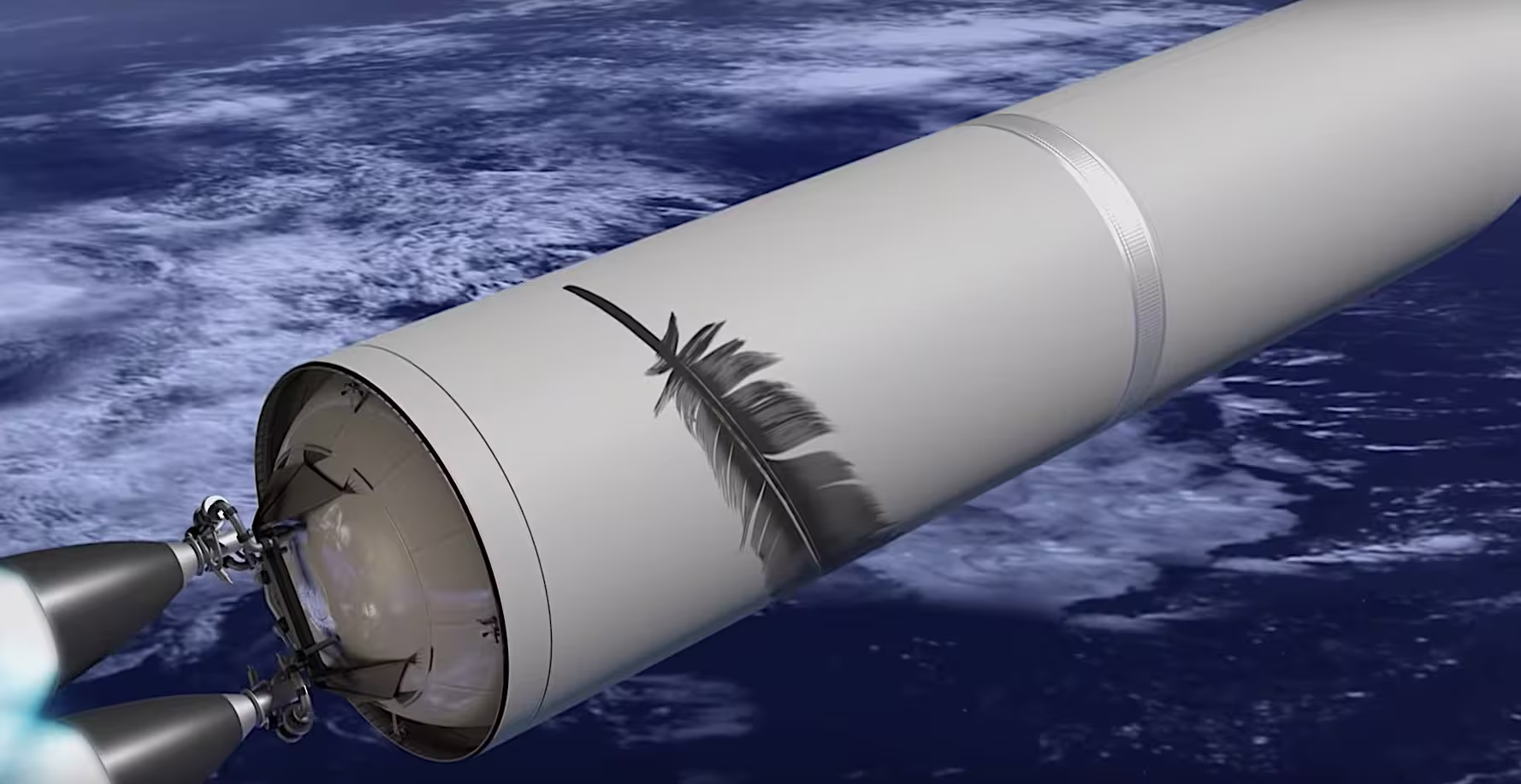
It is not yet publicly confirmed whether the New Glenn that will carry ESCAPADE is the same booster used on New Glenn’s initial mission earlier this year.
Scientific context and implications
Mars has no global intrinsic magnetic field like Earth’s; instead, localized crustal magnetism and the solar wind govern its near-space environment. By measuring the interplay of particles, fields and ultraviolet-driven ionization, ESCAPADE will help close gaps in our understanding of how atmospheric escape rates vary with solar activity. These data sharpen predictions of long-term climate change on Mars and assess potential radiation and plasma hazards to orbital and surface systems.
Conclusion
ESCAPADE’s twin-spacecraft approach combined with New Glenn’s lift capacity makes this mission a significant step toward detailed, time-resolved studies of Martian space weather. Results from ESCAPADE will contribute to planetary science, habitability studies, and engineering designs for sustained human presence at Mars.


Leave a Comment
Comments
No comments yet. Be the first.