
6 Minutes
Scientists find a deep thermal divide in the Moon
Scientists analyzing samples from China’s Chang’e 6 mission report that the far side of the Moon is significantly cooler deep inside than the hemisphere that always faces Earth. The finding, based on laboratory study of basaltic rock and soil returned from a large far-side crater, supports a long-standing hypothesis that the Moon’s interior is thermally asymmetric and that this imbalance extends well below the surface.
The team — led by researchers at University College London (UCL) and Peking University and published in Nature Geoscience — dated the Chang’e 6 sample at about 2.8 billion years old and used mineral chemistry and isotope techniques to reconstruct the temperatures at which its parent magma crystallized. They estimate formation temperatures near 1,100 °C for the far-side lava, roughly 100 °C lower than comparable basalts from the near side returned by past missions.
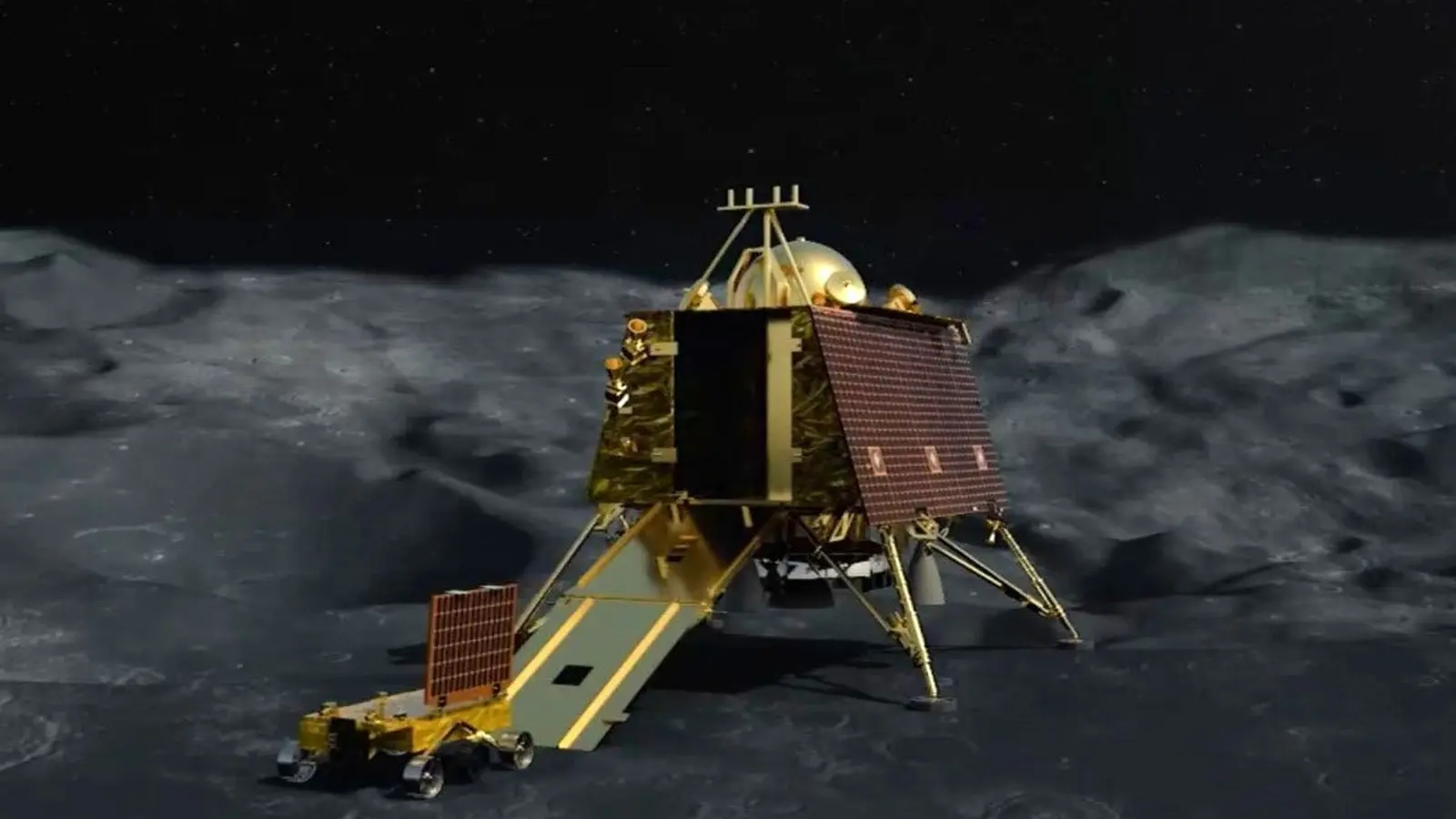
Chang’e 6 mission and returned samples
Chang’e 6 landed on the lunar far side and returned approximately 300 grams of rock and regolith allocated to the Beijing Research Institute of Uranium Geology for detailed analysis. Sheng He, first author affiliated with that institute, noted the significance: this material is the first laboratory-accessible sample from the far side of the Moon, providing a direct window into a hemisphere previously explored only by orbiters and remote sensing.
The sample is dominated by basaltic grains. Researchers mapped selected mineral grains with an electron probe to determine major-element chemistry and used ion-probe (SIMS) measurements of lead isotopes to date the rock via uranium–lead decay. Professor Pieter Vermeesch (UCL) contributed data processing methods that refined the age estimate to about 2.8 billion years.
How scientists reconstructed ancient temperatures
The team combined several independent approaches to infer the temperatures at which the far-side magma formed and its deeper parent source melted:
Mineral chemistry and thermometry
By measuring the composition of coexisting minerals in the basalt and comparing those compositions against thermodynamic models and laboratory-calibrated geothermometers, scientists estimated the crystallization temperature of the rock. This direct mineral-chemistry method gave an estimate near 1,100 °C.
Parent-rock thermometry and melt modeling

To probe earlier stages in the rock’s history, the researchers reconstructed the chemistry of the parent magma — the melt from which the collected basalt crystallized — and used melting models to estimate the temperature required to generate that melt from the mantle. That calculation again returned a temperature roughly 100 °C cooler than analogous estimates for near-side rocks from Apollo-era and other missions.
Satellite-based thermal proxies
Because returned samples remain limited, the team also compared satellite-derived compositional maps for the Chang’e 6 landing site with comparable data from near-side volcanic regions. These remote-sensing comparisons produced a consistent result, indicating a parent-rock temperature difference of about 70 °C between the two hemispheres.
Together, the multiple, independent lines of evidence strengthen the conclusion that the far-side mantle was cooler when these lavas formed and possibly remains cooler at depth today.
Why the far side may be cooler: KREEP and ancient reshuffling
The Moon’s volcanic history and internal heat budget are strongly influenced by the distribution of heat-producing elements (HPEs) such as uranium, thorium, and potassium. On the Moon these HPEs commonly occur with phosphorus and rare-earth elements in KREEP-rich material (K: potassium, REE: rare earth elements, P: phosphorus). KREEP concentrates heat-producing isotopes and thus enhances melting and volcanic activity where it is abundant.
However, remote sensing and now sample analysis indicate KREEP and other HPEs are concentrated on the near side. The resulting asymmetry in radiogenic heating provides a plausible mechanism for a warmer near-side mantle and more abundant basaltic volcanism there.
Researchers have proposed several processes to explain this uneven distribution:
- A massive, ancient impact on the far side could have redistributed dense, HPE-bearing materials toward the near side during the Moon’s early molten phase.
- The Moon may have collided with a smaller satellite or a second moon early in its history, producing two thermally distinct bodies that later merged into today’s Moon, leaving compositional contrasts between hemispheres.
- Earth's tidal influence and long-term gravitational interactions could have focused heating or influenced mantle convection patterns preferentially on the near side.
Each hypothesis has different implications for lunar origin and evolution. The new Chang’e 6 sample provides a direct constraint that any successful theory must match: the far-side mantle source was cooler by roughly 70–100 °C at the time the sampled lavas formed.
Scientific implications and future exploration

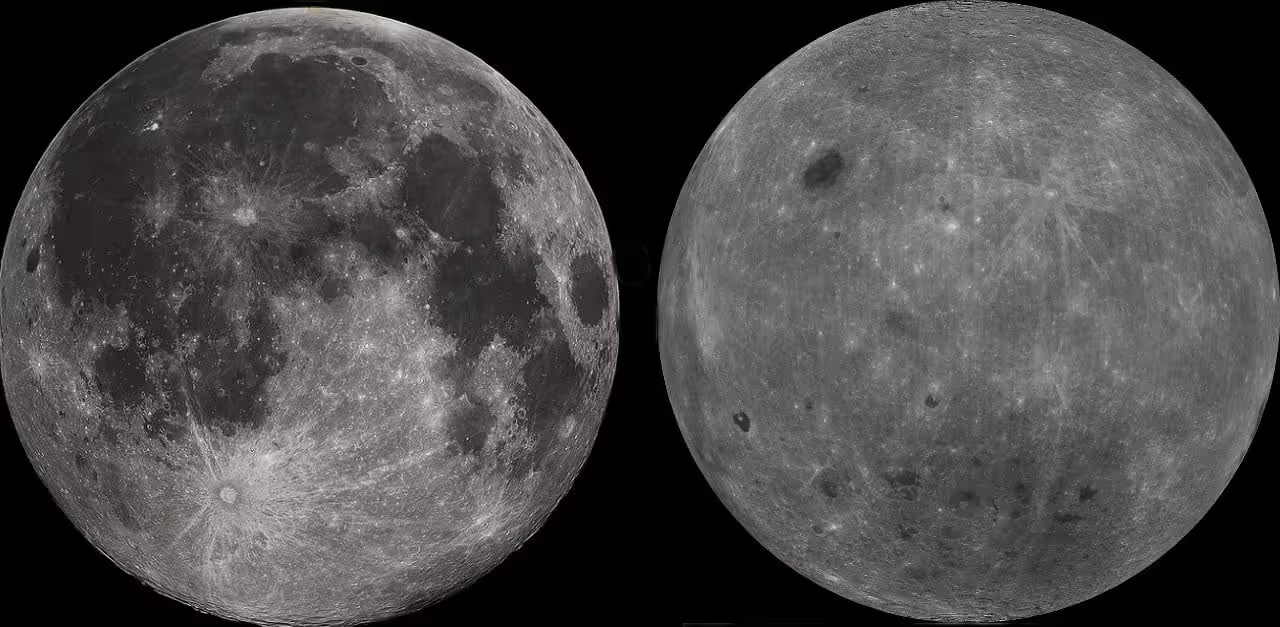
This temperature contrast helps explain why the lunar near side hosts extensive maria — dark basaltic plains created by volcanic eruptions — while the far side has a thicker, more cratered crust with fewer basaltic plains. A cooler far-side mantle would be less prone to melting and surface volcanism, producing the rugged, highland-dominated landscape observed by orbiters.
If the near-side mantle indeed contains a KREEP-enriched reservoir, that reservoir may have powered sustained volcanic activity later in lunar history. That would affect not only interpretations of lunar volcanism but also models of the Moon’s thermal evolution, crust formation, and magnetic history.
For lunar geologists and mission planners, the result underscores the value of returned samples from different lunar provinces. Chang’e 6’s far-side material complements Apollo and Luna near-side samples and highlights the need for future sample-return missions from diverse terrains to map the Moon’s interior in three dimensions.
Methods and technologies behind the discovery
The study combined classical petrology with modern microanalytical tools:
- Electron probe microanalysis produced precise major-element maps of minerals and glass, revealing crystallization histories.
- Secondary Ion Mass Spectrometry (SIMS) measured minute differences in lead isotopes to provide a robust uranium–lead age for the rock.
- Thermodynamic models and empirical mineral-melt equilibria were used to convert measured compositions into temperature estimates.
These techniques — now standard in planetary geoscience laboratories — are critical for extracting the maximum amount of information from gram-scale extraterrestrial samples.
Expert Insight
"Direct samples change everything," says Dr. Aisha Rahman, a planetary geologist at the Lunar and Planetary Laboratory, University of Arizona. "Remote sensing gives broad patterns, but returned rocks let us reconstruct precise temperatures, ages, and melt histories. The Chang'e 6 results provide a much-needed ground truth that will refine models of lunar thermal evolution and guide where we send future missions."
Dr. Rahman adds, "If the far side is systematically cooler at depth, that has implications for the Moon’s long-term cooling, the timing of mare volcanism, and even the distribution of resources for future exploration."
Conclusion

Analysis of Chang’e 6 samples offers the first direct evidence that the lunar far side’s interior was cooler than the near side when the sampled basalts formed about 2.8 billion years ago. Multiple independent thermometric approaches — mineral chemistry, parent-melt models, isotope dating, and satellite proxies — converge on a temperature difference of roughly 70–100 °C. The results support hypotheses that KREEP enrichment and early large-scale redistribution of interior materials created a persistent hemispheric thermal contrast. Continued analysis of Chang’e 6 samples and future targeted sample returns will be essential to resolve competing origin scenarios and to map the Moon’s interior thermal structure in greater detail.

Leave a Comment
Comments
No comments yet. Be the first.