
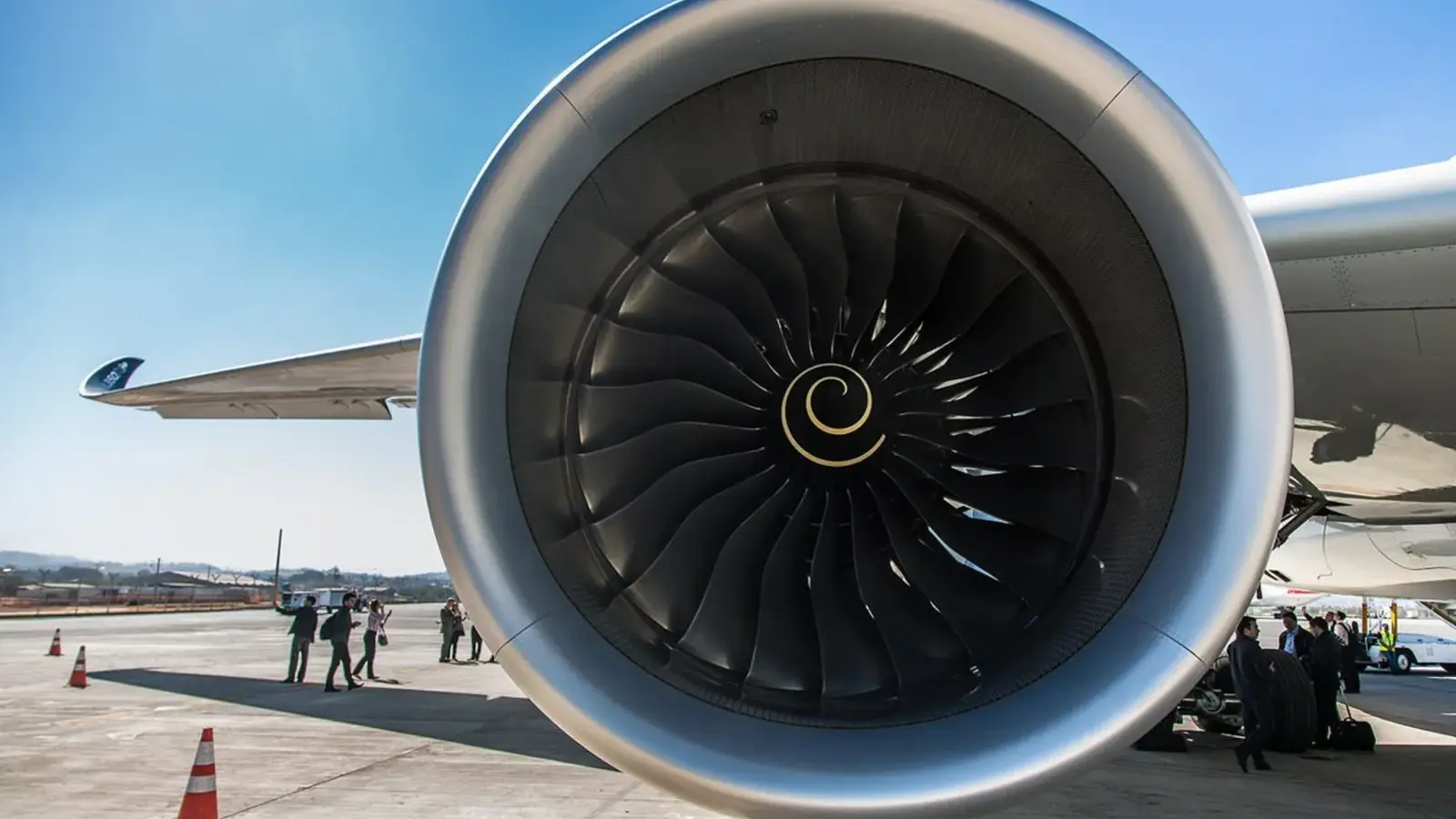
Chinese engineers have unveiled a prototype jet engine that promises to run without fossil fuels or batteries. Using ambient air and focused microwave energy, this microwave-driven plasma engine generates thrust by compressing and ionizing air into plasma — a high-energy state of matter — potentially changing aviation’s carbon footprint.
How a microwave plasma engine actually works
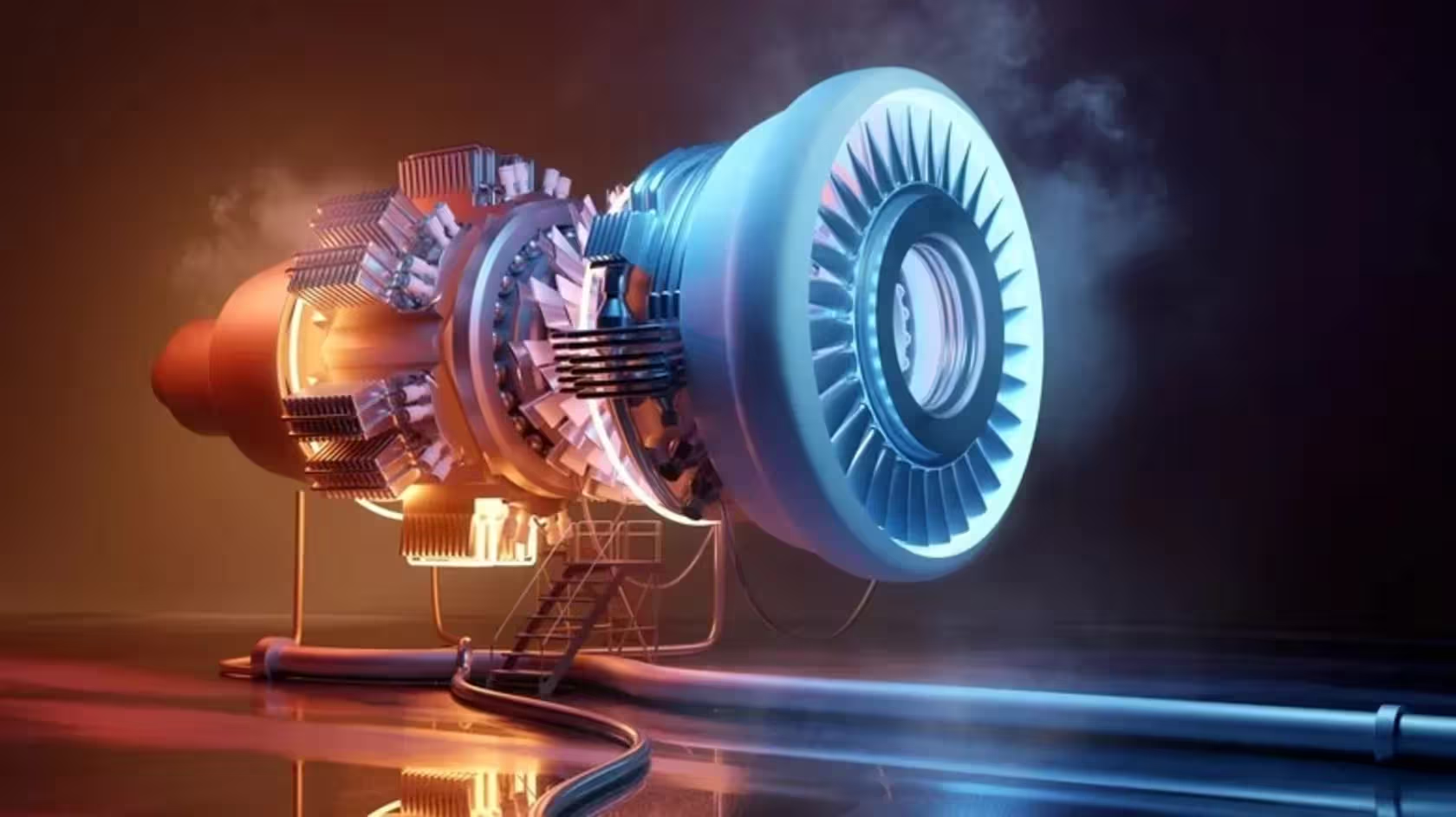
The core idea is deceptively straightforward: compress ambient air, then irradiate it with low-frequency microwave waves to create plasma. When microwaves interact with the compressed air, electrons are stripped from atoms and a plasma forms. That plasma can release energy and produce a high-velocity exhaust stream that generates thrust.
Unlike combustion-based jet engines, the plasma design contains no burning of kerosene, no onboard oxidizers and no chemical combustion byproducts. Engineers report that the microwave frequencies involved are comparatively low — akin to those used in household microwaves — though the power levels and engineering controls are far more sophisticated.
Origins and early demonstrations
The concept traces back to experiments in 2020 led by Professor Jiao Tang at Wuhan University, originally exploring microwave-assisted synthesis of synthetic diamond. During those laboratory trials Tang and his team observed conditions under which microwaves could sustain and manipulate plasma in compressed air, and the idea of applying that physics to propulsion took shape.
The first proof-of-concept device reportedly levitated a steel sphere of roughly 900 grams — a modest mass, but a meaningful milestone for a novel propulsion approach. To evolve from levitating a small object to powering a full-sized aircraft will require much larger plasma chambers, stable and portable high-power microwave sources, and rigorous flight and safety testing.
Why this matters for aviation and climate
If matured, microwave plasma propulsion could radically cut aviation emissions. Current jet engines burn vast quantities of fossil fuel and emit carbon dioxide, a primary driver of global warming. A propulsion system that eliminates onboard fuel and produces no chemical exhaust would be a breakthrough for decarbonizing air travel.
Beyond emissions, plasma-based systems may offer different efficiency and performance trade-offs — potentially enabling new aircraft architectures and shorter turnaround for long-range missions — but those advantages remain speculative until engineers solve power-supply and scaling challenges.
Where this technology sits among other propulsion efforts
Plasma physics is not new to high-end aerospace research. Large fusion experiments and plasma thrusters for satellites exploit ionized gases, and recently other countries have announced plasma propulsion prototypes. Russian engineers have publicized a long-range plasma drive concept, and NASA has explored pulsed-plasma rocket designs. The Chinese microwave plasma engine distinguishes itself by using ambient air as working fluid and microwaves as the primary energy input.
Technical hurdles and next steps
- Power source: Reliable, lightweight microwave power generators or beam power systems are needed to scale thrust for commercial aircraft.
- Thermal and material limits: Plasma and microwave fields stress materials; advanced cooling and new alloys or ceramics will be essential.
- Safety and regulation: High-power microwaves and ionized exhaust require aviation certification, environmental testing, and international standards.
- Efficiency and range: Engineers must demonstrate net energy advantages compared with existing jet and hybrid-electric systems.
In short, microwave plasma propulsion is an intriguing path toward fuel-free flight. It’s an early-stage technology with dramatic potential — but it still faces a long runway of engineering, safety validation, and system integration before it can deliver on its promise for commercial aviation.


Leave a Comment
Comments
No comments yet. Be the first.