
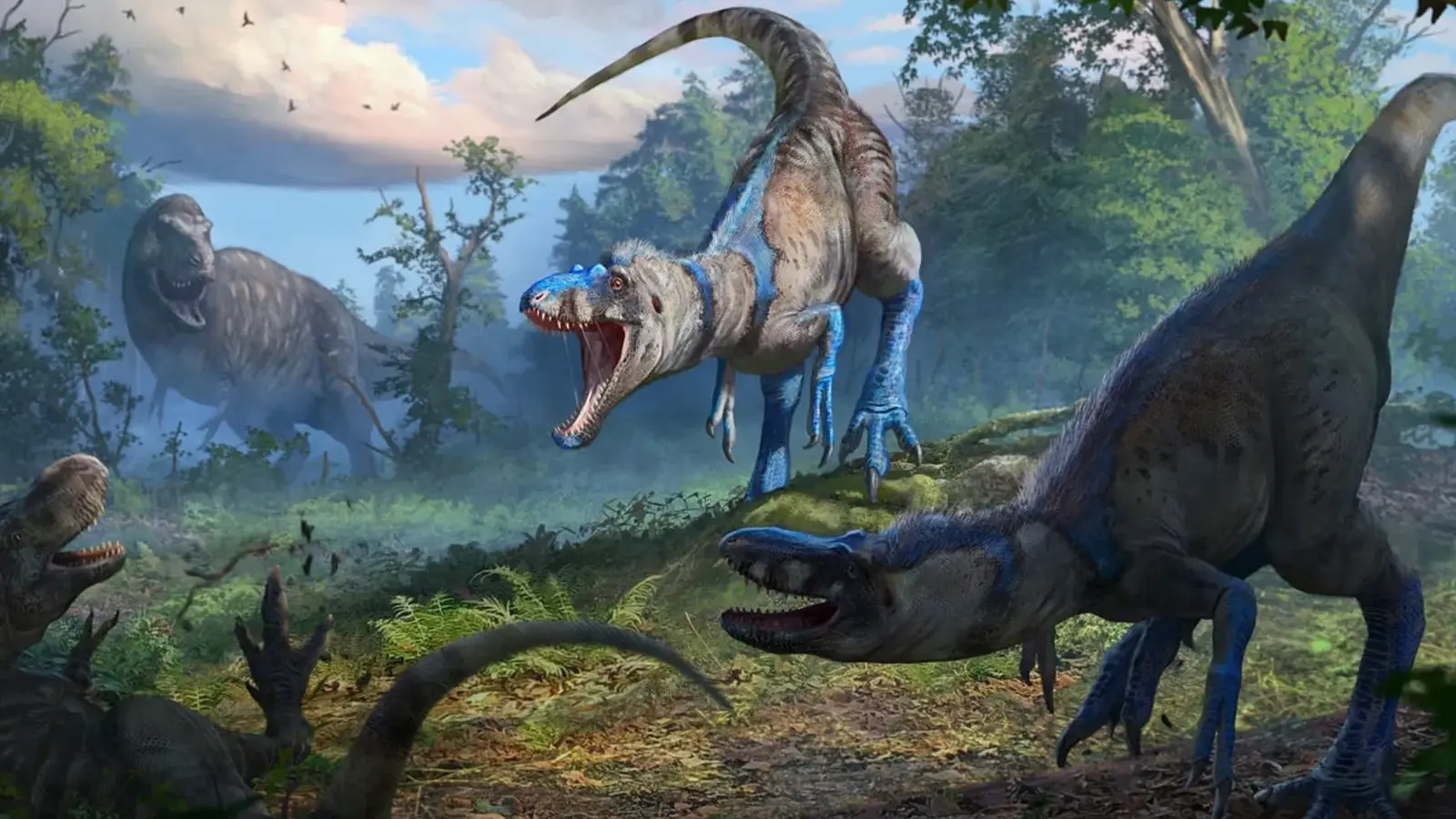
Decades of debate in paleontology may finally be settling: a fossil once thought to be a juvenile Tyrannosaurus rex is now recognized as a fully grown predator from a different species. New analysis of a nearly complete skeleton from Montana’s Hell Creek Formation argues that Nanotyrannus was not a young T. rex, but an independent, nimble hunter with its own distinct anatomy.
A long-running fossil mystery
The controversy began with a skull discovered in the 1940s in Hell Creek, Montana. In 1988 a group of researchers assigned that and similar specimens to a small tyrannosaurid they named Nanotyrannus lancensis, arguing they represented an adult, smaller-bodied species. Many other paleontologists countered that those remains were simply juvenile or subadult T. rex individuals — a debate that persisted for decades.
New skeleton, new perspective
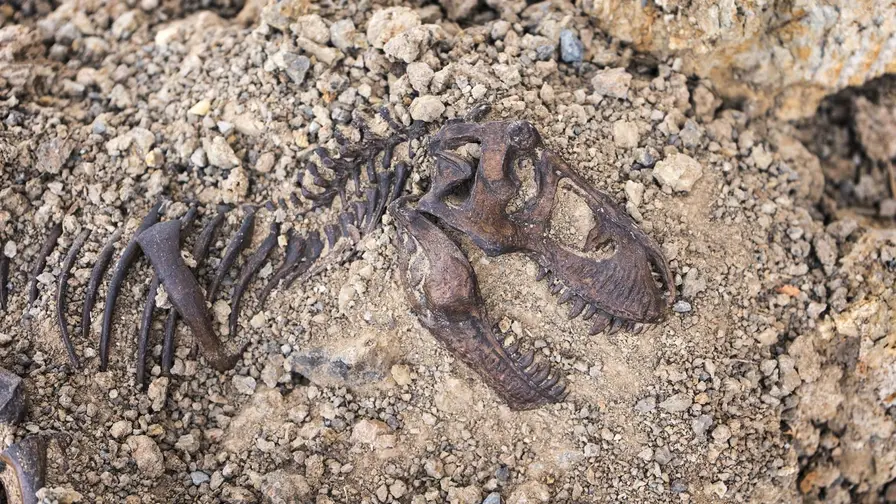
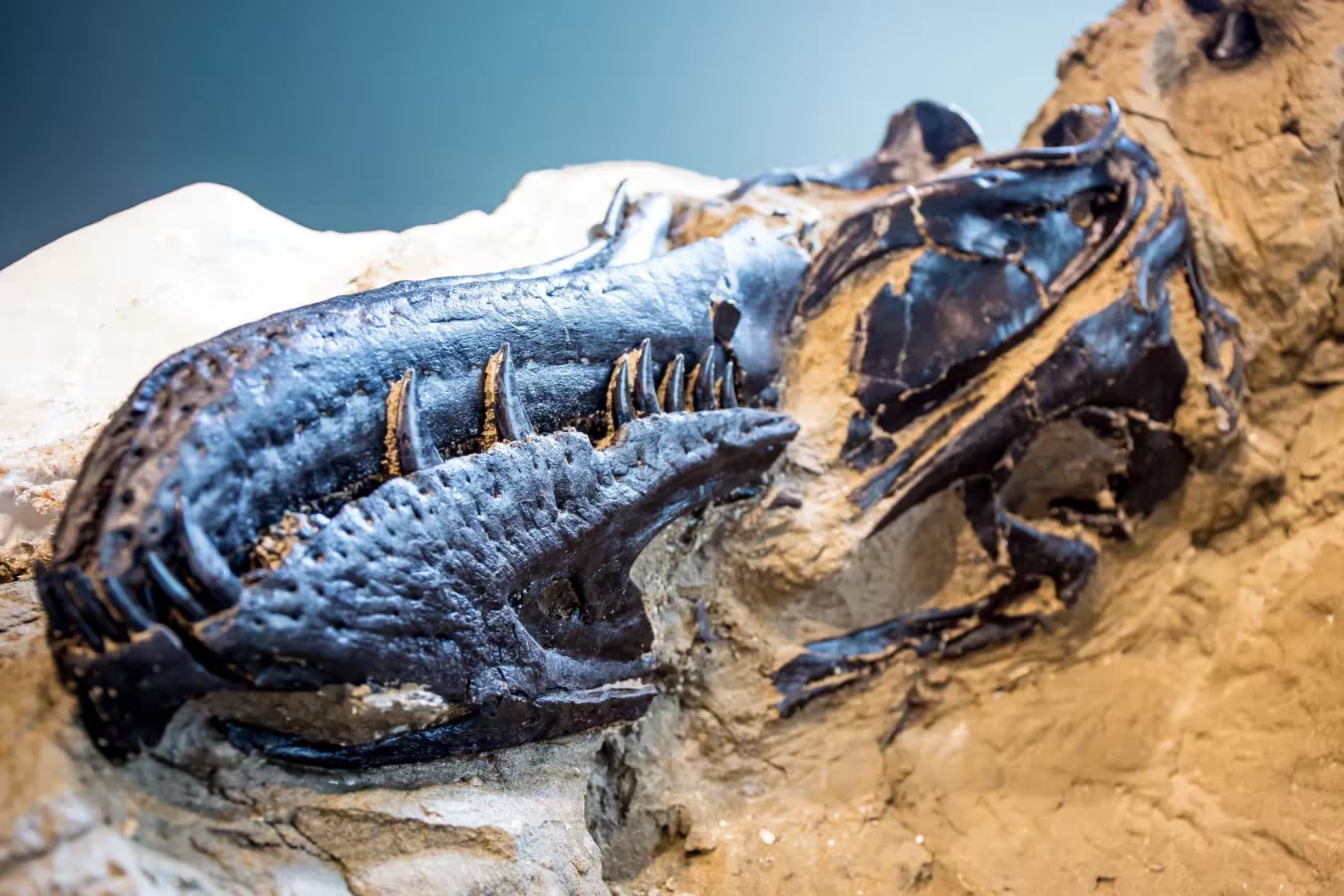
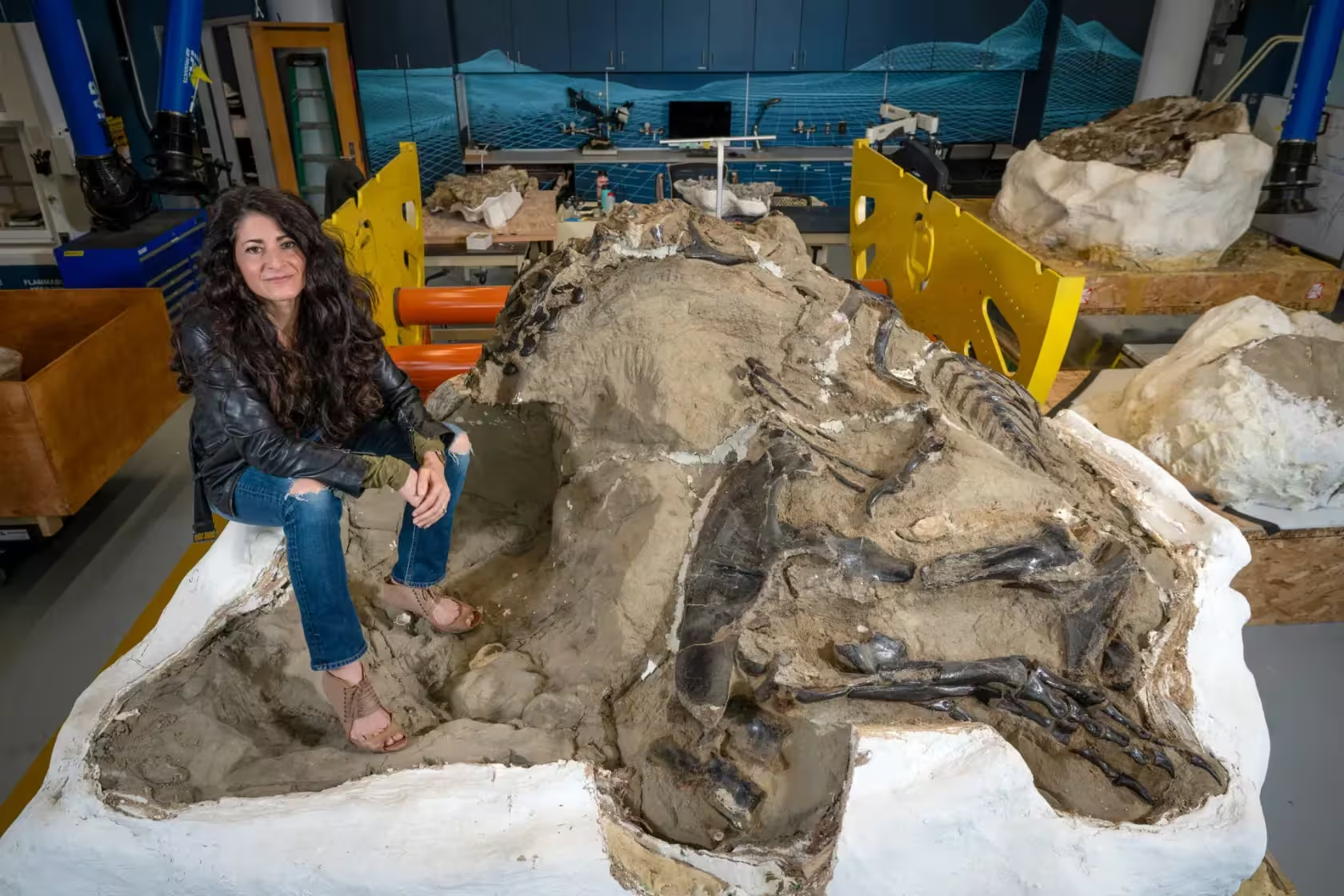
The turning point came after paleontologists obtained one of two famous fossils dubbed the “dueling dinosaurs,” discovered in 2006. The pair — a triceratops and a smaller theropod found buried together about 67 million years ago — offered a rare chance to study a nearly complete small tyrannosaur skeleton. Purchased by the North Carolina Museum of Natural Sciences in 2020, the specimen enabled a comprehensive anatomical and histological study.
Lead author Lindsay Zanno and colleagues report in Nature that the specimen shows adult bone textures and growth patterns consistent with maturity. Detailed comparisons reveal skull architecture, nerve and sinus patterns, tooth count, limb proportions, and tail length that do not match ontogenetic (growth-related) changes observed in T. rex. In short: these traits don’t simply transform with age — they represent a separate body plan.
"When we analyzed the specimen, we realized its anatomy was distinct in ways that can't be explained by it being a young T. rex," Zanno said. The team estimates the animal was about 20 years old at death, roughly 5.5 meters long and weighing around 700 kilograms — about one-tenth the mass and half the length of a full-grown T. rex.
Revising other fossils
Alongside the new skeleton, researchers re-examined roughly 200 tyrannosaur specimens. They conclude that another well-known specimen nicknamed "Jane," long thought to represent a juvenile T. rex, may actually belong to a second Nanotyrannus species, Nanotyrannus lethaeus. This taxonomic reassessment, if widely accepted, substantially shifts how paleontologists interpret tyrannosaur diversity in the late Cretaceous.
Researchers like Scott Persons of the South Carolina State Museum note the functional implications: Nanotyrannus appears adapted for a different predatory strategy. Longer legs and a larger first-digit claw suggest a pursuit or ambush specialist, complementary to the bulkier, bone-crushing T. rex. "Think of Nanotyrannus and T. rex like modern cheetahs and lions — both large predators, but optimized for different hunting styles," Persons commented.
What’s still unresolved
Not everyone is convinced. Skeptics, including long-time proponents of the juvenile-T. rex hypothesis, say some ambiguities remain, especially regarding variation across Hell Creek samples. Thomas Carr and others caution that if many small tyrannosaur specimens from Hell Creek are reassigned to Nanotyrannus, paleontologists must still explain the distribution and timing of true adult T. rex remains in the same rocks.
Even with strong new evidence, the story highlights how fossil interpretation evolves with new finds and better techniques. The Nature paper advances the case for Nanotyrannus as a distinct genus and reopens questions about predator diversity, ecological partitioning, and how we read growth versus species-level differences in fossil bones.
Implications for paleontology

Confirming Nanotyrannus as a separate species would rewrite parts of the Tyrannosauridae family tree and force a re-evaluation of ecosystem structure in the latest Cretaceous. It underscores the importance of nearly complete skeletons and modern histological methods for resolving long-standing taxonomic debates.

Leave a Comment
Comments (2)
whoa this is wild, tiny tyrant actually a different hunter? love the cheetah vs lion comparison. The dueling dinos find is insane, makes the Cretaceous feel real again!!
Wait so they say Nanotyrannus is its own adult species? hmm.. If they reassign 'Jane' and others, where are the adult T.rex bones in the same layers? sounds fishy, need more data