
4 Minutes
A routine scan of the back of the eye could offer an early warning system for cardiovascular disease and reveal how quickly someone is biologically aging. New research combining retinal images, genetic data, and blood biomarkers points to measurable signals in tiny retinal blood vessels that mirror vascular health throughout the body.
Small vessels, big clues: why the retina matters
The retina is one of the few places in the body where clinicians can directly observe microvasculature non-invasively. Scientists have long suspected that changes in retinal blood-vessel patterns reflect wider problems in the circulatory system. The latest study, published in Science Advances, strengthens that link by showing that simpler, less-branched retinal vascular networks are associated with a higher genetic predisposition to cardiovascular disease and accelerated biological aging.
Researchers analyzed eye scans and genetic information from more than 74,000 volunteers, using an approach called Mendelian randomization to test causal relationships. Mendelian randomization substitutes fixed genetic variants for a health condition, helping separate cause from correlation. Because our genes don’t change over a lifetime, associations uncovered this way are more likely to reflect underlying mechanisms rather than coincidental links.
What the team found and why it matters
The analysis revealed that people with lower retinal vessel complexity — measured as a lower fractal dimension, or simpler branching — also carried a higher genetic risk for heart disease. That suggests shared biological pathways drive both vascular deterioration in the eye and increased cardiovascular risk elsewhere in the body.
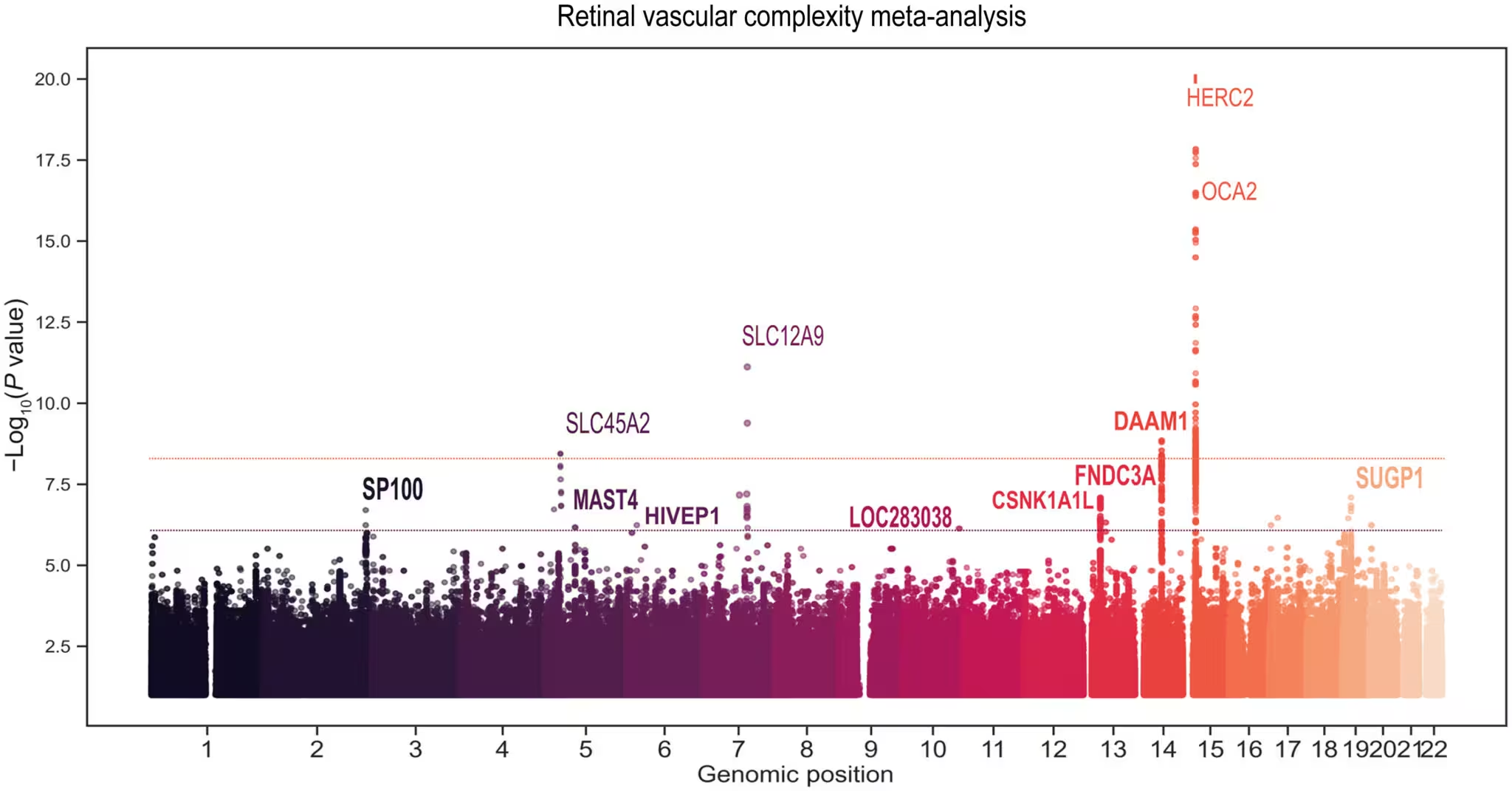
Beyond imaging and genetics, the study used a different cohort to scan blood proteins and pinpoint molecules that may mediate these changes. Two proteins stood out: MMP12, an enzyme linked to tissue remodeling and inflammation, and IgG–Fc receptor IIb, an immune receptor that can alter inflammatory responses. Both appear to influence small-vessel structure and could become targets for preventive therapies aimed at slowing vascular aging.

"The eye provides a unique, non-invasive view into the body's circulatory system," says Marie Pigeyre, a geneticist at McMaster University. "Changes in the retinal blood vessels often mirror changes occurring throughout the body's small vessels." Her team’s statement underscores how retinal screening could shift risk assessment from complex laboratory testing to a quick clinical image.
From lab bench to clinic: opportunities and challenges
Current assessments for age-related vascular conditions — including heart disease, stroke, and dementia — often rely on extensive blood tests, imaging scans, and clinical histories. If validated in broader populations, retinal scans could provide a faster, cheaper front line for risk screening. Imagine adding a retinal photograph to routine health checks: clinicians could flag individuals for lifestyle interventions, closer monitoring, or targeted therapies earlier than is now typical.
However, several hurdles remain. Retinal imaging equipment and interpretation algorithms must be standardized, and clinicians need clear guidelines on when an abnormal retinal pattern should trigger follow-up. Importantly, while genetic evidence suggests causal links, clinical trials will be needed to show that interventions based on retinal markers actually reduce disease outcomes.
Related technologies and future prospects
Advances in machine learning already enable automated analysis of retinal photos for diabetic retinopathy and macular degeneration. Extending those tools to quantify vascular fractal dimensions and integrate genetic or proteomic risk could create comprehensive screening platforms. Blood-based biomarkers such as MMP12 and IgG–Fc receptor IIb might be incorporated into multi-modal risk scores, improving specificity and guiding drug development aimed at vascular inflammation and remodeling.
Expert Insight
Dr. Elena Ramirez, a cardiovascular researcher not involved in the study, comments: "This work elegantly connects imaging, genetics, and proteomics. It moves retinal scanning beyond eye disease and into systemic risk prediction. The next step is prospective trials that test whether early action on retinal signals prevents heart attacks or strokes."

For clinicians and researchers, the retina now emerges as a practical window into vascular aging. As imaging and biomarker panels improve, retinal scans could become a routine part of preventive care—helping clinicians catch cardiovascular risk earlier and tailor interventions to slow the biological clock.











Leave a Comment
Comments (2)
Wow this blew my mind, the eye as a window to heart health? gotta get my eyes checked lol, but hope it's validated soon.
Is retinal fractal dim really that reliable? Cool idea but need trials, lots of diversity in cohorts before we trust it fully.