
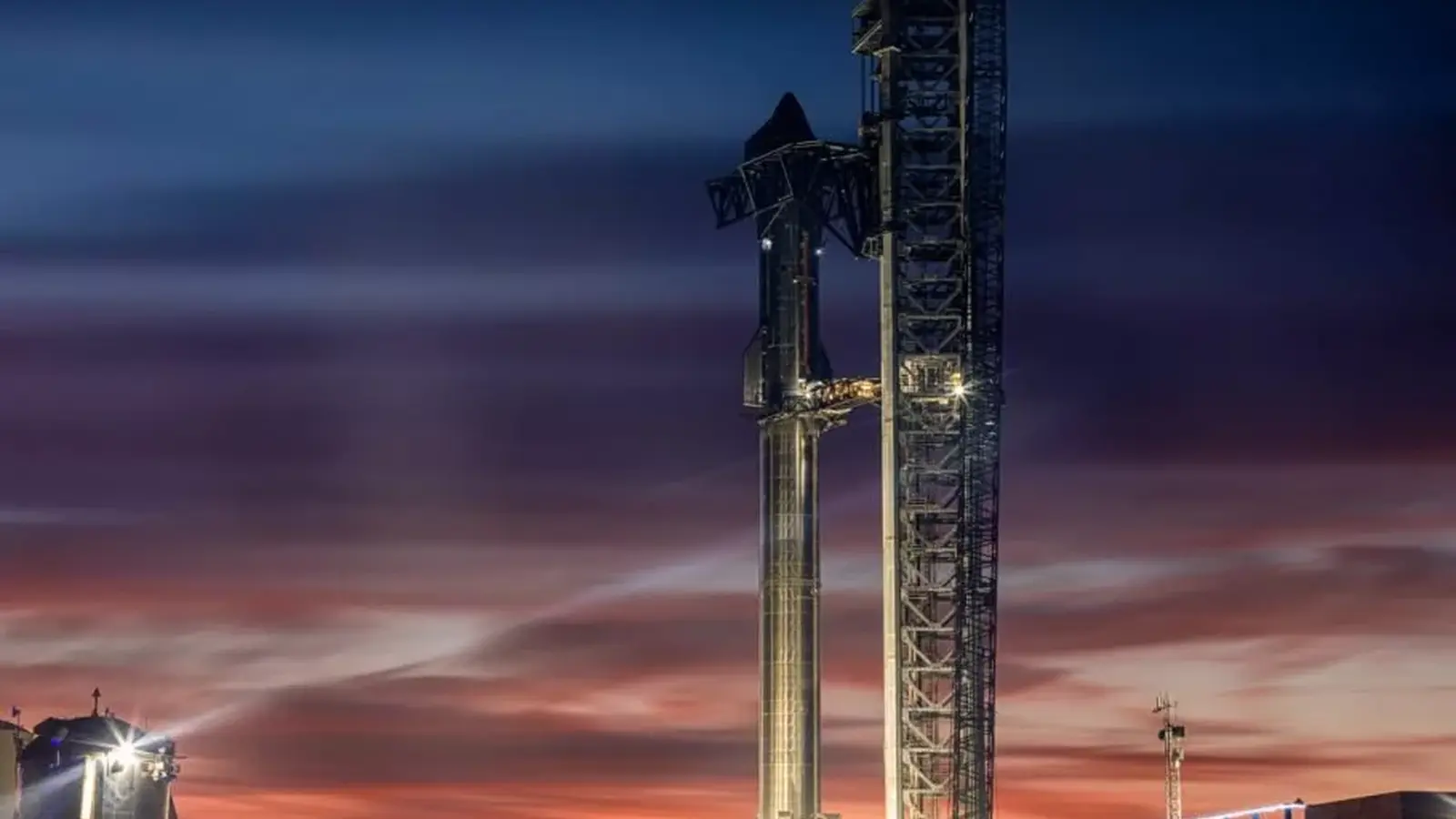
March promises to be a pivotal month at Starbase. Elon Musk has confirmed on X that SpaceX will attempt the twelfth Starship test flight next month from its Texas launch complex, and this time the rocket will fly with a fresh third-generation Super Heavy booster. Short sentence. Big implications.
The newest Super Heavy — roughly 124.4 meters tall, about a meter taller than the previous version — carries upgraded engines and several structural tweaks intended to boost thrust and reliability. Those changes are not cosmetic. They address two key challenges: getting the stacked vehicle to orbit reliably, and returning the first-stage booster intact for reuse. The company’s iterative approach means each test cycle yields data that feeds the next design update, and this December-to-March cadence reflects that engineering rhythm.
Why does this matter beyond SpaceX’s yard? Because Starship is now central to NASA’s lunar plans. The agency has selected a modified version of Starship as the Human Landing System for Artemis III — the mission that aims to return astronauts to the Moon for the first time since 1972. If Starship proves it can perform a stable orbital launch, conduct in-orbit refueling of its upper stage, and then execute a controlled landing, it will check off the heavy-lift, deep-space capabilities NASA requires.
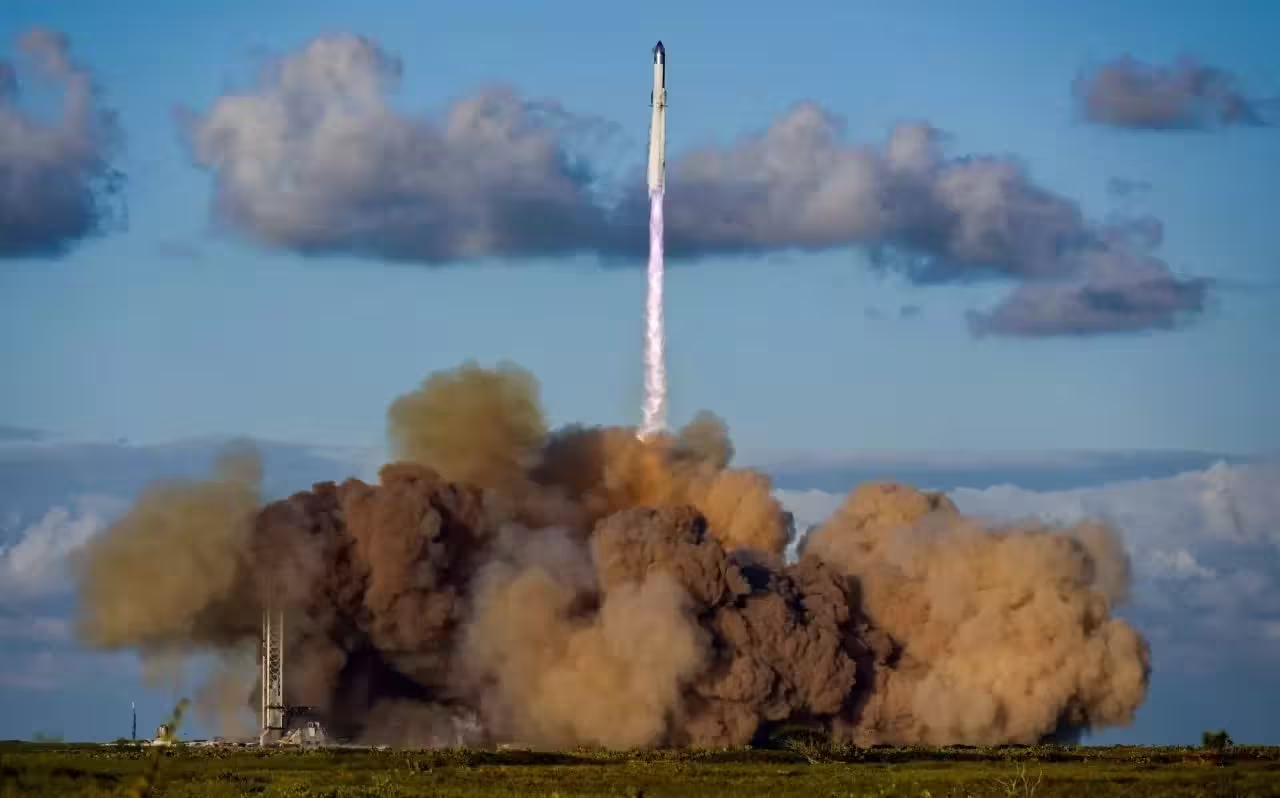
What to expect from the twelfth test
Expect them to push the envelope. A full orbital attempt means the vehicle must perform several complex maneuvers: ascent under Super Heavy power, separation of the two stages, an upper-stage burn to reach orbit, and then—critically—planned operations in space that mimic refueling and landing sequences. Re-entry and controlled touchdown of the booster are also on the checklist. Success would strengthen the argument that Starship can be reused many times, lowering launch costs and enabling higher-cadence lunar and interplanetary missions.
Timing for Artemis III currently sits around 2027, but planners openly acknowledge schedule risk. Technical hurdles crop up. Flight tests uncover new edge cases. Artemis II, the crewed lunar orbital mission that will fly Orion around the Moon, becomes a pathfinder: its results will influence orbital insertion profiles, docking procedures, and the handoff between NASA’s systems and SpaceX’s Starship. In short, missions are interdependent. One must work for the other to follow smoothly.
Engine upgrades on the new Super Heavy aim to increase specific impulse and thrust-to-weight ratio. Engineers expect modest gains to translate into better margin during ascent, which helps when stage separation and precise orbital insertion are on the line. Even a minor increase in engine performance can reduce structural stress and widen the operational window for in-orbit refueling—one of Starship’s signature innovations for deep-space missions.
Spaceflight is messy. Tests fail. That is part of progress. Each Starship campaign produces telemetry, broken pieces, brilliant recoveries, and lessons that shape the next vehicle. For NASA, industry partners, and the broader scientific community, the March flight will be another data-rich chapter in a project that aims to change how humans reach the Moon and beyond.
Watch the skies over Boca Chica. Engineers will be listening closely. And so will the teams planning humanity’s next steps on the lunar surface.

Leave a Comment
Comments
No comments yet. Be the first.