
4 Minutes
SpaceX’s Starship completed its 11th test flight with a planned splashdown of its upper stage in the Indian Ocean and a booster splash in the Gulf of Mexico, a visible step forward as the company races to meet NASA’s lunar ambitions. The flight offered both progress and fresh reminders of the engineering hurdles that still stand between prototype successes and a fully operational lunar lander.
Golden-hour launch and a textbook splashdown
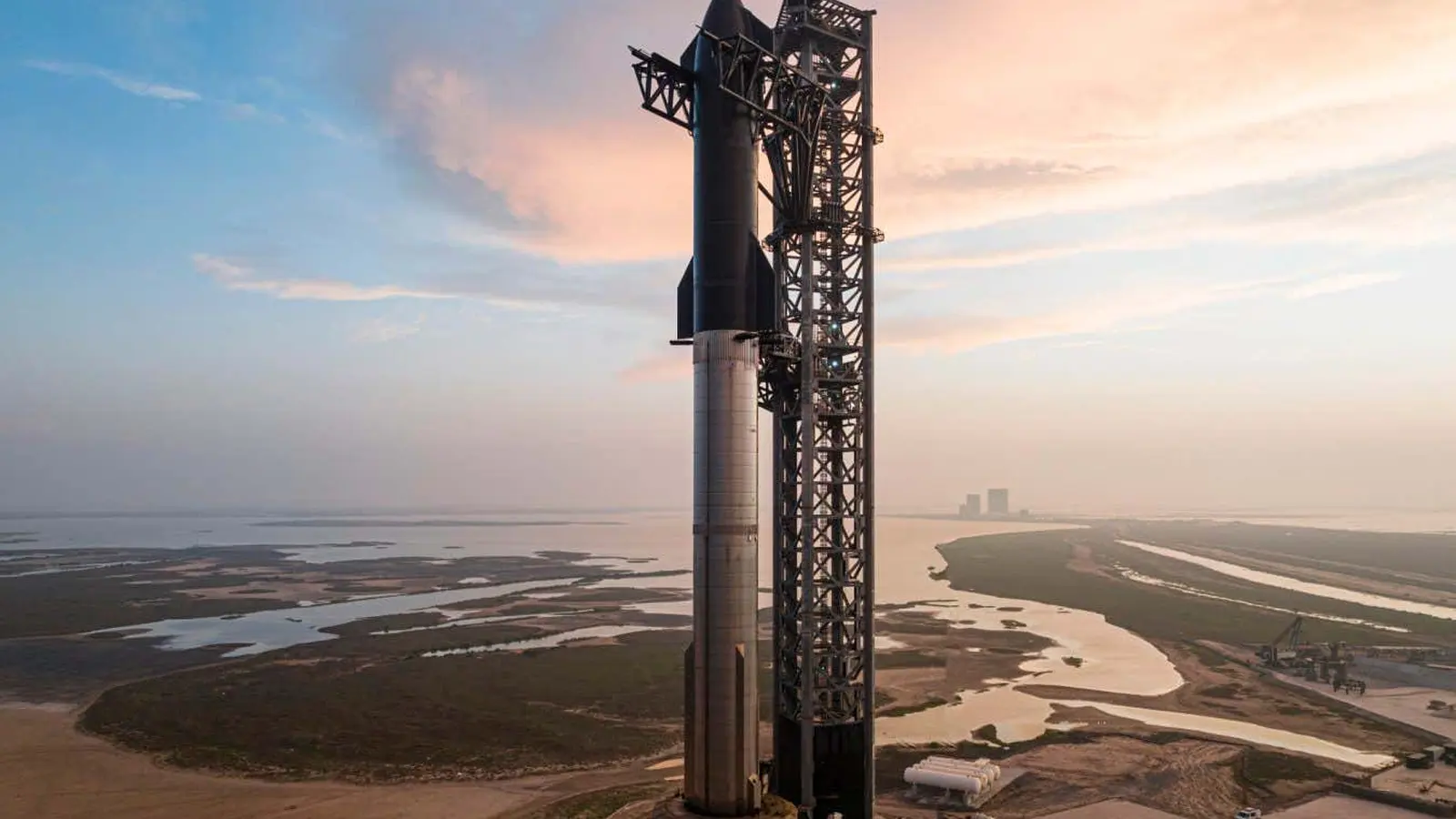
Launched from SpaceX’s South Texas complex just after 6:25 pm local time, the Starship stack carried out its planned sequence: the Super Heavy booster separated and splashed down in Gulf waters, while the upper stage — the vehicle commonly called Starship — reached space, deployed mock payloads and ultimately re-entered to splash down in the Indian Ocean about an hour after liftoff.
This mission closely followed the successful August flight profile and marked the end of this prototype iteration. SpaceX confirmed the next test will debut Version 3 of the vehicle, part of an iterative development approach that aims to tame one of the most ambitious rockets ever built.
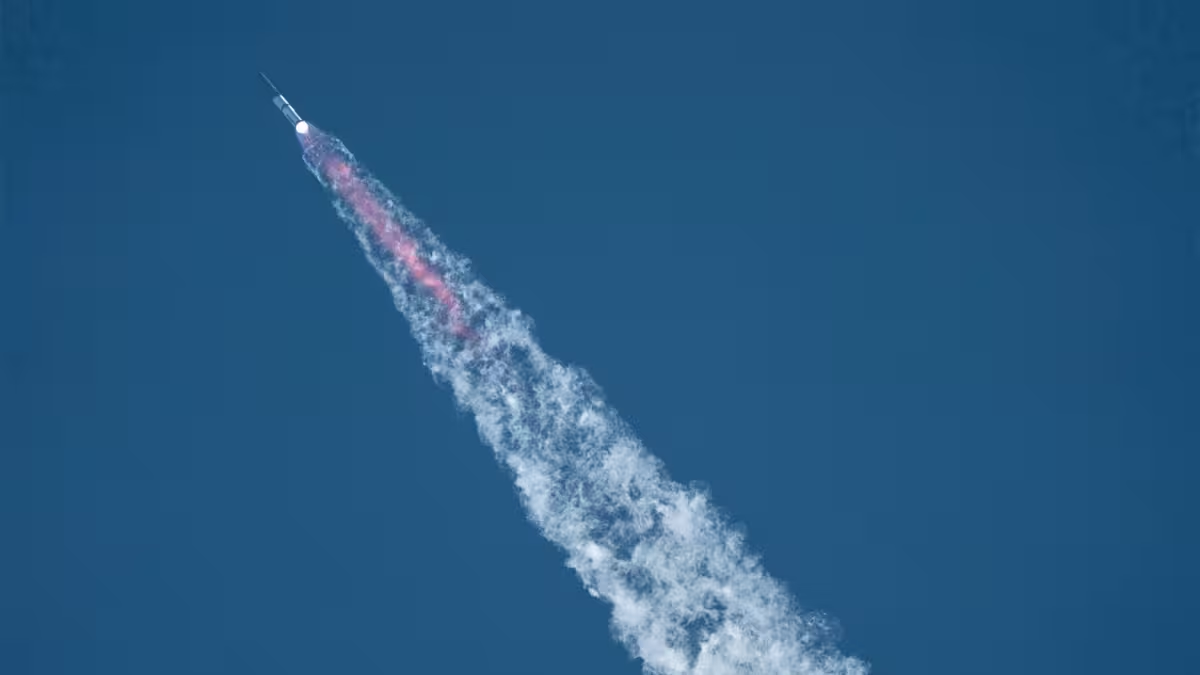
SpaceX's Starship rocket 38 during the 11th test flight.
Why this test matters for Artemis and human lunar return
NASA has selected a modified Starship design to act as a lunar lander for Artemis missions, making each successful test crucial for agency timelines. Starship is unique for its scale: it’s currently the world’s largest and most powerful rocket architecture, designed to carry heavy cargo and crew beyond low-Earth orbit.
On this flight SpaceX again demonstrated core operational elements — booster recovery in the ocean, stage separation, high-altitude flight and payload deployment. Each step validated hardware and software that will underpin deep-space missions, including lunar transfer and descent profiles that NASA will rely on for a crewed Artemis landing.
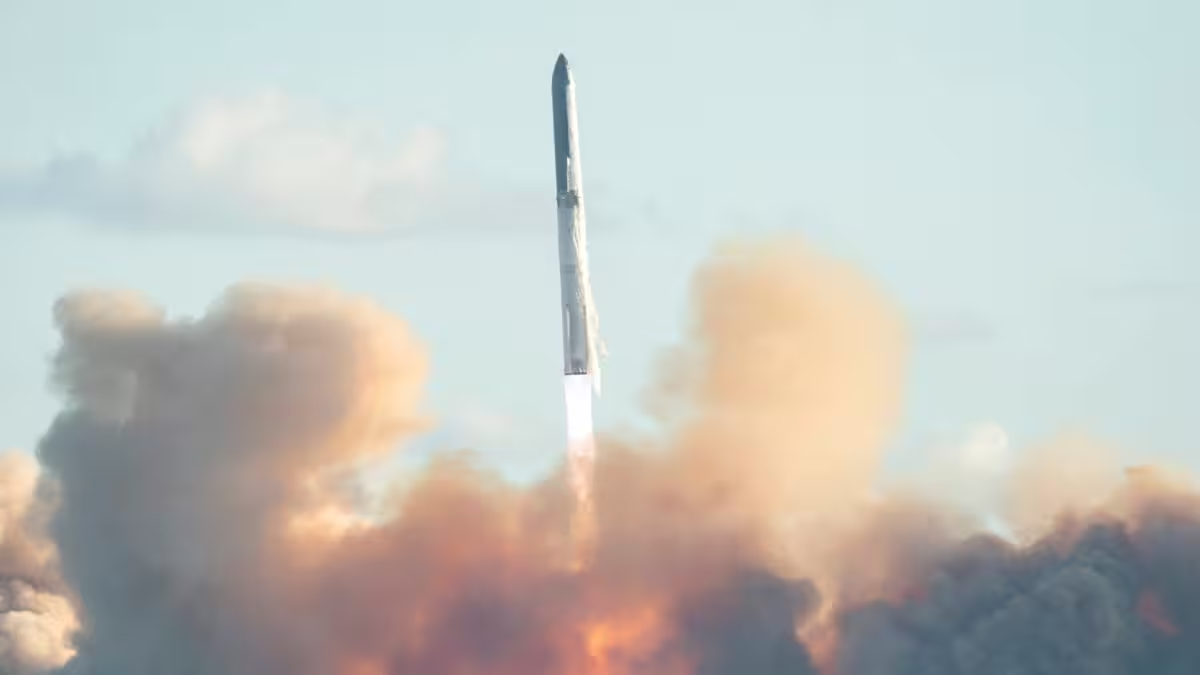
SpaceX's Starship rocket 38 launches during the 11th test flight, seen from South Padre Island in Texas.
Engineering obstacles remain: heat shields, refueling, and reliability

Despite incremental wins, major technical tasks still loom. Two stand out:
Reusable orbital heat shield
Re-entry heating at lunar-return velocities requires a durable, reusable thermal protection system. Elon Musk has called the orbital heat shield the toughest element, noting the Space Shuttle’s heat-shield refurbishment took months between flights. For Starship to fly frequently and economically, engineers must prove rapid-turnaround reusability.
On-orbit refueling with cryogenic propellant
To send Starship beyond Earth orbit with a full payload and crew, SpaceX plans to top off the vehicle in orbit using tanker flights that transfer super-cooled propellant. This technique has never been done at the scale required for Moon or Mars missions. NASA’s Aerospace Safety Advisory Panel has flagged the maneuver as a significant program risk, underscoring both the novelty and the mission-critical nature of orbital refueling.
Program context: timelines, politics, and competition
The Artemis program aims to return humans to the Moon, with Artemis III originally targeted for mid-2027. Political pressure and international competition complicate that schedule. U.S. officials, including NASA’s acting administrator, have publicly emphasized a determination to remain the leader in space, while independent panels and former administrators have warned delays could make it difficult to beat other national efforts to reach the Moon.
SpaceX’s contract to develop a lunar Starship lander is multibillion-dollar and central to NASA’s plans. Each flight that validates design choices helps reduce technical uncertainty — but the sequence of earlier failures and spectacular explosions in prior tests has raised questions about whether the ambitious timeline can be met.
Mission details and what was observed
Flight 11 replicated a number of mission actions from previous tests: stage separation, payload release (mock satellites), and controlled re-entry and splashdowns. The upper stage was intentionally not recovered. SpaceX engineers applauded as telemetry and live video confirmed staged events, a sign that test objectives were met.
Expert Insight
Dr. Elena Ortiz, a fictional senior systems engineer with two decades in spacecraft integration, comments: "What matters now is consistency. Successful individual flights are important, but predictable performance across many missions is the milestone that turns a prototype into an operational vehicle. Orbital refueling and a durable heat shield are the make-or-break technologies for lunar and Mars missions."

Starship’s 11th test is a notable step in a long experimental campaign. It reduced some technical uncertainty and demonstrated repeatability on key maneuvers, yet also reinforced that several unproven systems remain on the critical path. For NASA and SpaceX, the road to a crewed lunar landing will depend as much on repeated, reliable demonstration as on single spectacular flights.

Leave a Comment
Comments
No comments yet. Be the first.