
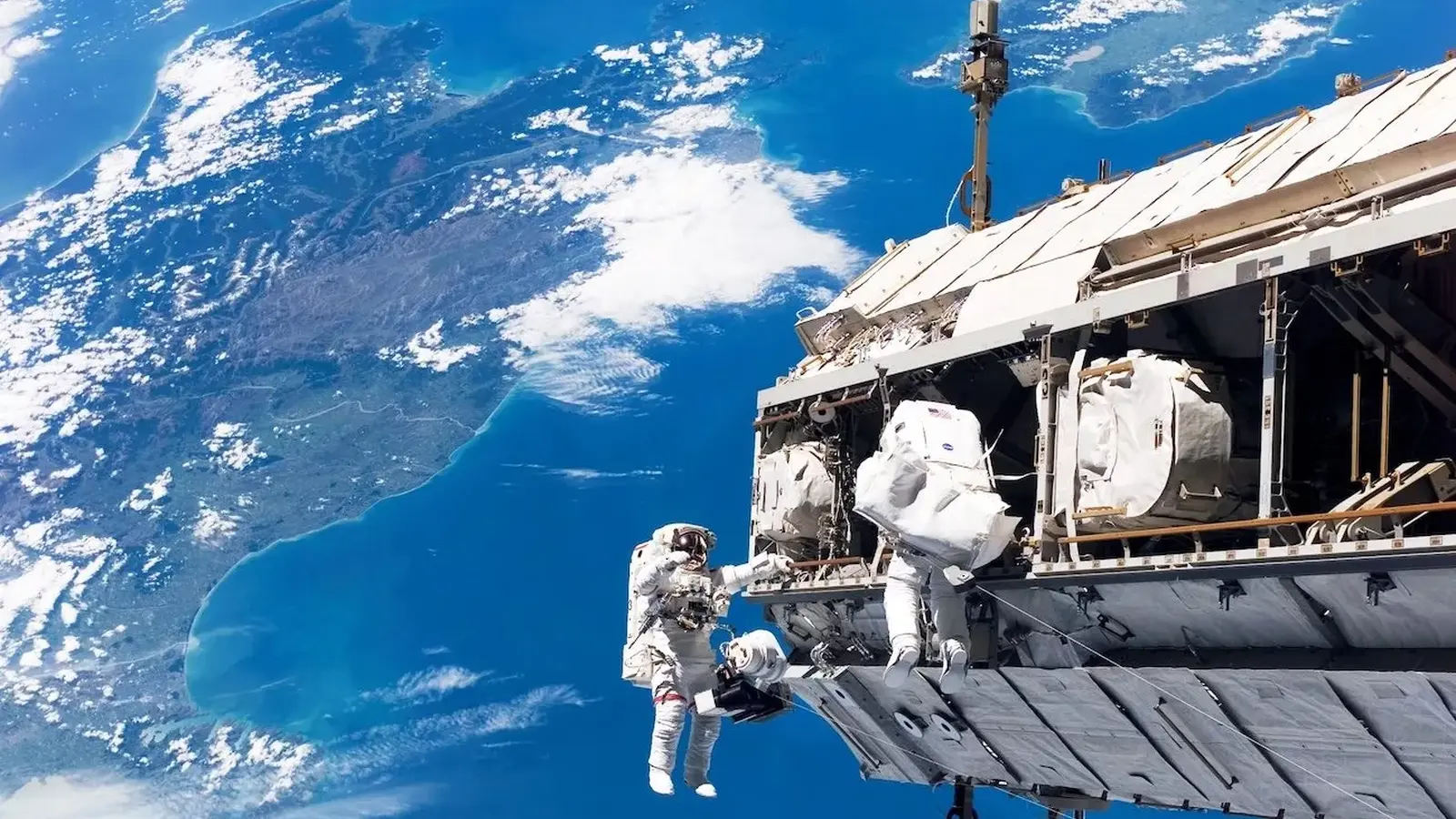
Space agencies face a stubborn problem for long-duration missions: food. Transporting prepackaged meals from Earth works for low-Earth orbit, but for trips to the Moon, Mars or beyond it becomes technically impractical and prohibitively expensive. The European Space Agency (ESA) is testing an unusual solution — growing a protein powder in space using only air, electricity and astronaut waste.
From carbon dioxide to protein: the Solein concept
ESA’s exploratory Terrae Novae program has funded a project called HOBI-WAN (Hydrogen-oxidizing Bacteria in Weightlessness as Nutrition). The goal is to produce a sustainable protein powder named Solein, developed by Finnish food-tech company Solar Foods. On Earth, Solein is made by a gas fermentation process: microbes consume carbon dioxide from air, along with hydrogen and electricity, and convert those inputs into a high-protein biomass that is dried into a powder.
Why astronaut urine matters — replacing ammonia with urea
On Earth the fermentation process typically uses ammonia as the nitrogen source needed to build proteins. In space, ammonia logistics are complicated. HOBI-WAN adapts that step by substituting urea — an organic nitrogen compound abundant in urine. In microgravity, recycling urea from crew waste into the fermentation loop would provide the nitrogen microbes need to synthesize amino acids and grow the protein-rich biomass. In short: air (CO2), electricity and recycled urea could become the feedstock for food production off-Earth.

Mission plan: developing the system and testing on the ISS
Solar Foods and OHB System AG, the project’s prime contractor, will spend the next eight months developing the hardware and processes on the ground that are compatible with spaceflight. If those tests go well, the aim is to fly a prototype to the International Space Station for an in-orbit demonstration. That test would evaluate microbe behavior in microgravity, the reliability of urea-fed fermentation, and the quality and safety of the resulting Solein powder.
Why it matters for future exploration
Imagine a system that converts cabin air and crew waste into shelf-stable protein. That reduces resupply mass, lowers mission cost and increases resilience for long missions. Beyond deep-space exploration, the technology could inspire terrestrial applications in sustainable protein production where land and water are limited.
Scientific and technical context
Gas fermentation using hydrogen-oxidizing bacteria is an established biotechnology on Earth, but adapting it to space involves challenges: closed-loop resource management, sterilization, process control in microgravity and validating nutritional content for human consumption. HOBI-WAN is an early step toward closed-loop life-support systems where in-situ resource utilization extends beyond air and water to actual food production.


Leave a Comment
Comments
No comments yet. Be the first.