

3 Minutes
Coffee is widely associated with alertness and a faster heartbeat, which has led many clinicians to advise people with atrial fibrillation (AF) to cut back. A new randomized clinical trial challenges that conventional wisdom, finding fewer AF recurrences in people who kept drinking coffee after a cardioversion procedure.
A randomized look at coffee and AF after cardioversion
Researchers enrolled 200 patients in the US, Canada and Australia who were scheduled for electrical cardioversion to restore a normal rhythm. All participants were current or former coffee drinkers. They were randomized: half agreed to abstain from coffee for six months, while the other half committed to drinking at least one cup per day.
Over the six-month follow-up the trial tracked episodes of atrial fibrillation lasting more than 30 seconds. AF recurred in 47% of the coffee drinkers versus 64% of the abstainers — a relative reduction of about 39% in recurrence risk for those who continued drinking coffee.
"The results were astounding," says cardiologist Christopher Wong of the University of Adelaide. "In contrast to conventional wisdom, we found the coffee drinkers experienced a significant reduction in AF compared to those who avoided coffee and caffeine."
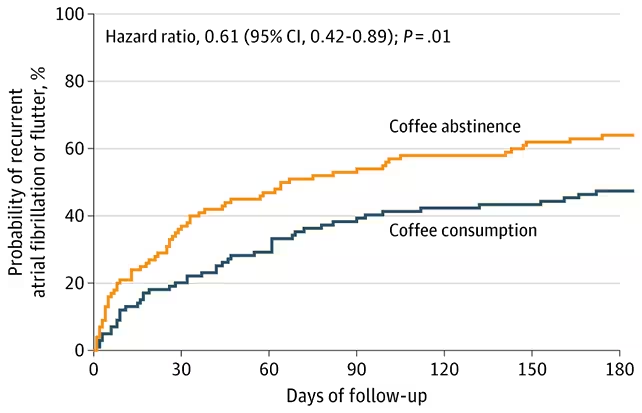
Cases of atrial fibrillation were less common in coffee drinkers
Why might coffee help — possible mechanisms
The trial does not prove a direct cause-and-effect link, but investigators and commentators have suggested several plausible explanations. Coffee contains compounds with anti-inflammatory properties. Chronic inflammation plays a role in the structural and electrical changes in the heart that promote AF, so anti-inflammatory effects could be protective.
Performance, blood pressure and fluid balance
Caffeine can transiently boost exercise capacity and physical activity, which are known to reduce cardiovascular risk factors associated with AF. Coffee also has mild diuretic effects and can influence blood pressure; both pathways might reduce atrial stretch and the triggers that precipitate AF episodes.
It’s also possible that drinking coffee displaces less healthy beverages — or reflects other lifestyle habits not captured in this study. The trial did not collect detailed dietary or exercise data to test those possibilities directly.
What the findings mean for people with AF
AF affects tens of millions globally and is linked to stroke and heart failure, with risk rising with age and conditions such as obesity, diabetes and heavy alcohol use. Given that background, easy-to-adopt lifestyle measures that reduce AF burden are of high interest.
Gregory Marcus, a cardiologist and electrophysiologist at UCSF, commented on the results: "It is reasonable for health care professionals to let their AF patients consider experimenting with naturally caffeinated substances that they may enjoy, such as caffeinated tea and coffee. However, some people may still find that caffeine or caffeinated coffee triggers or worsens their AF."
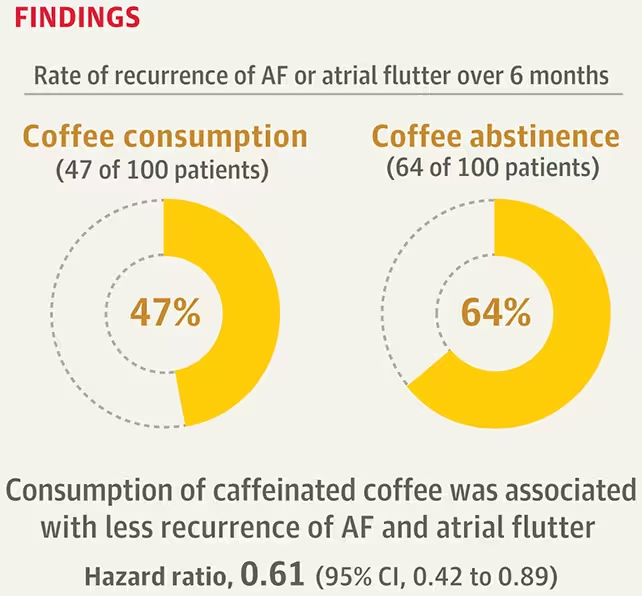
The recurrence rate was 39 percent less in those who consumed coffee
Next steps for research
This is the first randomized clinical trial to examine coffee and AF recurrence after cardioversion, but questions remain. Investigators plan to study people who were not habitual coffee drinkers before the trial and to compare other caffeine sources such as tea, energy drinks or caffeine pouches. Larger and longer studies that capture diet, activity and dose-response effects would help clarify whether certain coffee types or consumption patterns are most beneficial or potentially harmful.
For now, the trial provides measured reassurance that modest, regular coffee intake may not increase — and might reduce — AF recurrence risk in some patients. As always, individuals should discuss personal triggers and symptoms with their cardiologist before changing habits.


Leave a Comment
Comments
No comments yet. Be the first.