
5 Minutes
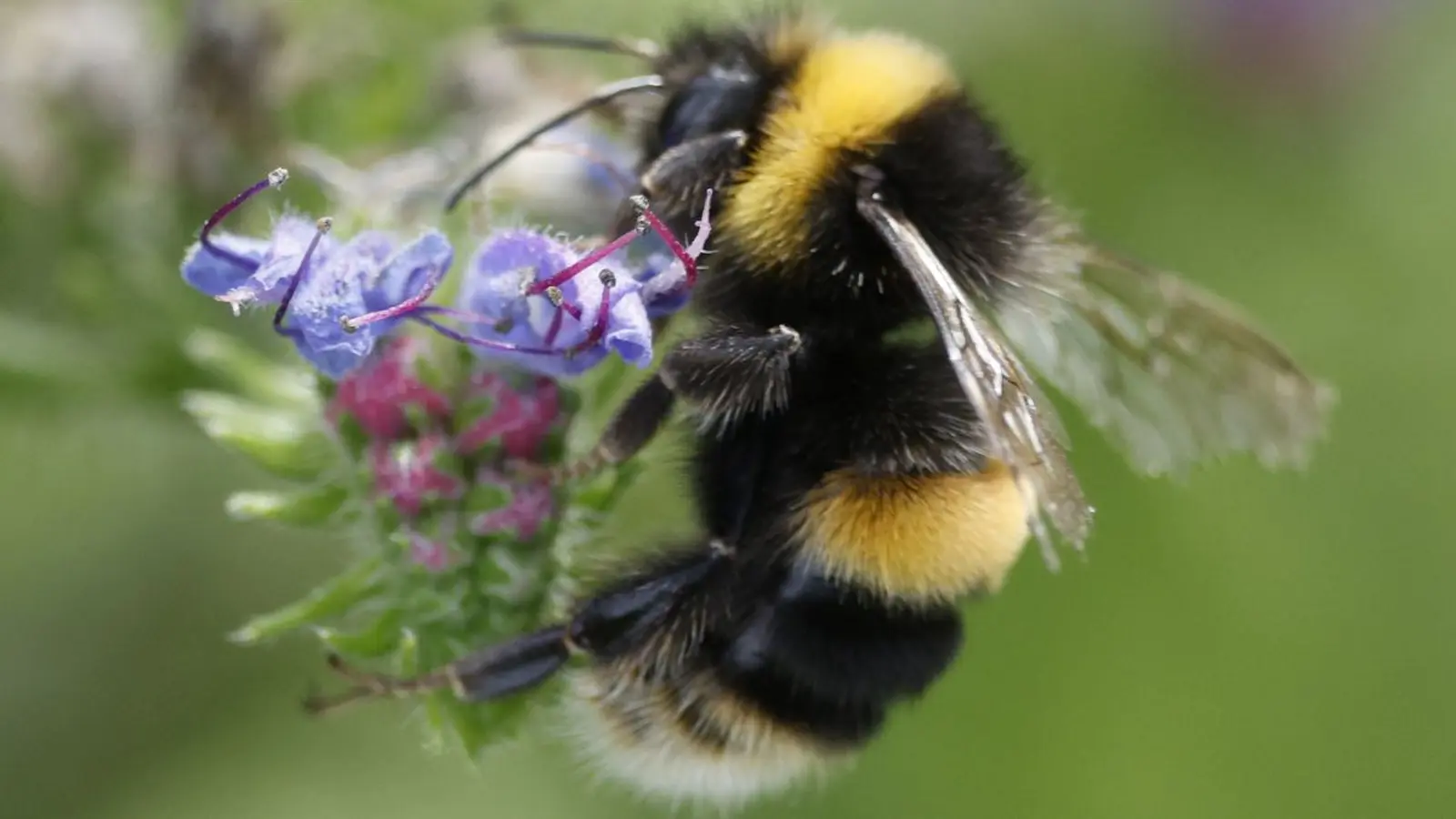
Scientists have taught bumblebees (Bombus terrestris) to distinguish short and long flashes of light — a simplified form of Morse code — and use that timing information to choose where to forage. The result is the first demonstration that these fuzzy pollinators can base foraging decisions purely on the duration of a visual cue, revealing unexpectedly sophisticated temporal processing in an insect brain the size of a poppy seed.
How the experiment worked: training bees to read time
Researchers led by behavioral scientist Alex Davidson at Queen Mary University of London set up a small foraging arena where individual worker bumblebees faced two flashing lights. One light pulsed for a longer duration, the other for a shorter pulse. In some trials the long flash lasted 5 seconds and the short flash 1 second; in others the long pulse was 2.5 seconds versus a 0.5-second short pulse. For each group of bees, one duration was paired with a sugary reward and the other with an aversive bitter liquid (quinine).
The animals had to learn which timing pattern led to sugar and which led to quinine. Bees were considered trained once they reached a success threshold of 15 correct choices out of 20 trials. Importantly, after training the researchers removed the sugar and quinine rewards and ran unrewarded probe trials to rule out scent or other cues. Even without any taste cues, the insects still preferred the timing pattern that had been associated with sugar, performing above chance.
The researchers’ set-up emphasized timing alone. The pulses were identical except for duration, so the bees had to encode and recall temporal differences to make the right choice. The experiment provides compelling evidence that Bombus terrestris can process purely temporal visual information — a capability previously documented more often in vertebrates than in insects.

The researchers' experimental set-up. The box on the right is the bees' living quarters; the three chambers on the left are where the testing takes place. (Alex Davidson/Queen Mary University of London)
Why temporal processing matters in nature
Being able to judge time intervals helps animals solve real survival problems. Foraging can require comparing how long flowers remain open or how long a resource is available. Timing helps with navigation, predator avoidance, and social interactions. Although bumblebees do not naturally encounter flashing light patterns like laboratory Morse code, temporal processing may be an adaptation of other sensory tasks — for example, tracking motion, judging wingbeat or flower dynamics, or encoding sequences during learning.
"We wanted to find out if bumblebees could learn the difference between these different durations, and it was so exciting to see them do it," Davidson says. He and colleagues suggest two possible explanations: either timing ability evolved from other ecological demands such as motion detection, or it reflects a basic neuronal property of time encoding that is shared widely across animals.


A diagram of the foraging arena in which the bees were tested. (Alex Davidson/Queen Mary University of London)
Key discoveries and scientific context
This study builds on growing evidence that bee cognition is richer than once thought. Recent work has shown bumblebees can farm fungus-like resources, teach problem-solving behaviors, and even exhibit play-like interactions. Other bee species have displayed simple numerical comprehension and learning strategies that resemble rudimentary arithmetic. Adding duration discrimination to that list underscores how complex cognitive tasks can arise in very small nervous systems.
Technically, the experiment isolates temporal discrimination as the decision variable. By randomizing which duration signalled reward across groups and eliminating non-temporal cues in probe trials, the team minimized alternative explanations such as scent, spatial bias, or brightness differences. The effect sizes — bees choosing the rewarded timing more often than chance — indicate robust learning in a relatively short training window.
Implications for cognition and robotics
Understanding how tiny brains encode time has implications beyond biology. Insights into compact, efficient neural strategies for temporal processing could inspire low-power algorithms in robotics and sensor systems, where hardware constraints mirror the limited resources available to insects. Moreover, recognizing advanced cognitive capabilities in pollinators reframes conservation arguments: protecting species with surprising behavioral complexity carries both ethical and practical weight for ecosystem services such as pollination.
Expert Insight
"The finding that bumblebees can use the duration of a visual pulse to guide foraging choices is striking," says Dr. Lina Morales, a neuroethologist (fictional) who studies insect learning. "It suggests time encoding is either repurposed from existing sensory computations or is an emergent property of neural circuits that operate at very small scales. Either way, these results push us to rethink what small brains can do and how natural selection shapes efficient solutions for complex tasks."
What’s next for research
Open questions remain. Do bumblebees generalize timing across different modalities (for example, sound versus light)? What neural circuits underlie interval estimation in the bee brain, and how flexible is the mechanism across contexts and species? Future studies combining behavioral tests with neural recordings or computational modeling could reveal whether insects use oscillator-like mechanisms, population-level neural dynamics, or other compact strategies to represent time.
The study, published in Biology Letters, is another reminder that remarkable cognitive abilities can emerge in tiny nervous systems — and that simple experimental designs inspired by everyday technologies, like Morse code, can illuminate fundamental principles of animal intelligence.


Leave a Comment
Comments (2)
Sounds neat but is this lab timing really like what flowers signal? feels a bit artificial, curious if they tried across senses. quick thought
wow, bees reading Morse-like flashes? didn't expect that. Tiny brains, big timing skills... if that's real then nature's full of clever hacks, lol