
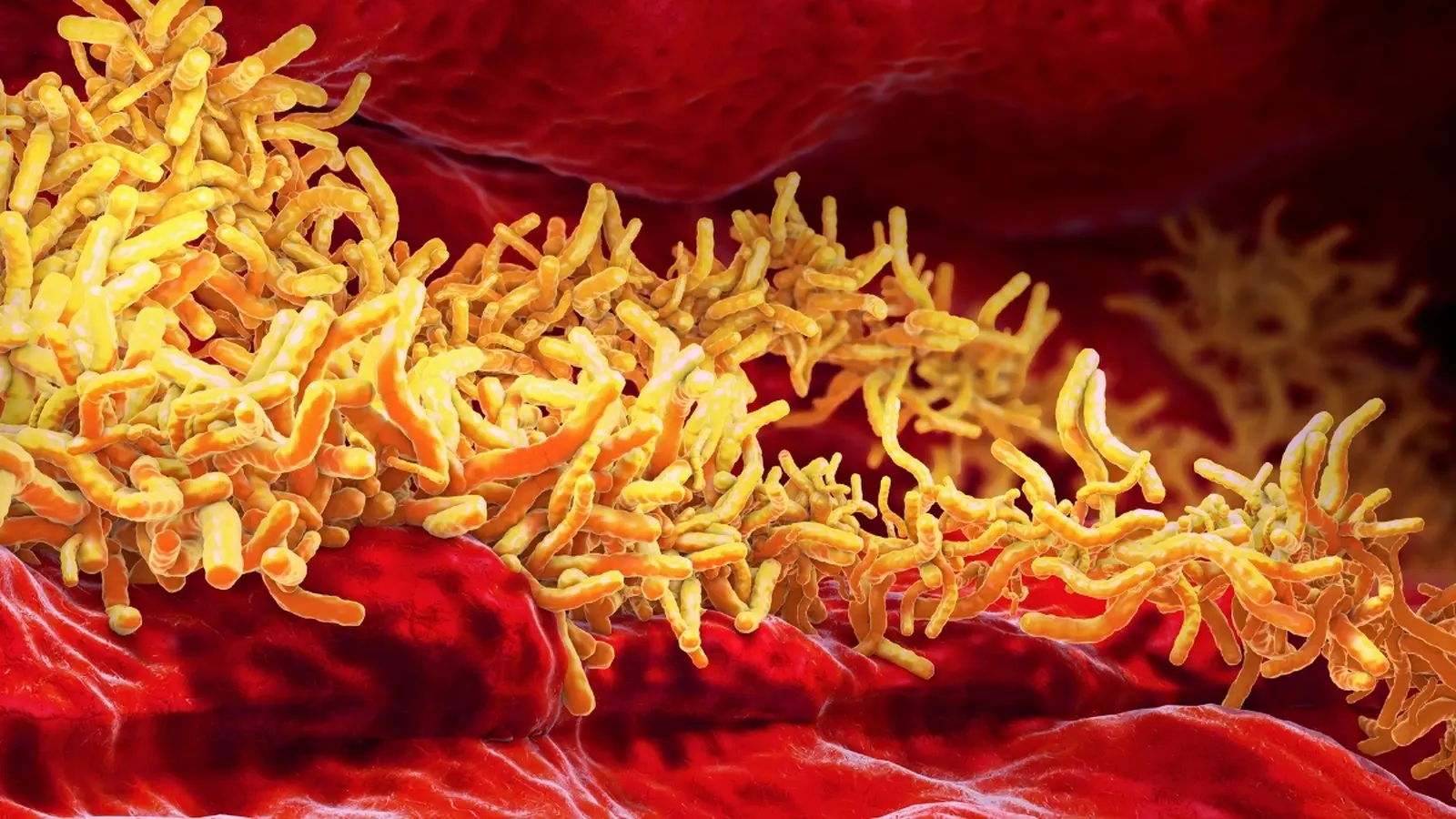
Tuberculosis remained the globe’s deadliest infectious disease in 2024, claiming an estimated 1.23 million lives and highlighting fragile progress against an ancient and preventable illness. The World Health Organization’s latest overview shows modest declines in cases and deaths since the pandemic disruption, but warns that cuts in funding and persistent social drivers could reverse gains.
A cautious reversal after COVID setbacks
For the first time since the Covid-19 pandemic upended health services, both TB cases and deaths fell year-on-year. The WHO reports a roughly 3% drop in deaths and almost a 2% fall in reported cases compared with 2023. Still, the agency stresses that these improvements are fragile: testing, treatment and prevention services remain under-resourced in many high-burden countries.
"Funding cuts and persistent drivers of the epidemic threaten to undo hard-won gains, but with political commitment, sustained investment, and global solidarity, we can turn the tide and end this ancient killer once and for all," said Tereza Kasaeva, head of WHO’s department for HIV, TB, hepatitis and sexually transmitted infections, underlining that the progress is not yet secure.
Who is most affected — and why it matters
An estimated 10.7 million people developed TB in 2024: 5.8 million men, 3.7 million women and 1.2 million children. Burdens are highly concentrated — eight countries accounted for roughly two-thirds of cases. India led with about 25% of global cases, followed by Indonesia, the Philippines, China, Pakistan, Nigeria, the Democratic Republic of Congo and Bangladesh.
Tuberculosis is a bacterial infection that most commonly attacks the lungs and spreads when people with active disease cough, sneeze or spit. Tuberculosis is the leading cause of death among people with HIV: in 2024 around 150,000 people with HIV died of TB. Major risk factors driving the epidemic include undernutrition, HIV infection, diabetes, smoking, and alcohol use disorders—social and health challenges that complicate control efforts.
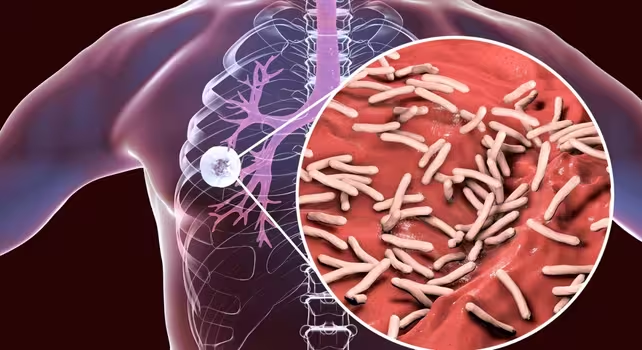
Tuberculosis is caused by bacteria infecting the lungs
Testing, treatment and a mixed research pipeline
Despite the high death toll, there are hopeful signs in diagnosis and care. In 2024, a record 8.3 million people were newly diagnosed with TB and started treatment — a milestone the WHO attributes to improved case-finding and outreach. Treatment success rates also improved, rising from 68% to 71%.
The WHO credits timely treatment with saving an estimated 83 million lives since 2000. Yet global financing for TB remains far short of targets. Last year only $5.9 billion was available for prevention, diagnosis and treatment — well below the $22 billion per year target set for 2027.
New tools and the search for better vaccines
In the research pipeline, progress is steady but incremental. As of August, the WHO catalogued 63 diagnostic tests in development and 29 drug candidates undergoing clinical trials. Vaccine research includes 18 candidates in human testing, with six in Phase III — the final stage before regulatory approval.
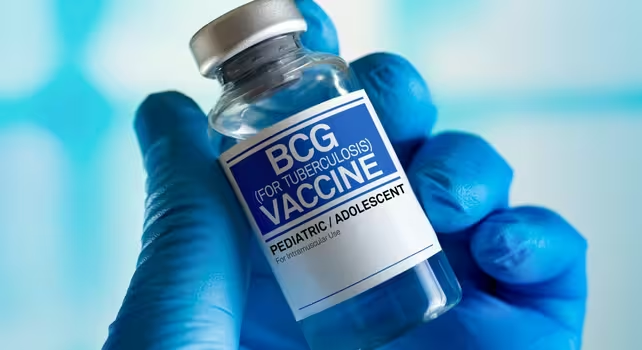
BCG vaccine is a part of routine childhood immunisation
Yet a striking fact remains: no new TB vaccine has been licensed for over a century, and there are currently no approved vaccines specifically for adults. Innovations in diagnostics are promising: Peter Sands, head of the Global Fund to Fight AIDS, TB and Malaria, highlighted shorter, more effective drug regimens and “cutting-edge diagnostics, including AI-powered tools that can detect TB faster and more accurately than ever before.” These technologies could transform detection and care, particularly in resource-limited settings.
Funding gaps and the road ahead
Experts warn that without a major scale-up in funding and political will, recent gains could stall. Investment is needed not only for medical tools but also for tackling the social determinants of TB — improving nutrition, reducing harmful alcohol and tobacco use, expanding HIV care, and strengthening primary health systems that find and treat TB early.
Expert Insight
Dr. Maya Rahman, a global health epidemiologist with two decades of experience in TB programmes, commented: "What we’re seeing is a fragile recovery built on patches of progress. Diagnostics and shorter treatment courses are changing the game, but unless funding matches scientific promise, too many communities will remain exposed. Ending TB requires both innovation and political action — not one without the other."
Declines in cases and deaths offer real cause for cautious optimism, but the WHO and partners emphasise that preventing a resurgence will require sustained investment, broader social interventions, and accelerated vaccine development. The path to ending tuberculosis depends on marrying new technologies with stronger health systems and global solidarity.


Leave a Comment
Comments (2)
Is this even true? only $5.9bn vs 22bn target, how do they expect progress with that budget... quick Q, are reporting gaps hiding worse numbers?
Wow didnt expect TB still killing so many.. 1.23M lives? heartbreaking. Funding cuts make no sense, politics fail ppl, urgent action needed.