
4 Minutes
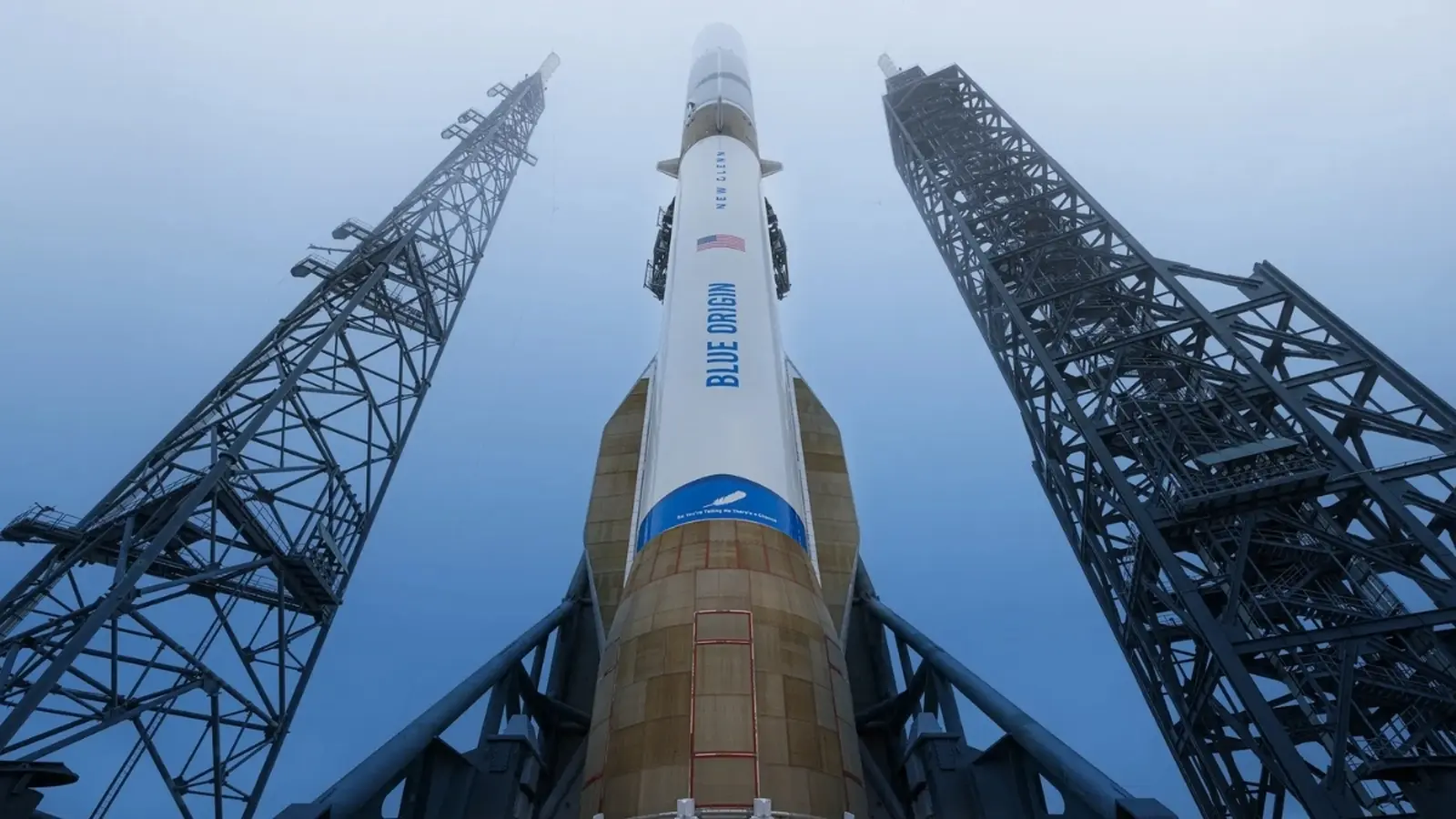
Blue Origin achieved a major milestone when its New Glenn rocket successfully launched NASA-bound twin spacecraft and, in a breakthrough for reusable orbital vehicles, recovered its first-stage booster with a precise landing on a sea platform. The flight — the rocket's second — cleared months of delays and put the private company squarely in the spotlight as competition with rival SpaceX intensifies.
Historic recovery: a reusable booster joins the club
The 322-foot (98-meter) New Glenn lifted off from Cape Canaveral after weather and space-environment concerns stalled the mission for days. At 3:55 pm local time (2055 GMT) the vehicle rose, placed its payload into the intended trajectory, and then executed the delicate return of its first-stage booster to a floating landing platform — a maneuver until now accomplished regularly only by SpaceX among orbital-class rockets.
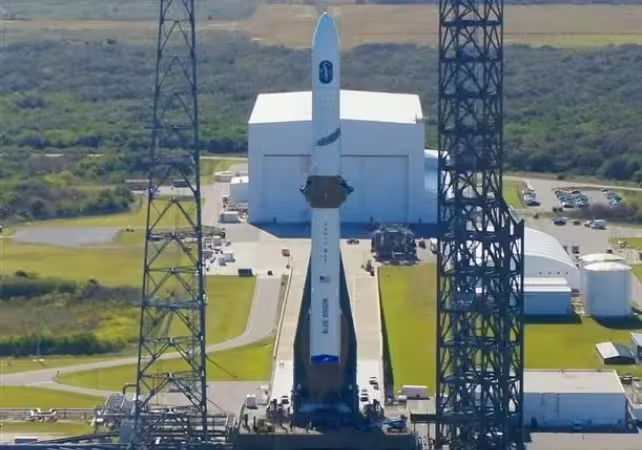
The 98-meter New Glenn rocket on the launchpad
Crowds at the Florida launch site erupted in applause as the booster touched down. Blue Origin touted the recovery as a turning point for cost reduction and reusability: instead of allowing expensive hardware to be lost at sea, the company can refurbish and fly boosters again. "Launch, land, repeat — it starts today," said Eddie Seyffert during Blue Origin's webcast.
Mission payload: ESCAPADE twins bound for Mars
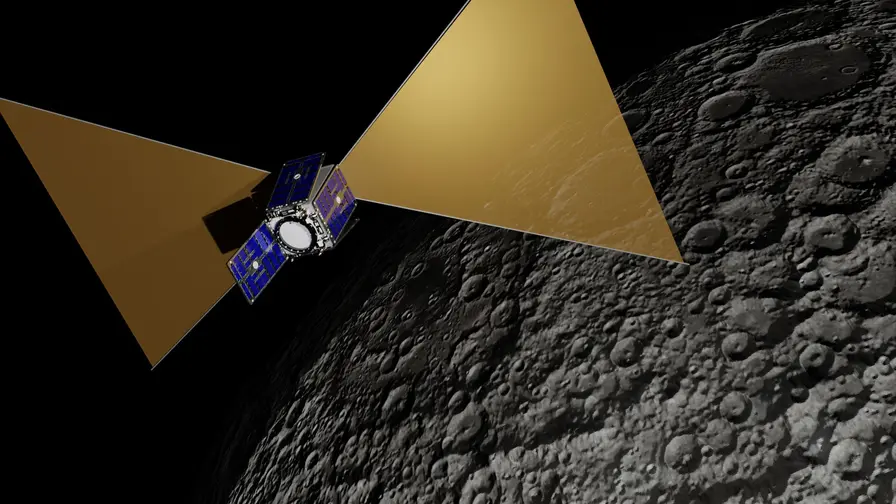
Onboard New Glenn were NASA's ESCAPADE twin spacecraft — informally named "Blue" and "Gold" — designed to study Mars' climate history and space weather interactions. Joseph Westlake, a NASA heliophysicist, explained on the webcast that the probes will first establish a stable, low-risk parking orbit to monitor the near-Earth space weather environment before committing to their interplanetary cruise.
Trajectory and timeline
- Initial parking and calibration in Earth orbit: months following launch.
- Gravity-assist departure window: fall 2026, when planetary alignment is favorable.
- Expected Mars arrival: 2027, when the probes will begin targeted observations.
This mission profile — parking near Earth and waiting for an opportune gravity assist — lets missions launch outside the narrow two-year direct transfer windows between Earth and Mars. That flexibility could enable more frequent scientific campaigns and more responsive mission planning.
Weather, solar storms and delayed countdowns

The launch had multiple postponements. Ground weather concerns delayed the liftoff on Sunday, while "highly elevated solar activity" prompted a separate hold because coronal mass ejections and intense solar radiation can damage delicate spacecraft electronics during crucial early operations. Blue Origin also reported unspecified technical holds that pushed the launch to Thursday.
Despite those setbacks, New Glenn completed vehicle separation and successful deployment of the ESCAPADE pair. The recovery of the booster marks a recovery upgrade from New Glenn's inaugural flight in January, when the first-stage was lost during descent even though the payload reached orbit successfully.
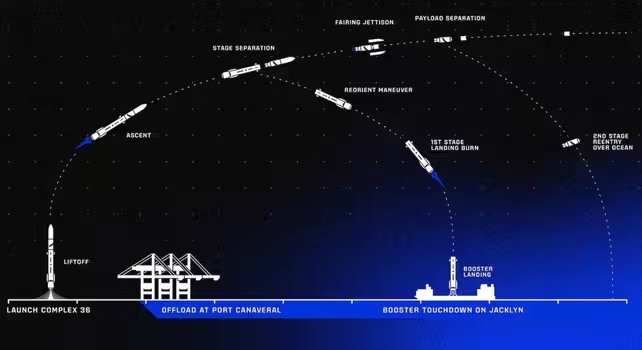
New Glenn's launch and booster landing
Why this matters for NASA and lunar ambitions
Blue Origin's success comes as NASA solicits commercial partners for future lunar missions and as political pressure mounts on the agency to accelerate lunar exploration timelines. Analysts say reliable, reusable heavy-lift rockets from multiple providers could lower launch costs and expand options for lunar logistics and near-term crewed missions.
George Nield, a senior aerospace executive with longstanding ties to the commercial space sector, told AFP the flight will be an "indicator" of Blue Origin's readiness to play larger roles in upcoming lunar and deep-space programs. The demonstration of repeatable booster recovery helps validate the company's long-term strategy of reuse.
Expert Insight
Dr. Maya Alvarez, an astrophysicist and mission systems specialist, commented: "Precision recovery of a first-stage booster is not just spectacle — it changes mission economics. If Blue Origin can iterate on turnaround time and refurbishment costs, reusable launchers will reshape how we schedule science missions. The ESCAPADE mission also illustrates smarter trajectory planning: parking orbits plus gravity assists give planners more flexibility to launch urgent or time-sensitive payloads."
Political and commercial reactions were swift. Industry figures and rivals alike offered congratulations: Jared Isaacman posted an excited reaction on X, while Elon Musk tweeted his congratulations to Jeff Bezos and the Blue Origin team. Such public acknowledgments underline how milestone flights quickly become part of the broader narrative about which companies will dominate future space logistics.
For now, attention turns to post-launch analyses: engineering teams will inspect the recovered booster, NASA will begin commissioning the ESCAPADE instruments in orbit, and mission controllers will prepare for the gravity-assist departure in 2026 that will set the twin spacecraft on course to Mars in 2027.












Leave a Comment
Comments (2)
sounds impressive but is the refurb cost really low? SpaceX did it faster, blue origin needs real cadence, not one off wins.
Wow that booster landing gave me chills, crowd cheering and all. If they cut refurbishment time, launch cadence could change everything. Hope inspections go well, tho.