
3 Minutes
Rolling out a yoga mat and syncing movement with breath may do more than calm your mind — new evidence suggests it could be one of the best long-term exercises to improve sleep. A large meta-analysis compared different workouts and found one clear front-runner for people with sleep disturbances.
What the research compared and discovered
Researchers at Harbin Sport University in China pooled data from 30 randomized controlled trials spanning more than a dozen countries and over 2,500 participants of varying ages with sleep problems. Their meta-analysis ranked exercise types by their effect on sleep quality and found that regular, higher-intensity yoga showed the strongest association with improved sleep compared with walking, resistance training, mixed exercise routines, standard aerobic workouts, and traditional Chinese practices such as qigong and tai chi.
Surprisingly, the best results came from relatively modest sessions: high-intensity yoga sessions lasting under 30 minutes, performed twice a week, produced measurable improvements. Study participants began to see benefits in as little as 8 to 10 weeks.
Why yoga might help sleep more than other workouts
Yoga is not easily boxed into ‘aerobic’ or ‘anaerobic’ labels. Different styles — from vigorous vinyasa to slower, restorative practices — alter intensity, heart rate and breathing patterns. That variability could explain why study results differ across trials, and why yoga sometimes outperforms more conventional exercise formats.
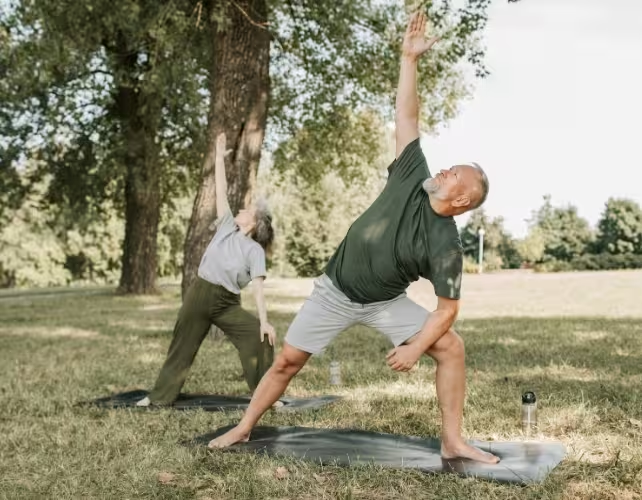
Several plausible mechanisms link yoga to better sleep. Vigorous sequences can raise heart rate and fatigue muscles like other workouts do, which contributes to sleep pressure. At the same time, focused breath control and mindful transitions between poses activate the parasympathetic nervous system — the body’s rest-and-digest mode — encouraging relaxation. Some small studies suggest yoga may also influence brainwave activity in ways that favor deeper, more restorative sleep.
How this fits with earlier evidence
Not all reviews have reached the same conclusion. A 2023 meta-analysis favored aerobic or mid-intensity exercise performed about three times weekly as the most effective for improving sleep quality. However, that earlier analysis included individual trials showing yoga can yield larger effects in some cases. Differences in participant populations, yoga styles, duration and intensity across studies likely drive these mixed findings.
The authors of the new meta-analysis caution that while results are promising, interpretation requires care: the body of trials is still limited and the sleep-disturbed populations examined are heterogeneous. In short, yoga appears powerful for many people, but it is not a universal cure for insomnia.
Practical takeaways for sleep-improvement
- Try short, higher-intensity yoga sessions (under 30 minutes) twice a week and track sleep changes over 8–10 weeks.
- If vigorous yoga isn’t accessible, walking and resistance training also showed positive effects and may be more practical for some people.
- Focus on breath work and movement quality: the combination of physical exertion and parasympathetic activation seems central to the benefit.
- Consult a clinician if you have chronic insomnia or a sleep disorder — exercise is helpful but often needs to be part of a broader treatment plan.
The study was published in the journal Sleep and Biological Rhythms and underscores that exercise, broadly defined, remains a valuable, low-cost tool for improving sleep. Still, individual responses vary — what works best will depend on your body, health status and preferences.


Leave a Comment
Comments
No comments yet. Be the first.