
4 Minutes
Many pet dogs carry a trace of their wild relatives: a new genomic analysis finds wolf ancestry across a majority of modern dog breeds. The discovery shifts how scientists think about long-term dog–wolf interactions and offers clues about how wild genes have shaped size, scent, and temperament in domestic dogs.
What researchers examined and why it matters
Researchers from US institutions screened thousands of publicly available genomes for signatures of hybridization between domestic dogs and wild wolves. Their paper, published in the Proceedings of the National Academy of Sciences in 2025, reports that more than 64% of modern breeds show measurable wolf ancestry. This is not just a relic of dogs' domestication about 20,000 years ago; the genetic patterns instead point to repeated interbreeding events within the last few thousand years.
Lead author Audrey Lin of the American Museum of Natural History said the findings challenge a widely held view in canine genetics. Before this study, many researchers assumed that modern breeds contained almost no wolf DNA. Lin observed that low-level wolf ancestry is in fact widespread and sometimes influential for traits we associate with specific breeds.
Which breeds carry the most wolf DNA?
The level of wolf contribution varies widely. Working and hybrid breeds such as the Czechoslovakian and Saarloos wolfdogs register the highest levels—up to roughly 40% wolf ancestry in some individuals. Among companion breeds, the Grand Anglo-Francais Tricolore hound stood out at around 5% wolf DNA, while sight hounds like Salukis and Afghans also showed elevated levels. But the relationship between wolf ancestry and body size is not simple: some large breeds like Saint Bernards showed little or no wolf signal.
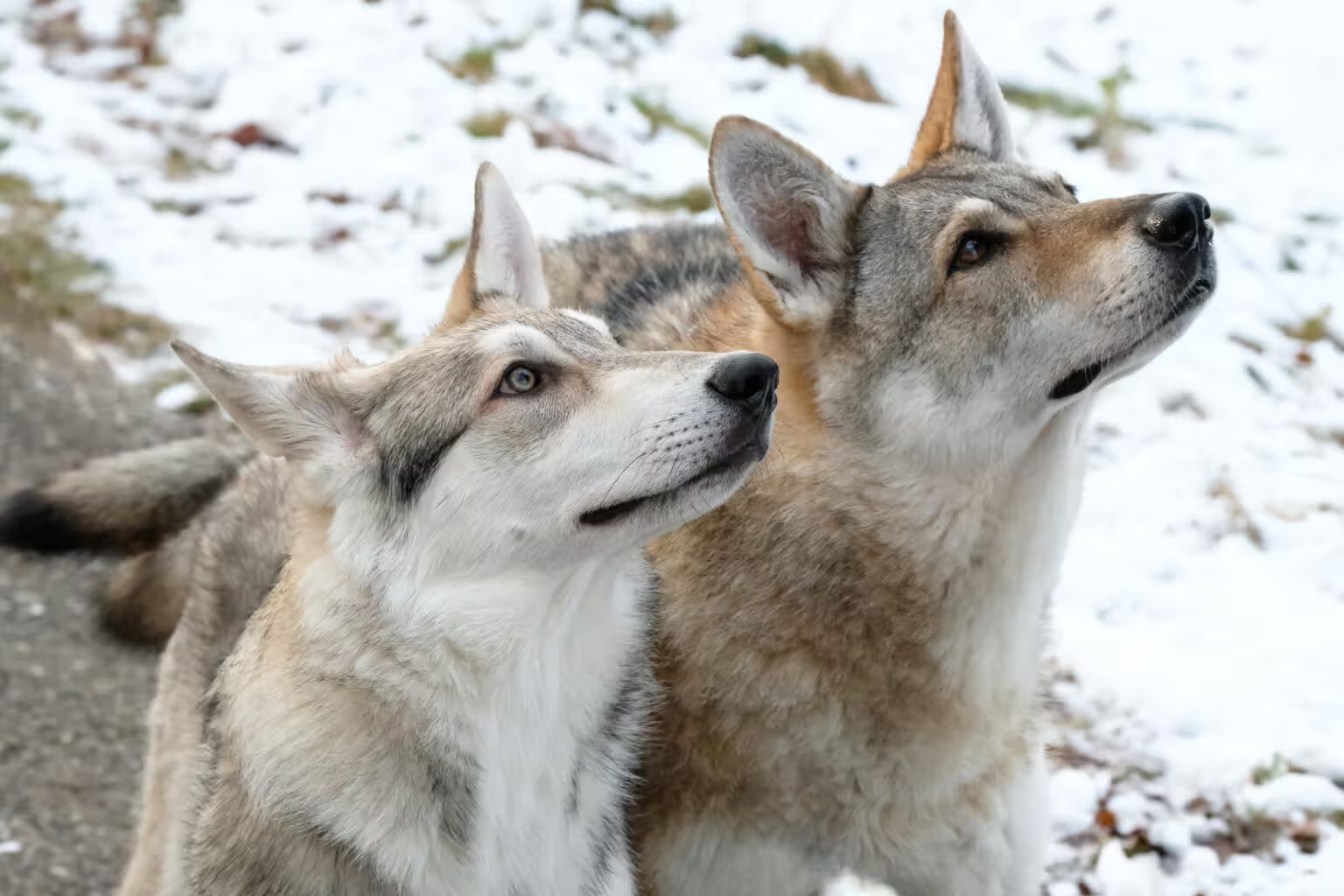
Saarloos wolfdogs had some of the highest amounts of wolf DNA, according to the study.
Subtle but widespread impacts on traits
Even tiny proportions of wolf DNA can correlate with measurable differences. The team linked wolf-derived alleles to variations in body size, sensory performance, and behavioral descriptors used by kennel organizations. For instance, breeds with minimal wolf ancestry tended to be described as friendly, trainable, and affectionate in kennel-club profiles. Dogs with higher wolf contributions were more often labeled as independent, wary of strangers, dignified, or territorial.
Researchers caution these descriptions are broad stereotypes and do not predict individual dogs' behavior. As Logan Kistler, curator at the Smithsonian Museum of Natural History and a study co-author, put it: 'This does not mean that wolves are coming into your house and mixing it up with your pet dog.' Instead, hybridization appears to have introduced genetic variants that provided advantages in specific environments.

How did wolf DNA get into so many dogs?
One plausible pathway is through village dogs—free-ranging animals that live in human settlements but aren't owned as pets. The study finds 100% of sampled village dogs carry wolf ancestry, suggesting ongoing contact between domestic and wild canids. Habitat fragmentation and human disturbances may separate individual female wolves from packs, increasing the chance they breed with stray or village dogs. Over generations, those wolf-derived genes can spread into nearby breeds.
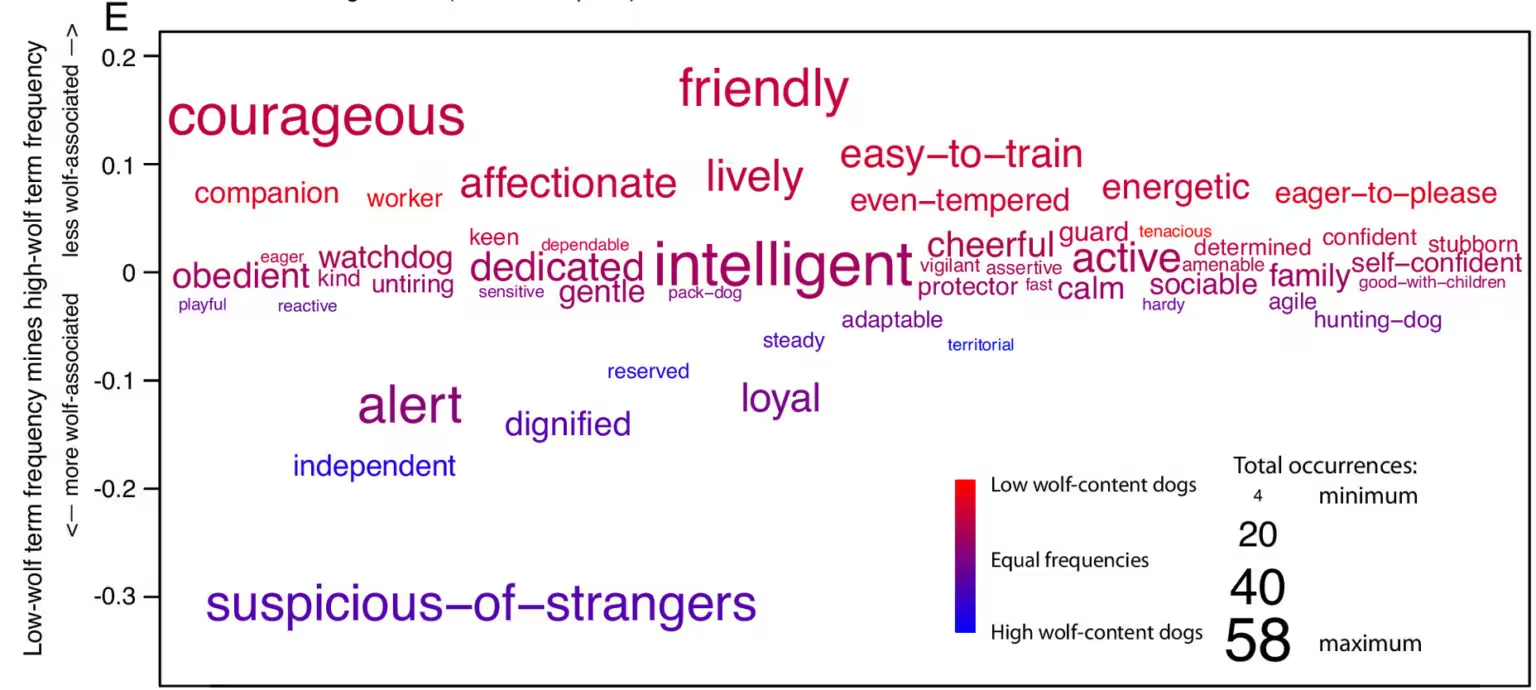
A chart describing dog traits in relation to the amount of wolf DNA in their genome.
Scientific context and broader implications
The study adds to a growing body of work showing that gene flow between wild and domestic species is common and often adaptive. For example, Tibetan dog breeds carry EPAS1 variants associated with high-altitude adaptation; those same variants are found in Tibetan wolves, pointing to a shared evolutionary response to low-oxygen environments. Similar cases across other species demonstrate how adaptive introgression—transfer of beneficial genes via hybridization—can aid rapid local adaptation.
For dog breeders, conservationists, and pet owners, these results highlight the fluidity of canine genomes. They also raise practical questions about how hybrid ancestry should be considered in breed standards, genetic testing, and wildlife management.
Expert Insight
Dr. Maya Ruiz, a conservation geneticist not involved in the study, commented: 'This research reminds us that domestication is not a single cutoff point. Dogs and wolves have continued to exchange genes as they moved across landscapes shaped by people. Those occasional gene transfers can leave a lasting footprint on traits that matter to both survival and human use.'
The authors emphasize that interbreeding events appear to have been infrequent at the individual-pair level but widespread enough across geography and time to shape the genomes of many breeds. Future work will refine the timing of these events and map specific loci where wolf-derived variants influence morphology, olfaction, or behavior.
Research and next steps

Ongoing genomic surveys, combined with improved sampling of wild wolf populations and historical dog lineages, will sharpen our picture of canine evolutionary history. Researchers also plan to investigate the functional consequences of particular wolf alleles—do they alter scent receptor genes, metabolic pathways, or neural circuits that affect behavior? Answers will deepen our understanding of both domestication and the ongoing evolutionary dialogue between wild and domestic canids.

Leave a Comment
Comments (2)
Is this even true? 100% of village dogs with wolf ancestry sounds extreme, sampling bias maybe? curious about geographic spread
Wait, 64% of breeds have wolf DNA? Mind blown... kinda cool but also kinda wild. Wonder how this changes breed tests, hmmm