
2 Minutes
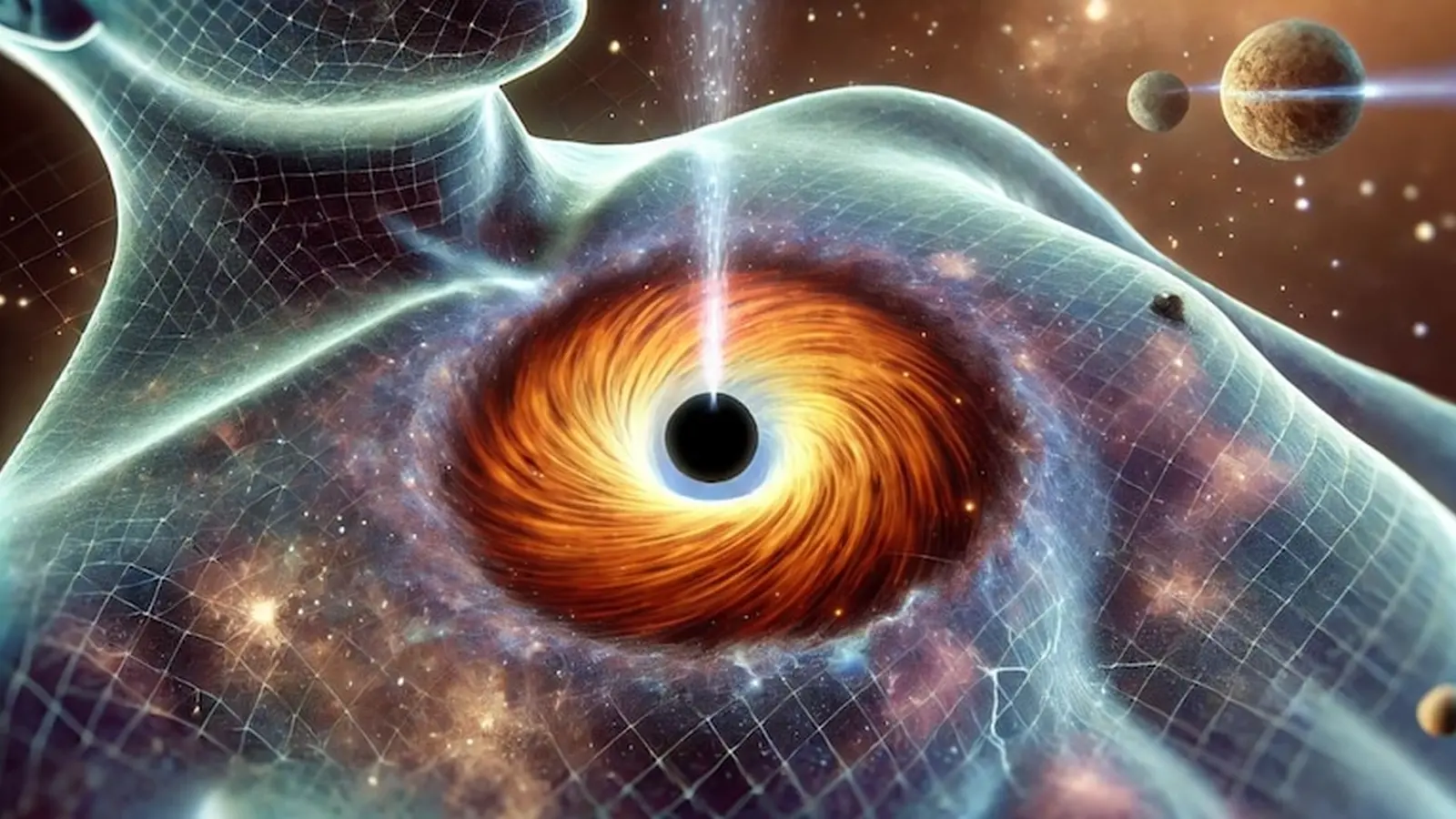
Primordial black holes are a theoretical class of black holes thought to have formed in the very early universe. In popular imagination they can sound like tiny cosmic bullets — but how real is the risk of one hitting a person, or even passing through Earth? The short answer: extremely unlikely.
What are primordial black holes and why scientists consider them
Primordial black holes would have formed from extreme density fluctuations in the fractions of a second after the Big Bang, rather than from collapsing stars. If they exist, their masses could span a huge range — from microscopic to asteroid-sized or larger. That mass range determines their behavior and potential danger.
Size matters: a close encounter explained
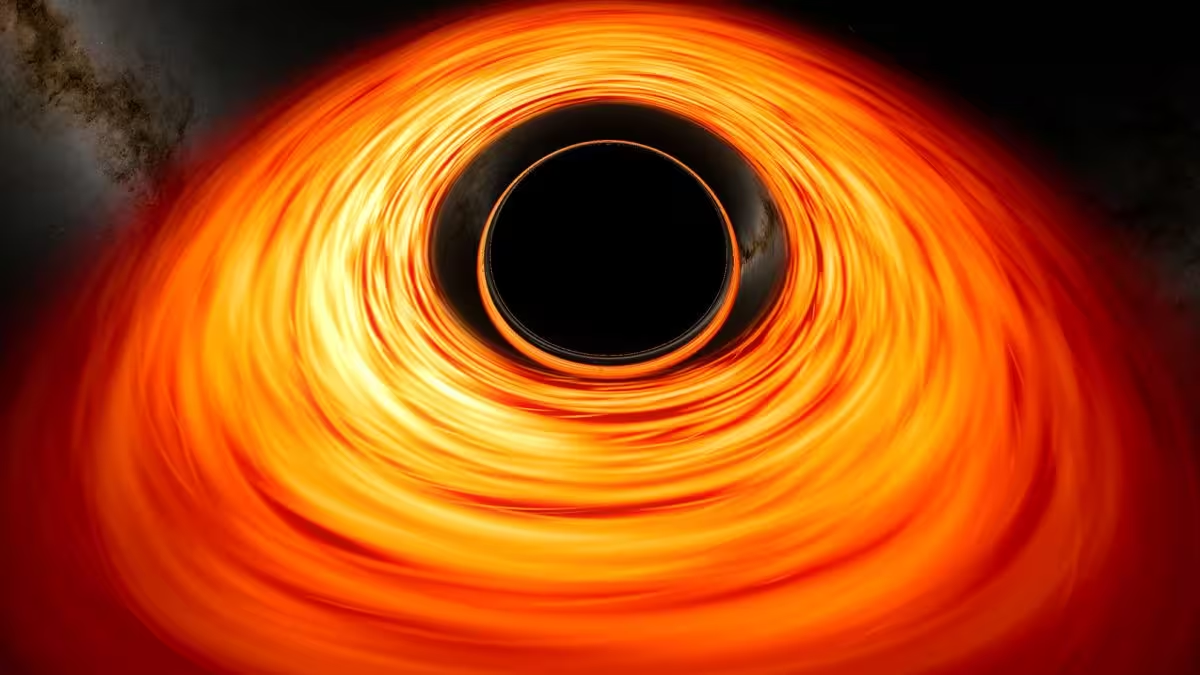
A large primordial black hole — roughly the mass of an asteroid or more — could be catastrophic if it passed through a person or a city. Its gravity would be intense over a small region and the interaction could be violent, similar in effect to a high-energy projectile.
Small ones are mostly harmless (and rare)
Conversely, a much smaller primordial black hole could theoretically cross your body without noticeable effect. But here’s the crucial point: the inferred density of such objects in space is vanishingly low. Encounters are so improbable that for all practical human concerns they don’t factor into risk assessments.
Why the universe’s timescale makes a difference
Even if primordial black holes formed, the chances of one intersecting a person’s path during humanity’s existence are effectively zero. On cosmological timescales, events like these are conceivable — but human civilization occupies an infinitesimal sliver of those times. As astrophysicist Scherrer has noted, primordial black holes might be theoretically possible, yet they may not exist in meaningful numbers at all.
Key takeaways for readers
- Primordial black holes are speculative but scientifically plausible.
- Large ones could be deadly in a direct encounter; small ones would likely be undetectable.
- Their cosmic abundance appears so low that an encounter with a human is essentially impossible.

Leave a Comment
Comments
No comments yet. Be the first.