
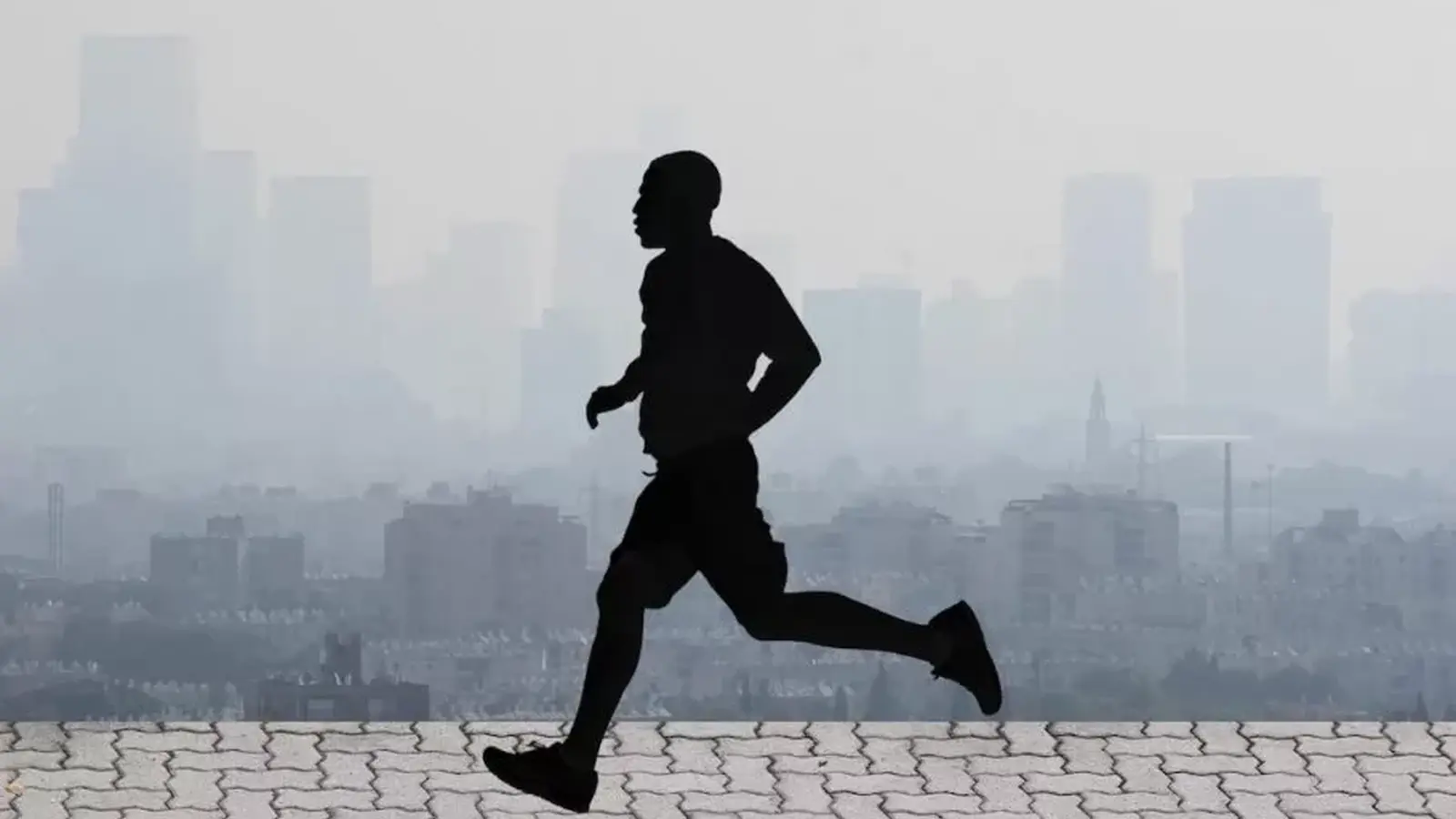
Regular physical activity is widely recommended to improve health and longevity. But new research shows that where you exercise may matter almost as much as how often. Scientists at University College London analyzed data from 1.5 million people and found that high levels of air pollution can substantially blunt — in some cases halve — the mortality benefits of exercise.
Study reveals how dirty air erodes exercise gains
The analysis, reported in BMC Medicine and summarized on ScienceDaily, compared mortality outcomes across different levels of fine particulate pollution (PM2.5). In clean to moderately polluted areas, people who did about 2.5 hours per week of moderate-to-vigorous exercise typically showed roughly a 30% lower risk of death than inactive peers. But in places with higher PM2.5 concentrations the protective effect dropped dramatically to an estimated 12–15%.
Why PM2.5 matters
PM2.5 are airborne particles smaller than 2.5 micrometers that can penetrate deep into the lungs and enter the bloodstream. The researchers report that when average annual PM2.5 reaches about 25 µg/m3, the benefits of physical activity begin to fall away sharply. At concentrations above ~35 µg/m3, the mortality-reduction effects of exercise for cancer and cardiovascular death become almost negligible. The study notes that roughly 46% of the global population lives in areas that meet or exceed the 25 µg/m3 threshold.

Professor Andrew Steptoe of University College London, a lead author, summarized the findings: "Our study shows that toxic air can substantially block the benefits of exercise, although it does not eliminate them entirely."
Practical advice: protect your workouts without quitting
Should you stop exercising outdoors when pollution is high? Not necessarily. The study authors and public-health experts emphasize that physical inactivity still poses a serious health risk — and, in many cases, moderate exercise in polluted air is better than none. Nevertheless, smart adjustments can reduce harm and preserve more of the benefit.
- Check the Air Quality Index (AQI) before you go outside and avoid outdoor exercise on peak-pollution days.
- Choose routes away from heavy traffic; parks and greenways typically have lower PM2.5 levels than busy streets.
- Lower workout intensity on polluted days so you breathe less deeply and reduce the volume of particles inhaled.
- Consider indoor exercise with filtration if local PM2.5 is consistently high (above ~35 µg/m3), especially for vulnerable groups.
The implications extend beyond individual choices. Urban planners, public-health authorities and policymakers must prioritize cleaner air to ensure that population-level benefits from physical activity are not undermined. Cleaner transport, stricter emissions controls and more urban green space are long-term solutions that help both air quality and public health.
For now, the message is pragmatic: keep moving, but be mindful of the air you breathe. Small changes in where and how you exercise can help preserve more of the health gains that physical activity offers.


Leave a Comment
Comments
No comments yet. Be the first.