

4 Minutes
Scientists are discovering that human sweat holds far more diagnostic information than once believed. New wearable sensors combined with artificial intelligence may soon translate those molecular signals into real-time health insights, from hydration and electrolytes to early warning signs of chronic disease.
Scientists are uncovering how the chemistry of human sweat may reveal far more about our bodies than previously understood. Emerging technologies are now able to interpret subtle molecular patterns that could reshape how we monitor health and detect early signs of disease.
Why sweat is suddenly a hot diagnostic target
Sweat is painless and non-invasive to collect, making it an appealing alternative to blood or urine for continuous monitoring. Though often dismissed as just salt and water, sweat contains hormones, metabolites and trace biomarkers that reflect physiological states. Researchers argue that pairing sensitive skin patches with machine learning can turn this overlooked fluid into a real-time health window.
“Collecting sweat is painless, simple and non-invasive,” says Dr. Dayanne Bordin, an analytical chemist at the University of Technology Sydney. That simplicity opens the door to continuous, practical monitoring outside clinical settings — during exercise, at work, or while sleeping.
How sensors and AI work together
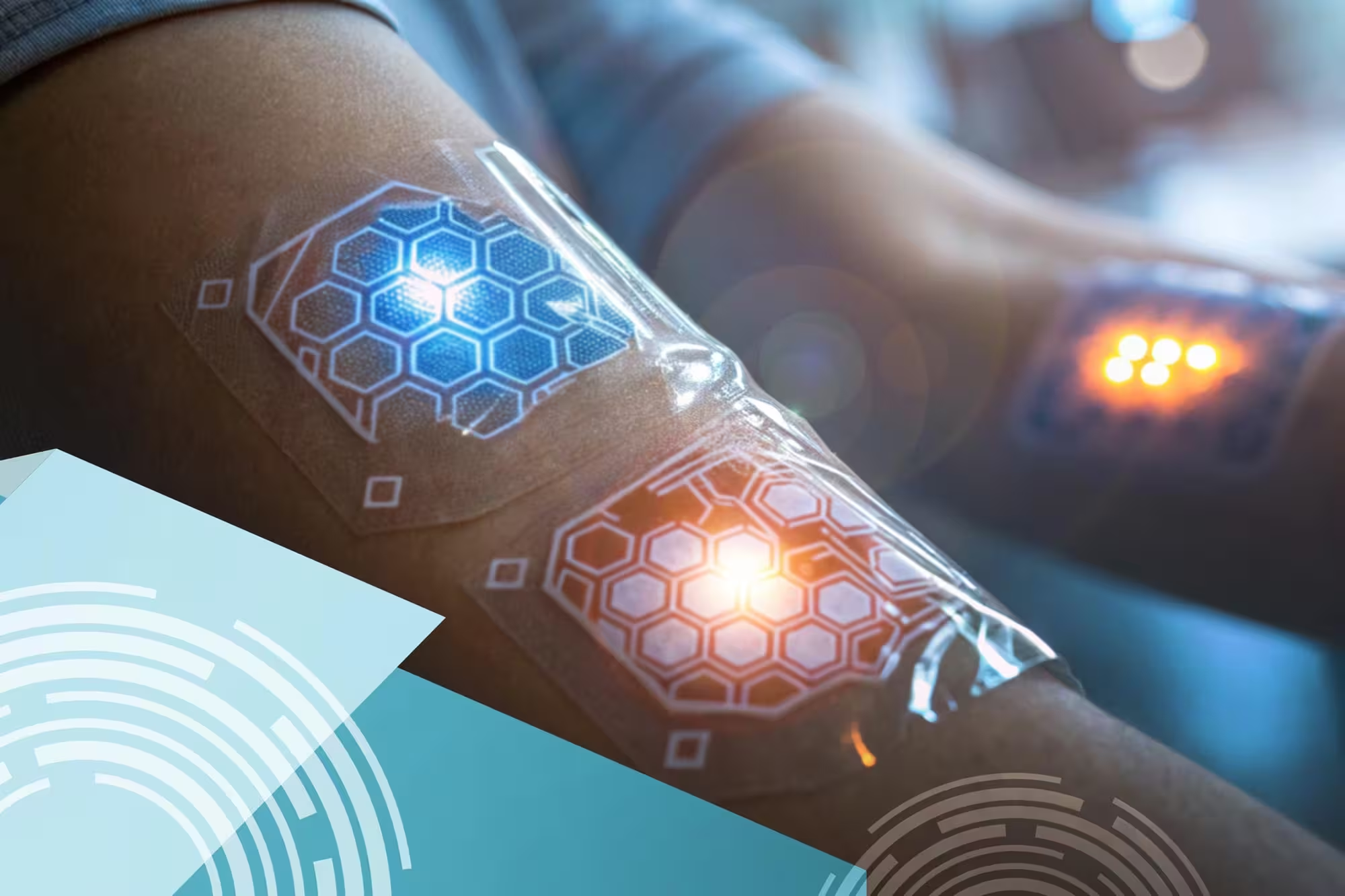
Recent advances in microfluidics, flexible electronics and wireless communications have produced skin-adherent patches capable of channeling tiny sweat volumes toward chemical sensors. These microfluidic platforms separate and guide droplets so electrochemical or optical detectors can measure concentrations of specific molecules, such as glucose, cortisol or sodium.
Raw sensor outputs, however, are noisy and multivariate. This is where artificial intelligence steps in: modern algorithms can sift large datasets, recognize complex molecular patterns, and map those patterns to physiological states. In practice, that means a patch might not just report a single reading; it can analyze trends, flag anomalies, and send actionable alerts to a smartphone.
Applications: from athletes to early disease detection
The immediate use cases are intuitive. Athletes could monitor electrolyte loss and hydration in real time to avoid cramps and optimize performance. Drug testers might one day use sweat patches for rapid, non-invasive screening before competitions. For people with diabetes, sweat-based glucose estimates could reduce the need for finger-prick tests if accuracy and calibration challenges are solved.
Longer-term, researchers are exploring whether sweat profiling can contribute to early detection of conditions like diabetes, Parkinson’s, Alzheimer’s and certain cancers. By tracking multiple biomarkers simultaneously and applying pattern-recognition models, subtle shifts that precede symptoms could become detectable.
Current limits and research priorities
Most work remains at the prototype stage. Key hurdles include ensuring sensor sensitivity to detect low-concentration biomarkers (trace glucose and cortisol), managing inter-individual variability in sweat composition, and building secure, low-power electronics for continuous data transmission. Standardizing sampling methods is also critical — sweat rate, environmental conditions and skin chemistry all influence readings.
UTS teams are addressing these issues by mapping baseline sweat physiology across populations and refining microfluidic designs to concentrate analytes. Commercial interest is rising as startups and sports brands test single-use and reusable patches in field trials.
What this means for preventive healthcare
Dr. Janice McCauley from the UTS Faculty of Science observes that the AI breakthroughs of recent years have improved pattern analysis, enabling more precise diagnostic classification. She notes, “The ability to measure multiple biomarkers simultaneously, and transmit that data wirelessly, provides enormous potential for preventive health care.”
Imagine a future wearable that alerts you to persistent high stress-hormone trends, early metabolic changes, or medication levels that drift outside therapeutic windows — all without a clinic visit. That possibility is drawing attention from clinicians, sports scientists and consumer-health companies alike.
Expert Insight
“Integrating reliable biochemical sensing with robust AI models is the breakthrough we need to make sweat monitoring clinically useful,” says Dr. Michael Reyes, a biomedical engineer and medical-device consultant. “The engineering challenges are solvable; the remaining gaps are large-scale validation and trusted data governance so patients and providers can rely on these devices.”
As prototypes mature into products, the next few years will likely reveal whether sweat can shift from an experimental medium to a routine source of health data. For now, the combination of sensitive patch technologies and smarter algorithms makes sweat a surprising—and promising—frontier in non-invasive diagnostics.












Leave a Comment
Comments (2)
I've tested sweat sensors in a lab, they really pick up signals but AI is what cuts the noise. Excited tho, could help athletes and patients fast
Wait, sweat sensors sound cool but is this even reliable? Calibration, skin differences, privacy of continuous data.. feels like a long road, hope they nail it