
5 Minutes
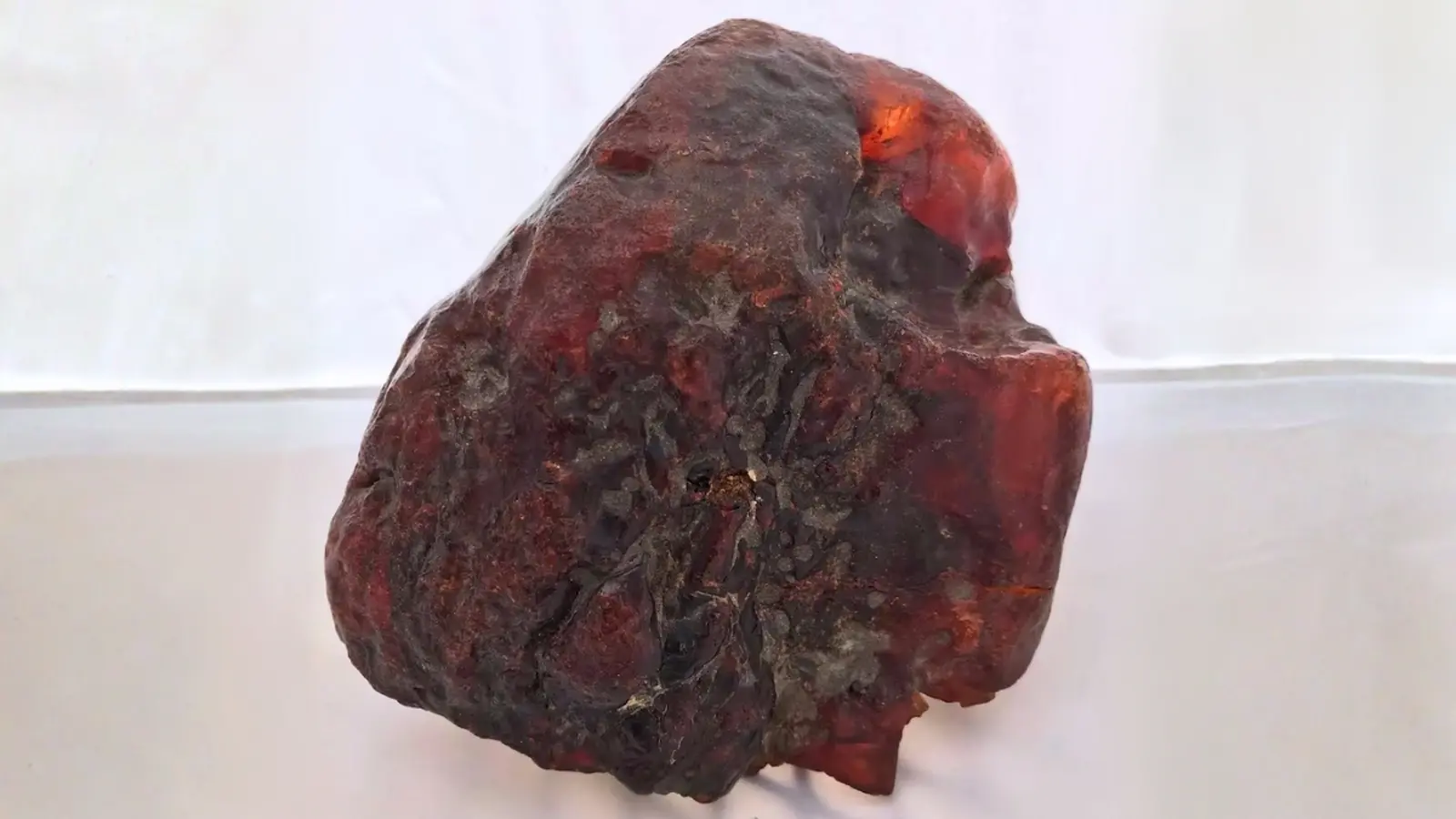
What looks like an ordinary rock can hide a lost world. In southeast Romania, a 3.5-kilogram stone used for decades as a doorstop has been reclassified as one of the largest intact pieces of rumanite amber ever found — and its value is now estimated at roughly €1 million (about US$1.1 million).
The discovery reads like a modern treasure tale: a stream-bed find, a humble household object, and a quiet reassessment by museum experts that transformed a domestic object into a national treasure. But beyond the headline price, this nugget offers paleontologists a rare window into ancient forests and the insects they trapped in fossilized tree resin.
From stream bed to museum: the story behind the nugget
The amber was found in the Buzău County area near the village of Colţi, a region in Romania known for rumanite — a red-hued variety of amber that has been mined intermittently since the 1920s. According to local reports, an elderly woman picked up the pebble from a stream, brought it home and used it as a doorstop for many years. Even when jewel thieves raided the house, the rock remained overlooked.
After the woman's death in 1991, an inheriting relative suspected the doorstop might be more than a mere stone. He sold it to the Romanian state, and experts at the Provincial Museum of Buzău arranged for an appraisal by specialists at the Museum of History in Kraków, Poland. Their analysis dated the amber at roughly 38 to 70 million years old, placing it in the broad window from the late Paleogene to the early Neogene — a period that followed the age of the dinosaurs and saw dramatic changes in forest composition worldwide.
“Its discovery represents a great significance both at a scientific level and at a museum level,” Daniel Costache, director of the Provincial Museum of Buzău, told El País. Classified as a national treasure, the nugget has been on display at the Provincial Museum of Buzău since 2022.
Why rumanite matters: more than a pretty gem
Amber is fossilized tree resin. Unlike sap, which circulates nutrients, resin is a sticky, protective secretion that trees produce to seal wounds and trap pests. Over millions of years, resin can harden and fossilize into amber, preserving delicate organic matter — including insects, plant fragments and, on rare occasions, microscopic organisms — in exquisite detail.
Rumanite is prized for its deep reddish-brown hues and regional rarity. While amber is relatively common across parts of the Northern Hemisphere, finds like this large rumanite chunk are exceptional and scientifically valuable. They can contain inclusions (trapped organisms) or provide chemical signatures that reveal the type of tree that produced the resin and the climatic conditions in which it formed.
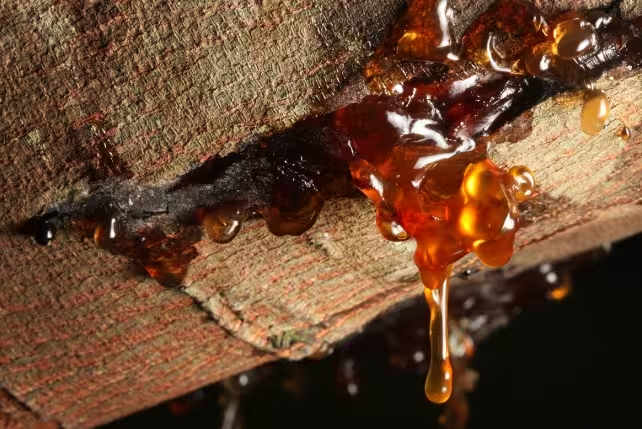
Resin forming under the damaged branch of a tree
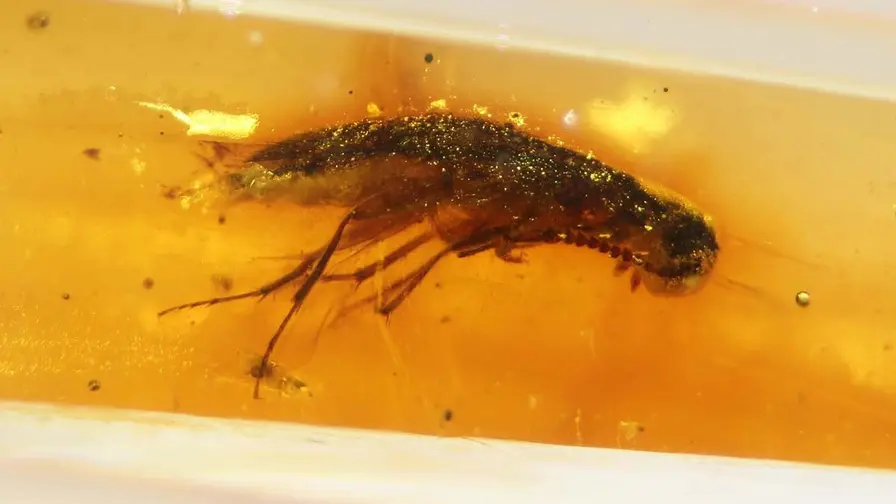
Recent international discoveries underscore amber's scientific reach. For example, 112-million-year-old amber from the Genoveva quarry in Ecuador captured multiple insect orders and fragments of spider web, showing how resin can preserve behavioral evidence as well as anatomy. In 2024, researchers reported amber in West Antarctica dating from roughly 83 to 92 million years ago, supplying strong evidence that swampy, conifer-dominated rainforests once existed near the South Pole during the mid-Cretaceous.
What scientists learn from amber
- Biotic snapshots: Amber can preserve entire arthropods, pollen, spores and small plant material, offering a direct view of ancient ecosystems.
- Climate and vegetation clues: Chemical composition and included plant fragments help reconstruct past temperatures and forest types.
- Behavioral evidence: Web fragments, insect interactions, and even microscopic gut contents can inform ecological relationships.
The Buzău nugget joins these global findings by adding a large, well-preserved sample from European deposits of rumanite — potentially filling gaps in how resin-producing forests evolved in this part of the world after the end-Cretaceous extinction.
Expert Insight
"Large amber pieces like the rumanite nugget from Colţi are scientific gold: they give us context for regional ecosystems, not just isolated specimens," says Dr. Elena Marin, a paleobotanist who studies fossil resins and ancient forest dynamics. "Even when inclusions are not obvious, the resin's chemistry and growth patterns tell us about tree species, seasonality, and the environmental stresses the forest experienced. That has implications for understanding how forests recovered and changed after major climatic events."
The rumanite discovery is also a reminder of how chance — combined with local knowledge and museum expertise — can recover scientifically important materials from everyday life. The nugget's path from stream to doorstop to national collection reflects decades of human activity layered on a much longer geological history.
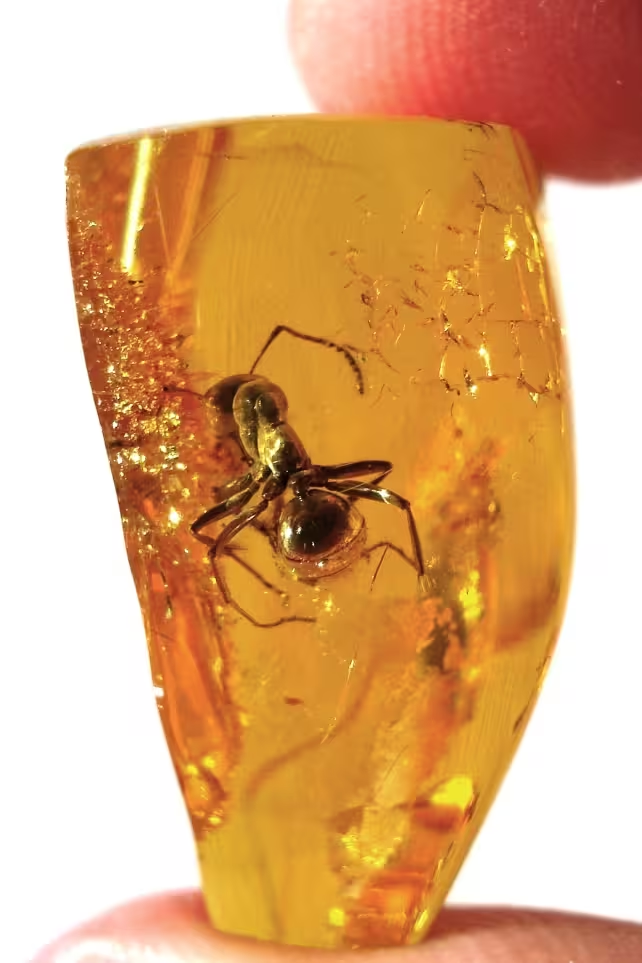
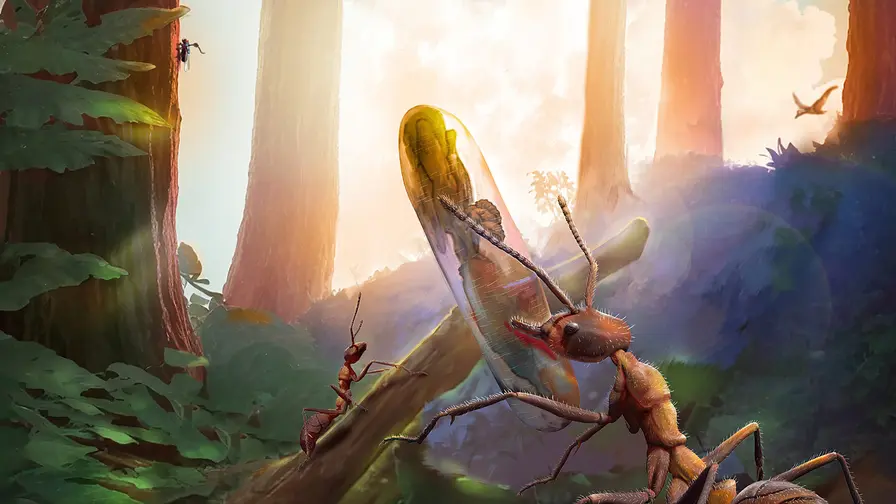
An ant inside Baltic amber
Implications and what comes next
Now that the nugget is cataloged and displayed, researchers can pursue targeted studies: chemical assays to identify its botanical source, microscopic surveys for any inclusions, and comparisons with other rumanite pieces to establish regional resin-production patterns. Museums and universities often collaborate on such analyses, combining spectroscopy, micro-CT scanning and comparative taxonomy to extract as much data as possible without damaging the specimen.
For the public, the story doubles as a cultural touchstone — a reminder that ordinary objects can carry unexpected scientific value. For researchers, the rumanite nugget from Colţi is an opportunity: to refine chronologies of resin formation in southeastern Europe, to link amber chemistry to ancient plant lineages, and to better understand how past forests adapted to changing climates.




Leave a Comment
Comments (2)
Is this legit? Sounds like folklore, was the testing robust or just hype? curious to see peer reviewed results, not tabloids...
wow, a doorstop worth a million? wild. museums turning household junk into science treasures is the best, but hope they scan it fully, like micro-CTs, chemical tests… please tell me they’ll share the data