
5 Minutes
New animal research from the University of California, Riverside suggests tiny plastic particles known as microplastics may not be innocent bystanders in cardiovascular disease. In a controlled mouse study, routine exposure to environmentally relevant microplastics accelerated atherosclerotic plaque formation in males — without changing weight or blood cholesterol. The results raise urgent questions about how pervasive plastic pollution might influence human heart health.
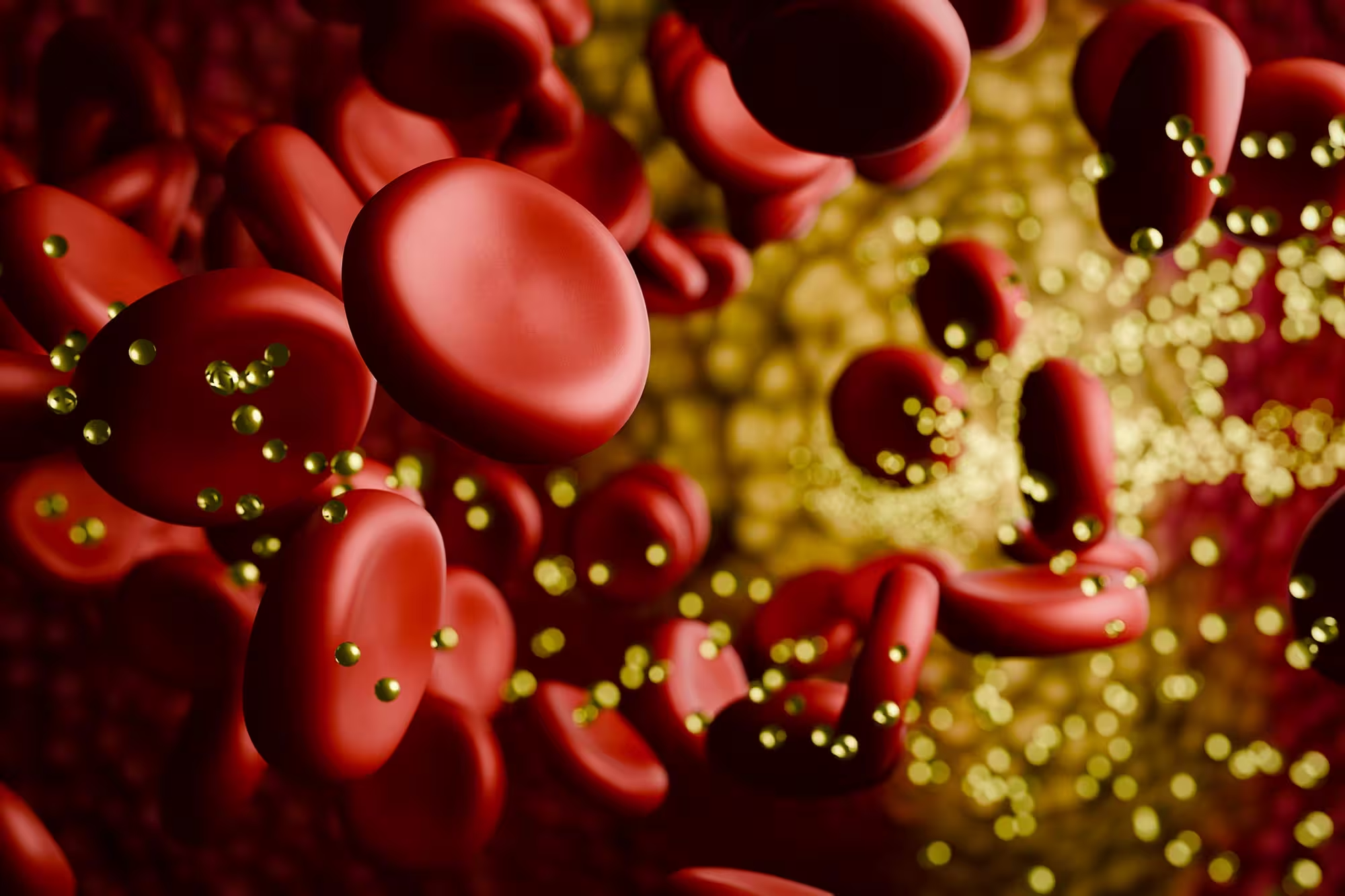
Researchers discovered that common microplastics can accelerate artery-clogging plaque in male mice. The effect occurred without changes in weight or cholesterol, suggesting the particles themselves directly damage blood vessels.
Why this study matters: from environmental contamination to clogged arteries
Microplastics — fragments smaller than 5 millimeters shed from packaging, clothing fibers, and many consumer products — are now ubiquitous in food, water and air. Recent human studies have detected microplastic particles inside atherosclerotic plaques, but causation remained uncertain: do plastics actively promote disease, or merely accompany it?
The new UCR-led experiment offers evidence that the particles themselves can provoke arterial damage. Using an established atherosclerosis model, researchers exposed LDL receptor–deficient (LDLR-/-) mice to daily doses of microplastics for nine weeks at levels intended to mimic environmental exposure. Both male and female animals ate a low-fat, low-cholesterol diet comparable to a lean human diet, isolating the effect of the particles from traditional metabolic risk factors.
Key findings: dramatic plaque increases in male mice
The team reported stark, sex-specific results. Male mice given microplastics showed large increases in plaque: roughly 63% more plaque in the aortic root and an astonishing 624% increase in the brachiocephalic artery compared with unexposed males. Female mice exposed to identical doses did not display a significant rise in plaque formation.
Crucially, exposed mice did not gain weight nor did their blood lipid profiles change. That indicates the plaque acceleration was not driven by obesity or higher cholesterol — common drivers of atherosclerosis — but likely by a direct interaction between circulating microplastics and vascular cells.
How microplastics damage blood vessels: cell-level evidence
To probe mechanisms, researchers used single-cell RNA sequencing to profile gene expression in individual vascular cells. Endothelial cells — the thin inner layer that lines arteries and regulates inflammation and blood flow — were most affected. In both mouse and human endothelial cells studied in the lab, microplastic exposure turned on pro-atherogenic genes that promote inflammation, immune cell recruitment and plaque formation.
Fluorescently tagged microplastics were also tracked in laboratory experiments: particles penetrated the endothelial layer and accumulated within plaques. Those direct observations, paired with the gene-activity changes, strengthen the argument that microplastics can initiate or accelerate atherogenesis rather than merely coexisting with it.
Sex differences: why males were more vulnerable
The sex-specific nature of the damage is striking and echoes patterns in other areas of cardiovascular research. Lead author Changcheng Zhou and colleagues suggest several biological explanations worth following up: sex chromosomes can influence cellular responses, and hormones such as estrogen may offer protective effects in females that attenuate microplastic-driven injury.
Understanding these differences could point to new protective strategies or reveal molecular pathways that explain why men often show different cardiovascular risk profiles than women.
What the study does and doesn’t show
- What it shows: Environmentally relevant microplastic exposure accelerated plaque formation in male mice and disrupted endothelial cell gene programs associated with atherosclerosis.
- What it doesn’t show: Direct proof in humans — although microplastics have been found in human plaques, causal links require additional human studies and diverse particle types, sizes and exposure routes.
Practical takeaways for reducing exposure
Because there are currently no proven medical methods to remove microplastics from the body, experts recommend reducing exposure where feasible. Practical steps include limiting use of single-use plastics, favoring glass or stainless steel containers for food and water, avoiding highly processed packaged foods, and reducing behaviors that generate airborne microfibers (for example, using lower-heat dryer settings and filters).
At the same time, maintaining classic cardiovascular health measures — healthy diet, regular exercise, blood pressure and cholesterol control — remains essential. If microplastics do accelerate plaque independently of metabolic risk, minimizing exposure offers a complementary prevention strategy.
Next steps for research
Zhou and the team plan to expand their work to determine whether different polymer types, particle sizes, and exposure durations produce similar effects. They also intend to investigate molecular pathways that drive endothelial dysfunction and to test whether comparable outcomes appear in human tissues or epidemiological studies. As plastic pollution continues to increase globally, clarifying health risks at realistic exposure levels is becoming a public-health priority.
Expert Insight
Dr. Elena Marconi, a vascular biologist (statement for context), says: "This study is an important wake-up call. The combination of particle accumulation inside the vessel wall and clear changes in endothelial gene expression points to a plausible mechanism where microplastics act like an environmental toxin for the vascular lining. The sex differences reported here are especially important — they may reveal protective pathways that could be harnessed therapeutically."
Future work that links specific particle chemistries and sizes to molecular damage will be critical for regulators and manufacturers seeking to reduce risk across the global food chain and consumer products.
For now, the take-home message is simple: microplastics are not just an environmental nuisance. In lab models, they can directly harm the cells that protect blood vessels and accelerate disease — and males, at least in this study, appear more vulnerable. Reducing avoidable exposure and prioritizing cardiovascular health remain sensible steps while science catches up.












Leave a Comment
Comments (2)
Wow this freaks me out. Microplastics in arteries? If real I'm switching to glass containers, no more synthetic clothes in my house. ugh
wait, is this even true? mice studies are useful but human exposure, particle types differ… endothelial invasion is worrying tho, need more data