
2 Minutes
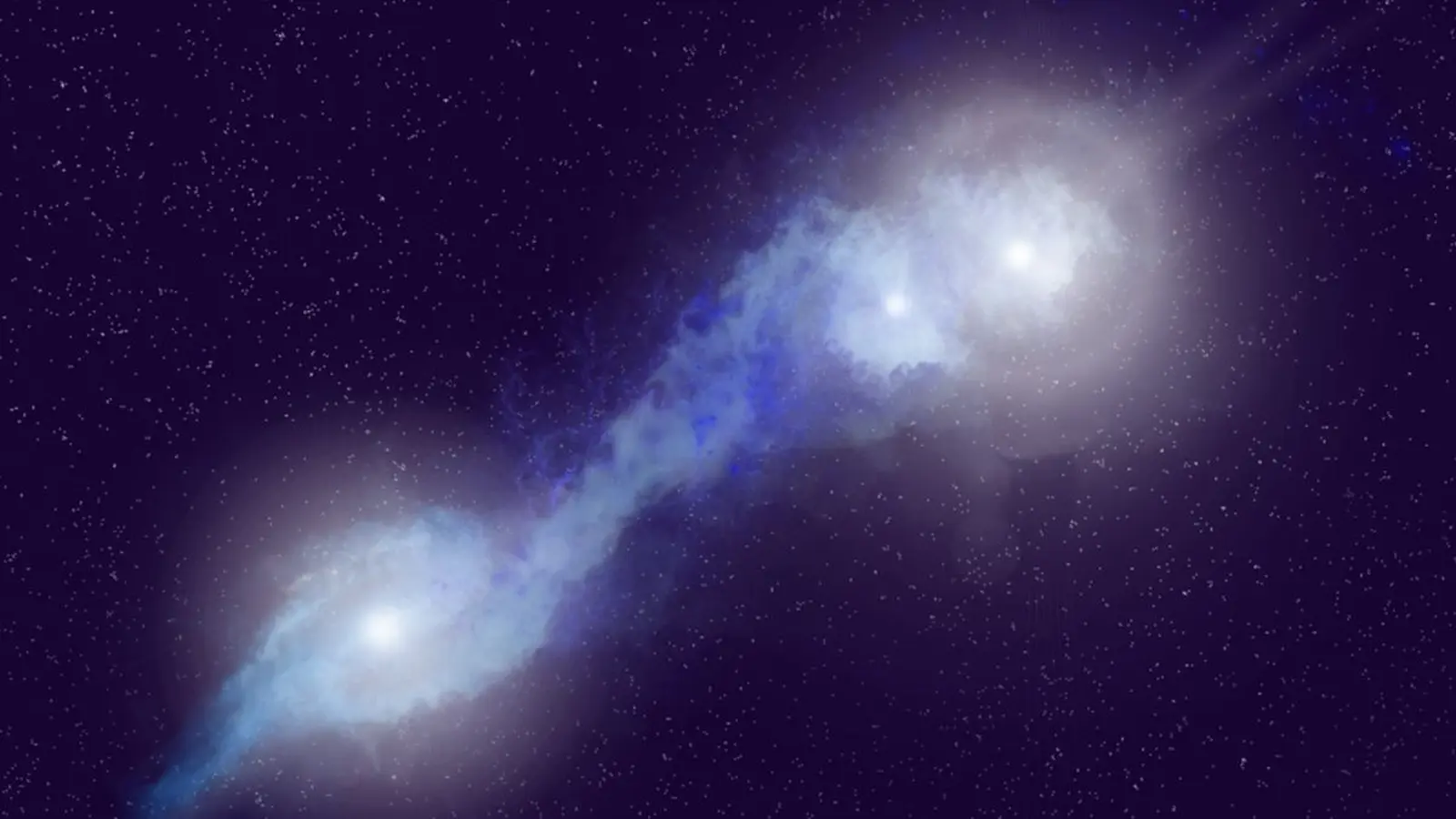
A rare cosmic choreography has been uncovered: three galaxies, each hosting an active galactic nucleus (AGN), are interacting in a single system. The discovery began as an unusual infrared signal flagged by the Wide-field Infrared Survey Explorer (WISE) and has since been confirmed through follow-up observations that reveal a spectacular and informative triple.
Two close neighbors — and a surprising third
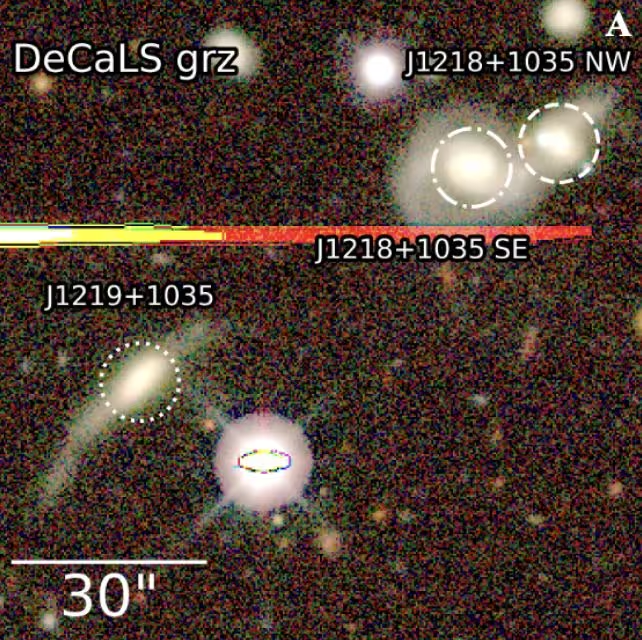
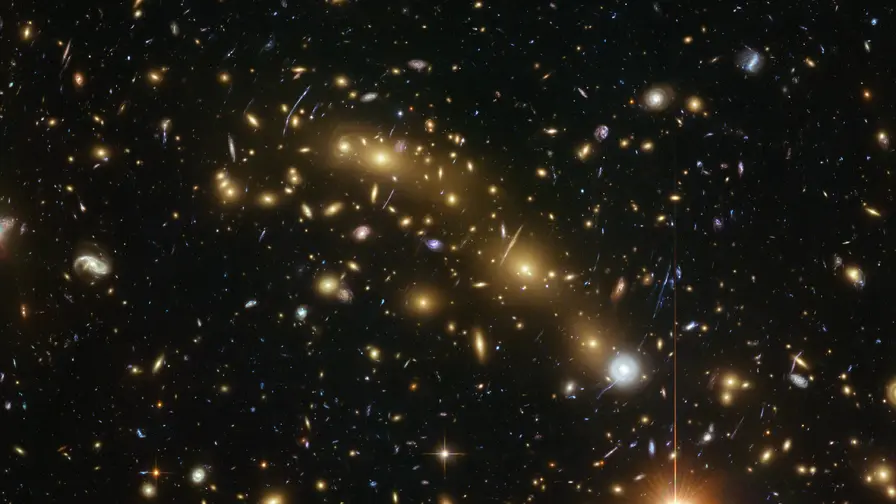
Initial images suggested two galaxies already overlapping at their edges, each powered by its own AGN. Detailed follow-up shows those two central nuclei sit roughly 74,000 light-years apart — close enough to be in the early stages of a merger. But the system gets more interesting: a third galaxy with a luminous AGN lies about 316,000 light-years away and appears physically connected by a gaseous tidal tail flowing toward the inner pair. That ribbon of gas acts like a smoking gun, linking the far-flung AGN to the merging duo and confirming this object as a true triple-AGN system.
Why astronomers care about triple mergers
Triple galaxy mergers are exceedingly rare and valuable. When multiple galaxies collide, their central supermassive black holes can be driven to feed actively, lighting up as AGN. These environments provide unique laboratories to study how galaxies assemble, how black holes grow and interact, and how gas is redistributed during violent encounters. Observing three active nuclei in one system helps constrain models of black hole fueling, feedback, and the eventual formation of binary or multiple black-hole systems.
From discovery to a multiwavelength campaign
The system was flagged in WISE infrared data because dust-obscured AGN can stand out at those wavelengths. Researchers then used additional telescopes across the electromagnetic spectrum to confirm the three active cores and to trace the tidal gas tail. The team emphasizes that finding such systems requires diverse selection strategies: infrared surveys can flag candidates, but optical, X-ray, and radio follow-up are crucial to confirm AGN activity and map dynamical connections.
What comes next
Scientists plan deeper, multiwavelength observations to measure black hole masses, gas kinematics, and star-formation triggered by the interaction. These data will improve search techniques for other hidden triples and refine our understanding of how frequent such mergers are in the cosmic landscape.
Quote from the team
As the research team notes, confirming a connected triple of AGN highlights both the rarity of these systems and the importance of combining infrared discovery tools with broad follow-up across wavelengths to reveal them.







Leave a Comment
Comments
No comments yet. Be the first.